Nature
 PUBLISHED
 1
1


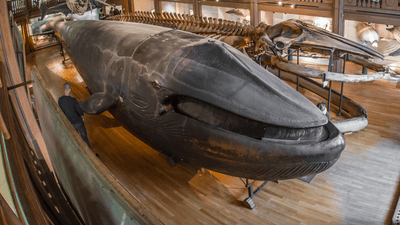


The Malm whale, or Malmska Valen, in Sweden is thought to be the world’s only fully taxidermied blue whale with its complete skin mounted on display. Other museums display whale skeletons and casts, but none with real skin, or one that you can pop open the mouth of and climb inside.
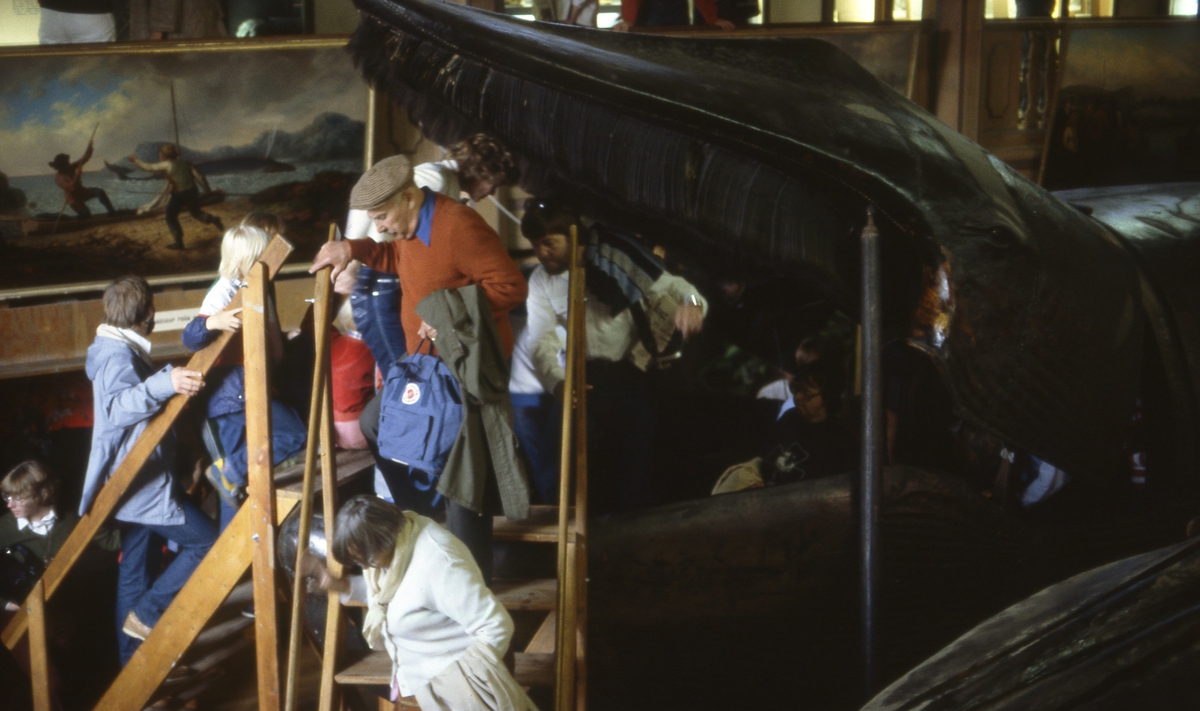
That’s what used to go down at the Gothenburg Museum of Natural History, with historic photos showing people sitting down and even enjoying a cup of tea inside the mouth of the Malm whale. An opportunity that came to a swift end when two people climbed inside and did something nobody expected.
Yes, the Malm whale’s open jaw had to be closed after two people were caught getting it on inside the taxidermy animal in the 1930s. According to Atlas Obscura, the chairman of the museum reportedly said of the incident, “We must be content with the fact that it was two citizens of our own city that enjoyed this privilege.”
I suppose a love of the natural world can take you to all sorts of places.
Shenanigans aside, the Malm whale is a truly a remarkable specimen. The animal’s life came to an end in 1865 when it beached in Askim Bay, after which it was reportedly killed by fishers. Then taxidermist August Wilhelm Malm arrived on the scene with big dreams.
Rather than transporting the carcass in pieces or preserving it only for its skeleton, he decided he wanted to treat it so that it could be preserved intact. That same skin was later stretched over a frame fitted with a hinged jaw that could open to allow people to walk inside. Visualizing, presumably for the first time, what it would be like to get swallowed by a whale.

Getting swallowed whole is actually highly unlikely despite the vast size of some whale species. Even less so for a blue whale that’s a specialist in eating tiny krill. That said, a man did briefly enter the mouth of a humpback whale before being swiftly spat out again (and no, there was no hanky panky that time).
With a maximum length of up to 30 meters (98 feet) and weighing 180 tonnes (200 tons), blue whales are the largest known animals ever to have lived on Earth. The Malm whale was only a juvenile when it died at around 16 meters (52 feet) long, but it’s still among the largest taxidermy specimens on display in any natural history museum across the globe.
Another impressive specimen is that of Henry the elephant, thought to have been the largest extant terrestrial animal on Earth when it was killed in 1955. It’s possible Henry’s descendants could still be lurking in the Angolan Highlands, as discovered in one scientist’s 10-year search for the region’s “ghost elephants”.