Nature
 PUBLISHED


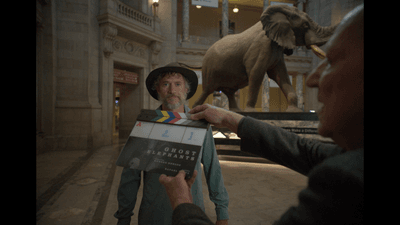


The Highlands of Angola were home to around 70,000 elephants before civil war broke out in 1975. Following decades of conflict, those numbers were decimated as elephants were killed for ivory, encountered land mines, and lost precious habitat. Tens of thousands of elephants died, while others are thought to have fled to neighboring countries.
Today, their numbers remain low, but it’s thought that small hidden populations may still be living in some of the most remote regions of the Angolan highlands – a hard-to-monitor area that’s about the size of England. Still, signs have been recovered, such as footprints and dung and the scrapings of a shoulder scratch against a tree.
You can sense them, but you can’t hear them. They’re ghosts.
Dr Steve Boyes
Conservationist and National Geographic Explorer Dr Steve Boyes went in search of these elusive animals, using heat-sensitive cameras and microphones to remotely monitor the environment, while traversing the landscape on foot, bike, and by boat. For all his gadgets, he turned up no data. “You could smell the elephants, but you don’t see them,” he told IFLScience. “You can sense them, but you can’t hear them. They’re ghosts.”
GHOST ELEPHANTS, a new National Geographic film written and narrated by Werner Herzog, follows the incredible true story of Boyes’ 10-year search for elephants in Angola’s highlands. It’s Boyes’ view that these elephants may be the descendants of Henry, the world’s largest elephant ever recorded who weighed more than a T. rex.
Henry was shot in 1955 by the Hungarian hunter Josef J. Fénykövi, but some of his remains (skeletal and taxidermy) are stored to this day at the Smithsonian Institution. It’s thought Henry may have unique ancestry that could explain why Angola’s elephants don’t appear like elephants found anywhere else across the globe. Those samples mean Boyes and a team of scientists could establish a genetic link, if only they could find some living elephants.
So, Boyes sought out the help of the experts. In the film he is led by the guidance of three KhoiSan Master Trackers: Xui, Xui Dawid, and Kobus, whom he describes as “the original scientists.”
What you experience in a Master Tracker is the birthplace of science.
Dr Steve Boyes
“To me, what you experience in a Master Tracker is the birthplace of science. I’m a scientist and my view on the world is very narrow. I’m using measurable, empirical datasets whether I’m measuring a behaviour or counting things and writing them down or measuring water quality. I use those datasets to make up stories. That’s what my discussion and conclusion is in my peer-reviewed paper and then my peers decide whether my story is good or bad.”
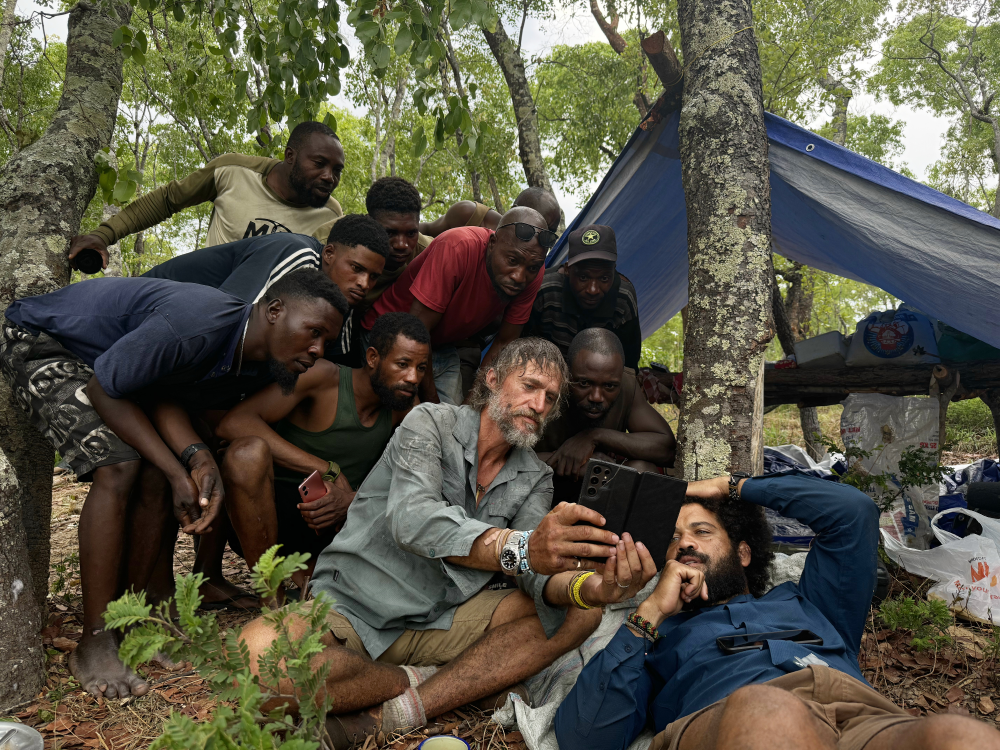
“Xui does exactly the same thing, but he is using qualitative datasets in everything sees, everything he hears, everything he smells. It’s just a ton of data he draws in. He’s not looking at the tracks anymore, that is immaterial to him. He’s listening for the birds, looking at the trees, looking at every single detail, brings it all in, and then he makes up a story.”
“The story that he comes up with is far more accurate than mine could ever have been with a GPS or special acoustic sensors or cameras or anything. He’ll be able to predict where something is, he’ll be able to tell me the elephant was pregnant or not, he will be able to tell me what they’re eating where they’re going where they should be right now. It’s extraordinary.”
“There’s no scientific mind that I know today that can, in the moment, consume so much data and bring out a conclusion in almost real time.”
We spoke to Boyes about what he learned during his 10-year search for Angola’s ghost elephants, how it felt to finally film one first-hand in the wild, and find out about a potent grub he likens to “holding plutonium”.
GHOST ELEPHANTS premieres on National Geographic on March 7.