Nature
 PUBLISHED




Found just a little over 400 kilometers (250 miles) off the coast of Mozambique, the island of Madagascar is not only the oldest island on the planet, but also one of its most iconic. One reason for that is the astonishing depth and breadth of its biodiversity, providing us with a whole host of delightfully strange and beautiful animal species that are found nowhere else on Earth.
The oldest island on Earth
Although it might only be a tiny blip in Earth’s geological history, to us comparably short-lived humans, Madagascar has been around for what we can very scientifically call a long-ass time.
It was once part of the ancient supercontinent of Gondwana, until it and India broke off from what is now Africa about 150 to 160 million years ago. Then, around 84 to 91 million years ago, India broke up the band and made a new one with Asia, leaving Madagascar on its own. It’s been a solo act ever since, making it the world’s oldest island.
The result of Madagascar's long isolation is that evolution was left to well and truly pop off, resulting in an island brimming with biodiversity, with numerous species found nowhere else on the planet. In fact, it’s thought that around 90 percent of species in Madagascar are endemic to the island – and best believe they are all kinds of weird and wonderful.
Lemurs, lemurs, and more lemurs
You can’t really talk about Madagascan wildlife without mentioning lemurs, unless you wish to incur the wrath of King Julien himself, the iconic animated depiction of one of the island’s most recognizable lemur species, the ring-tailed lemur.
However, the stripy-tailed species is just one of roughly 107 lemur species that live on the island. They include the fluffiest of floofs, like the Coquerel’s and silky sifaka, to the world’s smallest primate, Madame Berthe’s mouse lemur, which measures at just 9 to 9.5 centimeters (3.5 to 3.7 inches) in body length.
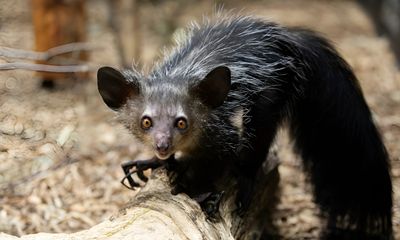
The lemur group also has some truly certified freaks, none greater than the aye-aye. To say they have a strange appearance is something of an understatement; they’ve got big ears, scraggly fur, and a horror movie-worthy set of spindly fingers. The longest of all is their middle finger, which they use to scoop out grubs from otherwise unreachable places – although they also use it to pick their noses too. Delightful.
Fossa ooh, fossa ahh
Madagascar is also home to a number of carnivorans, the largest of which is the fossa. Yet another example of the island’s bizarre collection of wildlife, this thing looks like someone couldn’t decide between making a cougar or a weasel and just threw in the ingredients for both.
Fossa have slender bodies with long tails. They’ve got retractable claws, which they use for hunting and climbing trees. If it wasn’t for the odd weasel-y feature, you really could be convinced that these creatures were cats.
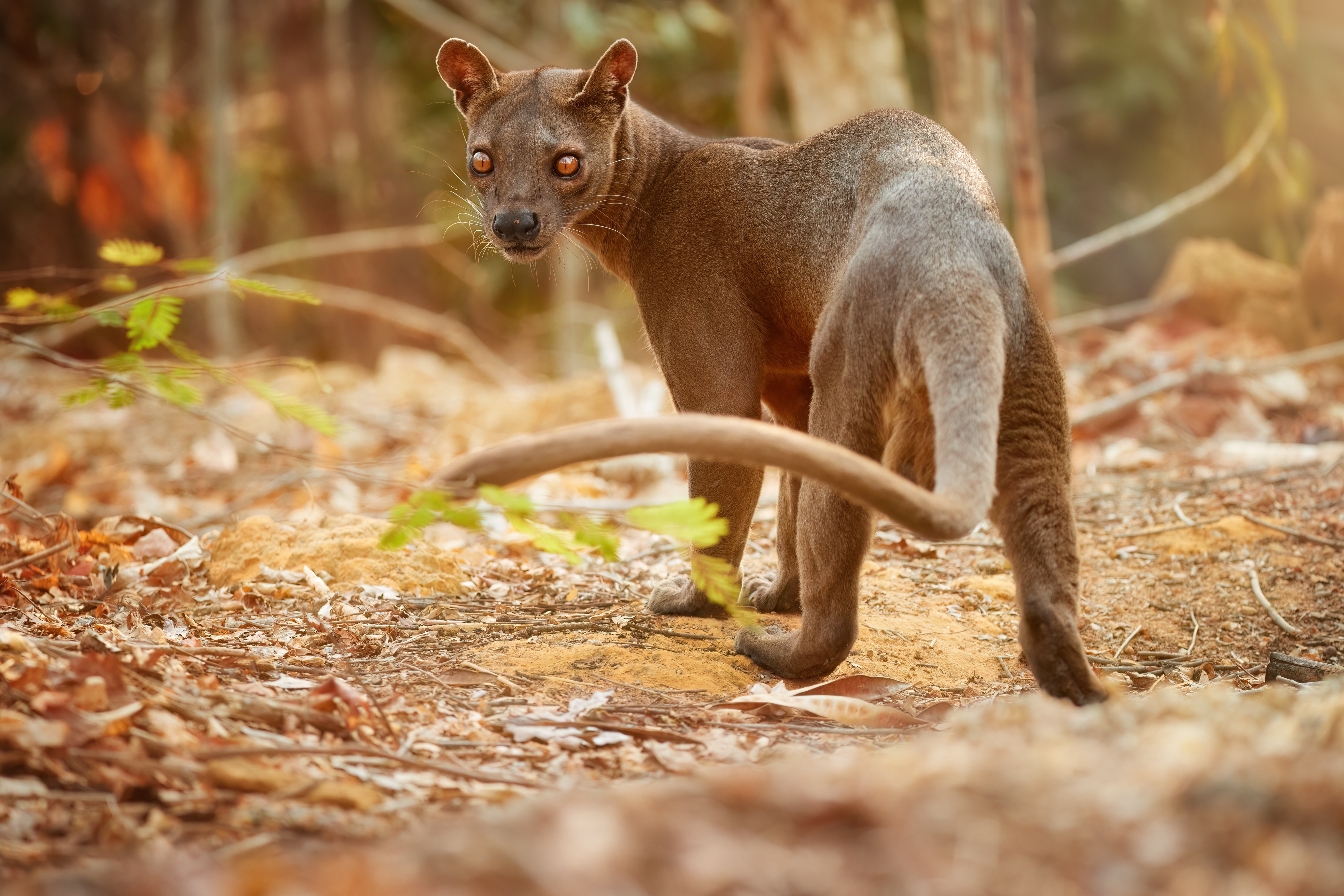
But while fossa belong to the suborder Feliformia due to their cat-like appearance, they definitely aren’t cats – this is a case of convergent evolution, where species that aren’t closely related to each other independently evolve similar traits that help them adapt to similar environments. Fossa are actually more closely related to mongooses
Biodiversity in danger
The bad news is that both lemurs and fossa are under threat. In fact, Madagascar’s famous biodiversity as a whole is currently experiencing a rapid decline, with over 3,500 species of plants and animals on the island considered by the IUCN as under some level of threat.
A number of factors are playing a role in this decline, such as habitat loss (including conversion of land for agriculture) and degradation, climate change, hunting, and the illegal pet trade. While efforts are being made to tackle the problem, one study has estimated that, should Madagascar go on to lose all the mammals currently classified as threatened, it would take evolution 23 million years to recover the level of biodiversity.
It’s a chilling thought, and not just when it comes to non-human species. As one 2022 study explained: “Madagascar is among the world’s poorest countries, and its biodiversity is a key resource for the sustainable future and well-being of its citizens.”
Holding onto the island’s biodiversity as best we can will be of benefit to everything that lives there – human or otherwise.

 1
1