Nature
 PUBLISHED


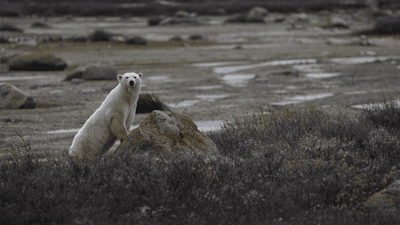


Every year a small town in Canada gets a sudden influx of polar passersby as the world’s largest bear (that begins life as a fluffy stick of butter) embarks on its annual migration. The big move is driven by the return of the sea ice they need to hunt, but getting to seal town involves going through the “polar bear capital of the world”: Churchill, Manitoba, in Canada.
Their time on land means they’re incredibly well-studied thanks to the efforts of institutions like Polar Bears International (PBI), not least because spotting a big white animal on grass is easier than seeing them out on white ice in a blizzard.
Biologist and conservationist Alysa McCall is a member of the PBI team and regularly heads out to conduct research from the safety of a tundra buggy from late October through to November, and it’s around this time that Polar Bear Week is celebrated, from October 27 to November 2.
“We are in the midst of the annual polar bear gathering at this time of the year,” McCall told IFLScience from inside Tunrda Buggy 1. “The polar bears in this region have been on land since they came off the sea ice in the summer, so these bears have been living off their own body fat, not eating very much, [and] conserving energy.”
Climate change has led to longer summers and an increase in land use among bears that once occupied a diverse range of sea ice habitats. Research has found that polar bears exhibit remarkable plasticity in adapting to environmental changes, but there’s a limit to how much time on land they can tolerate before succumbing to starvation. A worrying consideration given forecasted declines in Arctic sea ice indicate there will be longer periods of summering on land in polar bears’ future.
It’s understandable, then, that once the weather starts to turn the bears are practically queueing up to get back on the ice.
“As the temperatures start to cool and winter approaches, the bears start moving toward the coast because they know that soon the sea ice will freeze up on Hudson Bay, and almost overnight these bears are gone,” said McCall. “They’re out there hunting their main prey, seals, eating a ton of seal blubber, and consuming thousands upon thousands of calories.”
The polar bear gathering means the residents of Churchill have gotten used to employing the help of sirens and horns to reduce interactions, as well as creating bear bins so they’re not lured in by our delicious trash. PBI has also created a “Bear-dar” early detection radar designed to alert communities and remote camps when a bear is approaching.
Their proximity gives us a great opportunity to learn more about polar bear behavior, and thanks to PBI and Explore.org, you can see what’s going on in this annual polar soap opera from the comfort of your living room.
“Until the sea ice comes back, we are here live streaming the polar bears. We have a lot of events at PolarBearsInternational.org, live cams on Explore.org so you can watch what the polar bears are doing,” said McCall. “We’ve got sparring, we’ve got moms and cubs, we’ve got all sorts of great activity so come check it out.”