Nature
 PUBLISHED




What you'll discover in this article
- Scientists have discovered evidence of a cloaca in the fossilized tailprint of a 294-million-year-old early ancestor of mammals.
- The fossil addresses a gap in our understanding of how cloacas evolved among early terrestrial vertebrates, and highlights how their orientation changed over time and across animal groups.
- Study author Dr Lorenzo Marchetti told IFLScience, “So far, we knew and still know very little on the fossil record of this structure, but this finding [...] allowed us to build a reliable framework for its evolution in time and on the tree of life.”
The capacity to poop was a quantum leap in the evolution of life. Once animals no longer had to waste time regurgitating the food they had ingested, they were free to munch their way through the environment (potentially triggering the first mass extinction event).
The through-gut was a superpower, but among some animal groups it was decided that the anus was not enough.
Enter: the cloaca. A single, all-purpose opening that can tackle the digestive, urinary, and reproductive facts of life. Today we see cloacas in amphibians, reptiles, birds, and a few unusual mammals (hello, the monotremes).
It’s a tour de force of adaptation, but one that’s been missing a chapter in its evolution. A gap that may have just been filled by the discovery of a 294-million-year-old animal’s remarkably well-preserved tailprint.
Preserving precious private parts
The fossil record is full of prints, known as trace fossils, that palaeontologists specializing in ichnology have learned to read like ancient clues. From the swim scratches of T. rex to the butt drags of rock hyraxes, trace fossils have taught us all sorts about animals behavior, and they can fill in for something the fossil record is sorely lacking in: soft tissues.
When an animal starts to decompose, the soft tissues are the first to go and therefore they are much rarer in fossils. We do find mummified remains, and in other cases microbial mats have ensured the preservation of soft tissues dating back to the Ediacaran, but in lieu of the animal itself scientists can also look to their prints.
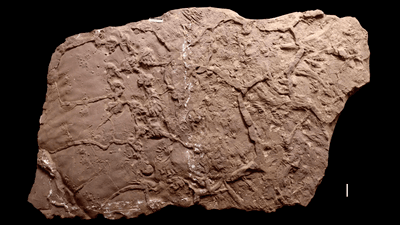
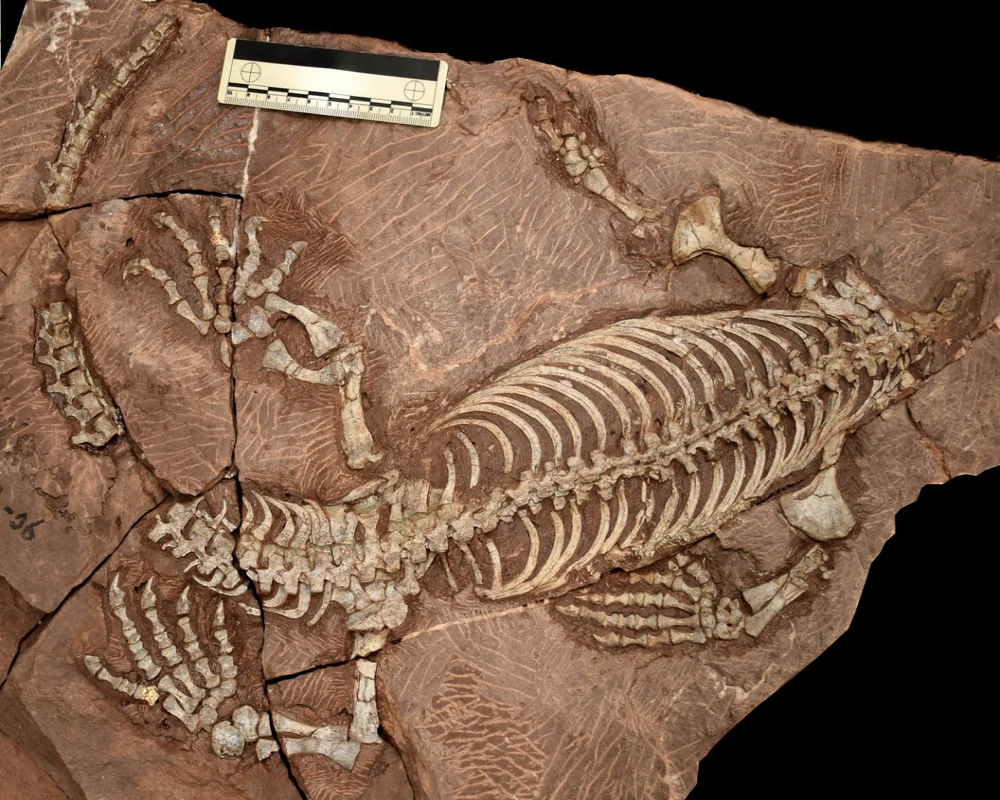
It was the prints left behind by a Dimetropus in the UNESCO Global Geopark Thuringia that recently captured the attention of a research team from the Museum für Naturkunde, Berlin. An early herbivorous ancestor of mammals, the creature had left behind a tailprint and several footprints in the Bromacker fossil locality, one of the world's most significant late Palaeozoic fossil sites.
This study provides a first hypothesis on how the external part of the cloaca evolved in deep time, which was previously unknown.
Dr Lorenzo Marchetti
Changing orientation
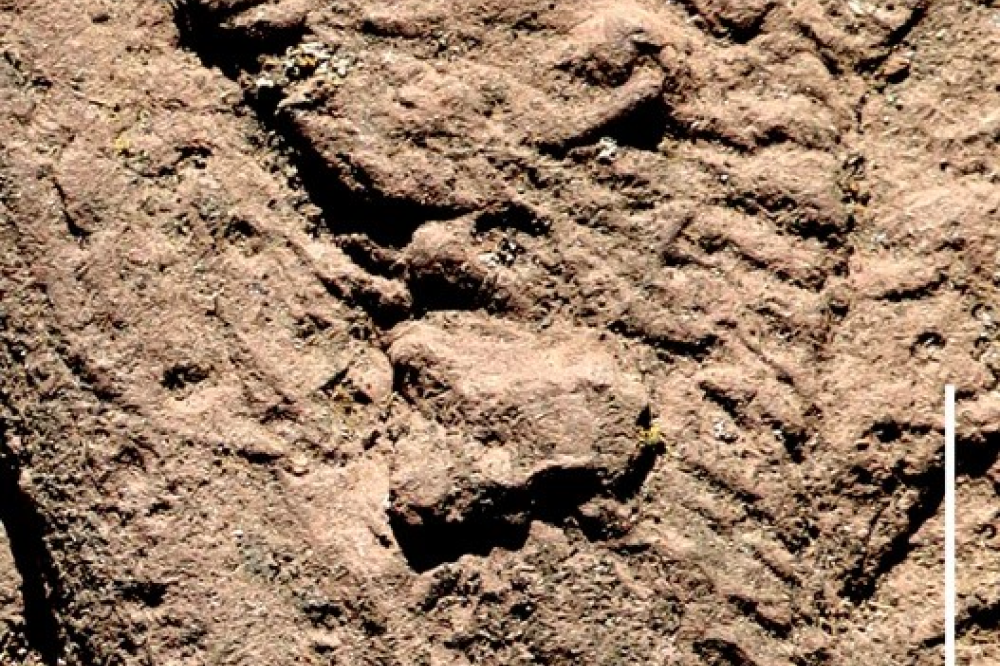
When the scientists looked closely at the base of its tail, they noticed two rows of elevated scales that have been interpreted as the lips and opening of a cloaca.
It marked the oldest fossil evidence of a cloaca in the mammalian lineage, and the first time we’ve found a cloacal opening in an animal from Synapsida.
Stranger still, the vertical slit demonstrated that the cloaca has gone for a bit of a spin throughout its evolution.
“The most fascinating takeaway is the recognition of the change in orientation of this structure through time and in different groups and the hypothesis that the vertical orientation was the initial morphological condition for tetrapods,” said study author Dr Lorenzo Marchetti of the Museum für Naturkunde Berlin to IFLScience.
“Of course, the reasons for this change are more difficult to discern because we know very little of extinct animal behaviour, but we advanced some preliminary hypotheses based on observations of modern animals.”
Possible explanations as to why the cloaca would be a vertical slit in some animals and a horizonal slit in others include differences in reproductive anatomy, changes in body shape – primarily the size of tails and limbs – and maintaining body temperature through cloacal evaporation (is there anything it can’t do?). It’s also possible that it could be a response to changing environmental conditions.
The trace fossil provides a unique opportunity to study the reproductive anatomy of early terrestrial vertebrates, and addresses a gap in our understanding of the evolution of the cloaca that scientists have been eager to fill.
“This study provides a first hypothesis on how the external part of the cloaca evolved in deep time, which was previously unknown,” said Marchetti.
“So far, we knew and still know very little on the fossil record of this structure, but this finding, combined with other key fossil finds, their age and phylogenetic position and a comprehensive review on modern animal cloacas, allowed us to build a reliable framework for its evolution in time and on the tree of life.”
The study is published in the journal iScience.