Nature
 PUBLISHED
 1
1


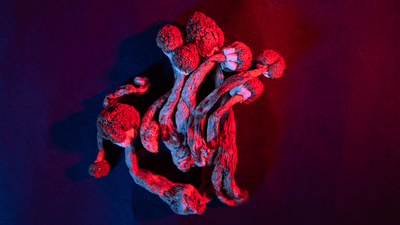


If you've ever done a little digging around into magic mushrooms, or mushrooms that contain the psychedelic compound psilocybin, you may have stumbled across some of the wackier suggestions for how the mushrooms evolved it.
These range from the scientifically plausible – some sort of a defense mechanism – to the type of suggestion you might expect from someone who has recently consumed the mushrooms. For example, there is a non-zero part of the "psychonaut" community who believe that the mushrooms were sent here by an alien intelligence to guide our developing consciousness.
Enjoyable though these wackier ideas are, scientists are attempting to hone in on what the actual answer might be. Less "out-there" explanations include that psilocybin helps to disperse spores around the place by altering the behavior of whatever creature is unfortunate enough to ingest it, or that the effects deter insects and slugs that would otherwise consume the mushroom.
One mystery surrounding it is why the mushrooms put so much energy into producing this mind-altering substance.
"Despite environmental limitations, a large portion of nitrogen is allocated to psiloids. For example, psilocybin can make up to 1.6 percent of a mushroom’s total nitrogen content," a review of the topic explains. "The high nitrogen allocation to psilocybin production suggests that its benefits outweigh any cost to nitrogen-limited growth and reproduction processes."
A new study has taken a look at one possibility: that they evolved the psychoactive compound in order to disorient the hell out of invertebrate fungivores.
"Psilocybin acts in a similar way to the neurotransmitter serotonin, yet how and why natural selection favoured its biosynthesis remains unclear," the team explains in their paper, which has not yet been peer reviewed. "Given the resemblance to serotonin, modulation of invertebrate behaviour for defence is a likely explanation, but neither this nor alternative hypotheses have ever been formally tested."
The experiment involved two species of fruit flies (Drosophila). The team prepared food for the larvae, with a little extra ingredient to spice things up a bit: dried magic mushrooms, in powder form. They then monitored the larvae as they grew, noting any differences between the insects and normal healthy fruit flies.
"Drosophila larvae exposed to extracts from Psilocybe species show reduced pupation rates, decreased survival to adulthood, decreased thorax size and wing size and increased fluctuating asymmetry. Locomotion was also compromised, with larvae spending less time moving, moving more slowly and showing increased turning behaviour," the team writes in their paper. "These results lend support to the hypothesis that these compounds have evolved for defence purposes."
Though "compromised" locomotion may sound like the flies were "tripping balls", it is impossible to tell what kind of experience the larvae were having. But their growth and movement were certainly hampered by the compound.
“What our results suggest is that compounds like psilocybin interfere with basic insect physiology and behaviour in ways that are likely harmful rather than mind-altering," Kirsty Matthews Nicholass, lead author on the paper, explained to New Scientist.
While the study is interesting, and seems to support the invertebrate defense hypothesis, it wasn't altogether clear-cut. For example, the team also found that flies with a reduction in their 5-HT2A receptors – usually stimulated by psilocybin – actually exhibited heightened stimulation to psilocybin in the study.
"Potentially, larvae were responding to other co-extracted compounds from the mushrooms or psilocybin may interact with additional receptor pathways," the team explains. "To fully understand the involvement of the central nervous system in invertebrate responses to psilocybin, pharmacological approaches employing receptor antagonists will be essential."
The team suggests that further study, where single compounds are isolated, will be needed in order pinpoint whether these are effects of psilocybin or synergistic effects of several compounds within the fungi. As well as this, they suggest that other hypotheses should be tested, such as the idea that psilocybin helps the spread of spores by altering the behavior of the animals which consume the mushrooms. We don't know how you'd go about the "aliens sent them here" idea, if such an idea were even testable.
The study is posted to preprint server BioRxiv.