


 Nature
 PUBLISHED


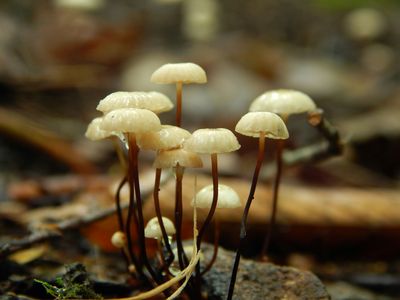


Somehow, for reasons that are still unclear, the natural world gave rise to tiny mushrooms teeming with the psychoactive compound psilocybin. Even more astonishingly, the ability to produce this particular psychedelic didn’t evolve just once - it emerged at least twice independently.
Psilocybin is a naturally occurring psychedelic substance that profoundly alters consciousness and perception. While it can be used as a recreational (and illicit) drug to induce powerful trips, recent years have shown it also holds great promise in medicine, emerging as a potential treatment for therapy-resistant depression and other mental health conditions.
The chemical is most famously produced by around 165 different species belonging to the genus Psilocybe. However, it’s also made by part of another genus of mushroom-forming fungi, Inocybe, known as fiber caps.
For the first time, scientists in Germany and Austria have shown that the two fungal genera developed the ability to produce psilocybin at least twice independently of each other.
Psilocybe species make the substance using a known toolkit of enzymes. Surprisingly, they found that fiber cap mushrooms create it with a totally different biochemical arsenal, yet arrive at the same molecule.
"It was like looking at two different workshops, but both ultimately delivering the same product. In the fiber caps, we found a unique set of enzymes that have nothing to do with those found in Psilocybe mushrooms. Nevertheless, they all catalyze the steps necessary to form psilocybin,” Tim Schäfer, lead author of the study from the Leibniz Institute for Natural Product Research and Infection Biology - Hans Knöll Institute (Leibniz-HKI), said in a statement.
This suggests the ability to produce psilocybin may be an example of convergent evolution – the process by which different organisms from different periods or regions independently evolve the same attributes or abilities due to similar evolutionary pressures.
One well-known example is wings, which have evolved separately in birds, bats, insects, and other animals, all serving the same function of powered flight despite arising from very different parts of the tree of life.
The question is, however, what drove the need for these two different fungi to co-evolve the same psychedelic compound?
"The real answer is: we don't know," said Professor Dirk Hoffmeister, head of the research group Pharmaceutical Microbiology at Friedrich Schiller University Jena and Leibniz-HKI. "Nature does nothing without reason. So there must be an advantage to both fiber cap mushrooms in the forest and Psilocybe species on manure or wood mulch producing this molecule – we just don't know what it is yet."
"One possible reason could be that psilocybin is intended to deter predators. Even the smallest injuries cause Psilocybe mushrooms to turn blue through a chemical chain reaction, revealing the breakdown products of psilocybin. Perhaps the molecule is a type of chemical defense mechanism," added Hoffmeister.
Whatever the answer, the latest breakthrough could guide the way towards new, easier ways to synthesize psilocybin, as it shows there’s not one path towards making this mind-altering molecule.
"We hope that our results will contribute to the future production of psilocybin for pharmaceuticals in bioreactors without the need for complex chemical syntheses," added Schäfer.
The study is published in the journal Angewandte Chemie International Edition.



 1
1