Nature
 PUBLISHED
 1
1




What you'll discover in this article
- Capuchin monkeys are incredibly curious, even when it comes to computers.
- Federico Sánchez Vargas told IFLScience how the technology could revolutionize what we know about animal intelligence
- AI systems like this could boost our understanding of other, more complex primates.
Even wild monkeys can’t escape the tidal wave of artificial intelligence (AI) sweeping the planet. But fear not, these capuchins in Costa Rica are not being used to make AI slop. In fact, it's quite the opposite.
In a new study, scientists at Emory University and the Georgia Institute of Technology developed a novel computer system called CapuchinAI and planted it in the Taboga Forest Reserve of Costa Rica.
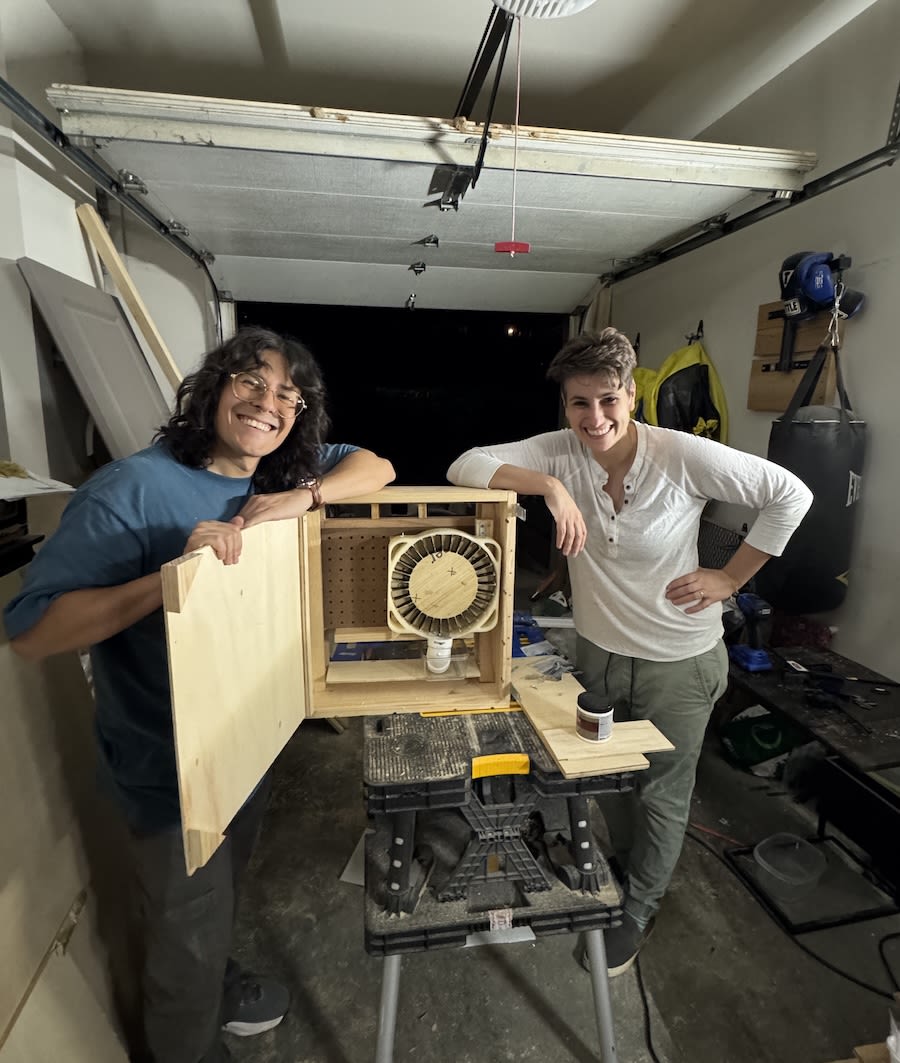
All of the complex components were fitted into a wildlife-proof, weatherproof box that was built in the researchers' garage using parts bought from a local DIY store.
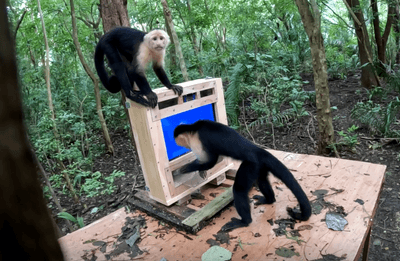
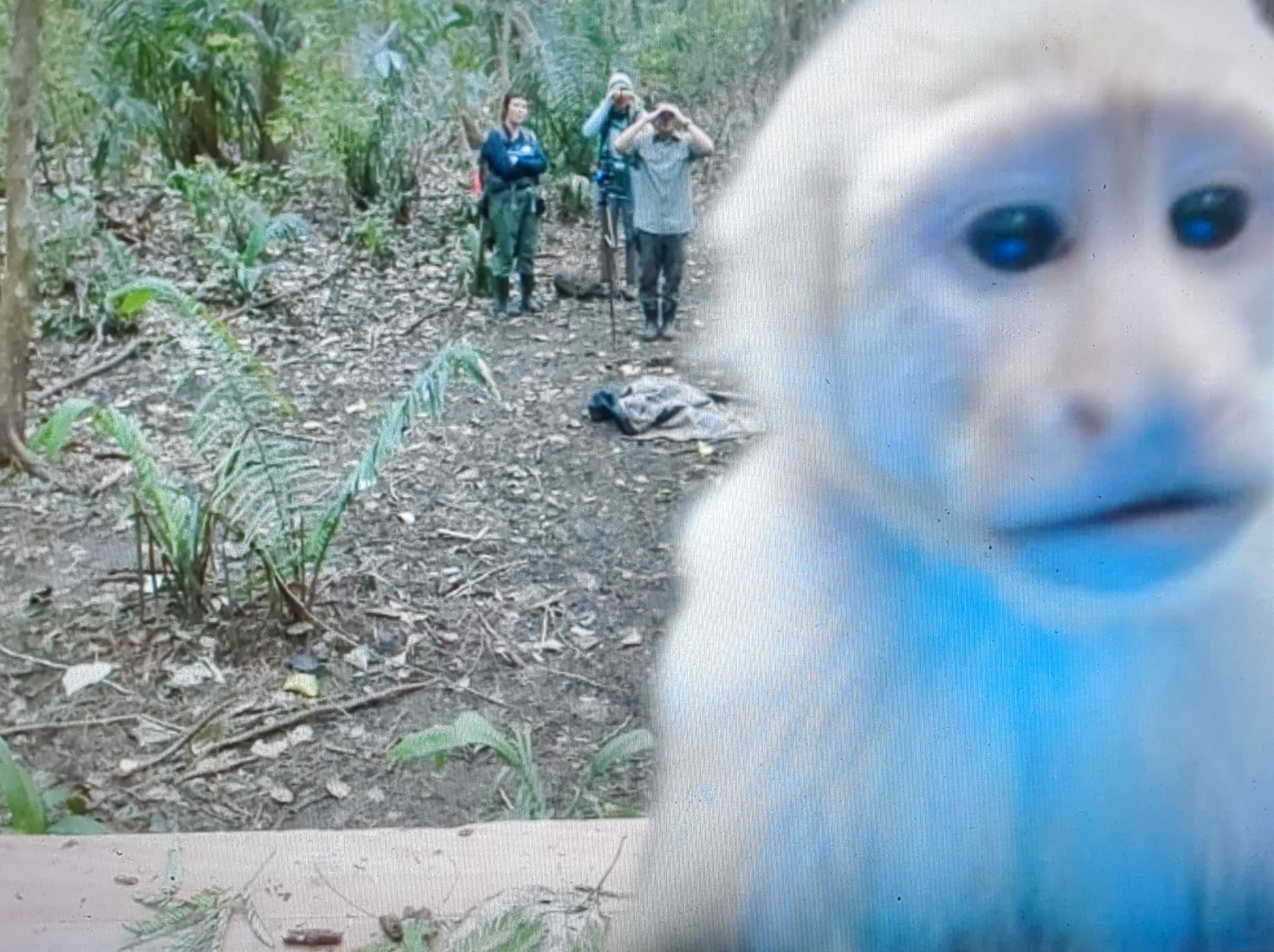
Once deployed in the Costa Rican jungle, facial recognition software detected the presence of white-faced capuchins (Cebus imitator), triggering the system to boot up. The screen then lit up in a vivid blue, much to the monkeys' curiosity.
“Capuchins are generally incredibly inquisitive animals. Whenever they encounter something new or unusual, they rapidly approach,” Federico Sánchez Vargas, first author of the paper and a PhD student in anthropology at Emory University, told IFLScience.
While toying around the screen, the capuchins would accidentally trigger the release of a banana slice.
“At this point, none yet understood how they'd gotten that banana, but they now knew they could get one – and something to be noted about capuchins besides their exploratory nature is their persistence,” explained Sánchez Vargas.
Eventually, most of the capuchins figured out that the machine released a sweet treat if they touched the screen in a certain way, such as by pressing their lips to it.
“Within six sessions per group, out of the 10 monkeys who first accidentally touched a screen, eight went on to show behaviors consistent with fully understanding the task, such as only directing touches towards the screen and anticipating a food reward by placing their hand by the dispenser at the same time as they touched the screen,” said Sánchez Vargas.
The system is inspired by the late Frans de Waal, a pioneering primatologist who redefined how humans view the intelligence, empathy, and morality of other animals through decades of observation and elegant experiments.
In a similar vein, CapuchinAI could eventually be used to gather rich, high-quality insights about primates as they go about their business in their natural habitat. Its facial recognition software will be used to identify individual capuchins and automatically collect data with minimal disruption to their lives.
“In the past, any new cognitive experiment in the wild required building a whole new, specifically designed apparatus. But now, if we want to test a new cognitive domain, all we need to do is code a new test, and then we can immediately implement it on the screen,” noted Sánchez Vargas.
Sánchez Vargas is especially interested in understanding if and why there are cognitive differences between individual monkeys. With a tool like CapuchinAI, researchers could automatically recognize monkeys, gather data about their lives, and compile it to understand how it shapes their behavior and cognitive abilities.
CapuchinAI, as the name suggests, is currently geared towards smaller monkeys, but the team believes the system could be adapted for other primates as well.
“I would love to see this method as a way to generate high-quality and comparable data across primatology field sites and even across species,” said Sánchez Vargas.
“We're very committed to the open, collaborative nature of science. To that end, we've shared all the resources that we used to develop the project openly in our publication,” the anthropologist concluded.
The study is published in the American Journal of Primatology.