Nature
 PUBLISHED


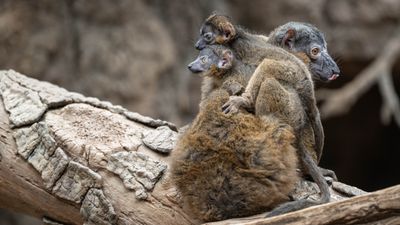


Fancy a hefty dose of cute to start the first full week of May? We’ve got just the thing for you… well, two things actually – a set of collared brown lemur twins recently born at the Bronx Zoo in New York.
These adorable new arrivals were born back on March 15. They’ve been spending the last month and a bit since nestled into their mom’s fur, clinging on tight as she goes about her day in the zoo’s “Madagascar!” exhibit, which is also home to ring-tailed lemurs, radiated tortoises, and a whole bunch of different birds.
Although they’ll stay snuggled up with mom most of the time for a little while yet, it seems the twins are starting to get more adventurous as they grow; the Bronx Zoo told IFLScience in an email that they’ve also been seen leaping about the canopy, using their long tails to help them keep their balance in classic lemur fashion.
The birth of the lemurs is special in more ways than one. According to the Association of Zoos & Aquariums (AZA), it’s relatively rare to see the birth of twin lemurs in managed breeding setting, with multiple infants occurring in less than 25 percent of collared brown lemur births.
The as-yet unnamed twins also represent a conservation win for collared brown lemurs; like many of the 107 lemur species found in their native home of Madagascar, they’re classed as endangered by the IUCN.
According to the conservation organization, the species experienced a population decline in the wild of more than 50 percent over 24 years, in large part due to habitat destruction through charcoal production and unsustainable agricultural practices, as well as exploitation through hunting.
With evidence suggesting that these threats have yet to let up, it’s predicted that the collared brown lemur population will continue to decline at the same rate.
That’s where conservation programs come in; the Bronx Zoo is part of an AZA plan to ensure the survival of collared brown lemurs. The plan focuses on breeding lemurs in managed care to maintain the species’ genetic viability. This means that a species has enough genetic diversity that it’s healthy, can reproduce, and survive and adapt to environmental changes, like a new disease popping up.
It’s a plan that’s more important than ever with the world’s oldest island experiencing a rapid decline in its biodiversity. One day, lemurs like the twins born at the Bronx Zoo could be reintroduced to their native habitats to restore the breadth and depth of life found on Madagascar.
In the meantime, if you’re hoping to catch a glimpse of these super special twins, your best bet is in the afternoon – that’s when Bronx Zoo Assistant Supervisor Kate says guests have seen the babies most often.