Nature
 PUBLISHED



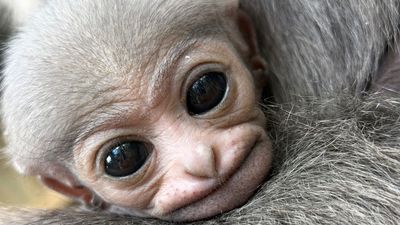


While we were all adding glitter to our homemade cards and forgetting to peel the price tag off the gas station flowers last Valentine’s Day, it turns out something far more exciting was happening over at Port Lympne Reserve in the UK: the birth of a baby Javan gibbon.
The delightfully big-eyed and fluffy new arrival is the offspring of male gibbon Gapak and now five-time mom Belle, who, according to an Instagram post by the reserve, has been “confidently showing baby off.” And quite right too – baby Lima, as the young male has been named (very appropriate for a smol bean), is downright adorable.
But besides giving us something to coo over, Lima’s birth also marks a significant conservation win for Javan gibbons.
Also known as silvery gibbons, in the wild these primates are found only on the Indonesian island of Java (hence their other name). Here, they’ve historically lived in richly diverse lowland and mountainous rainforests, swinging between branches up to 10 meters (33 feet) apart with impressive ease.
However, the forest in which the species once thrived has become increasingly fragmented due to deforestation for the purposes of logging and agriculture. On top of that, Javan gibbons are also threatened by hunting and the illegal pet trade.
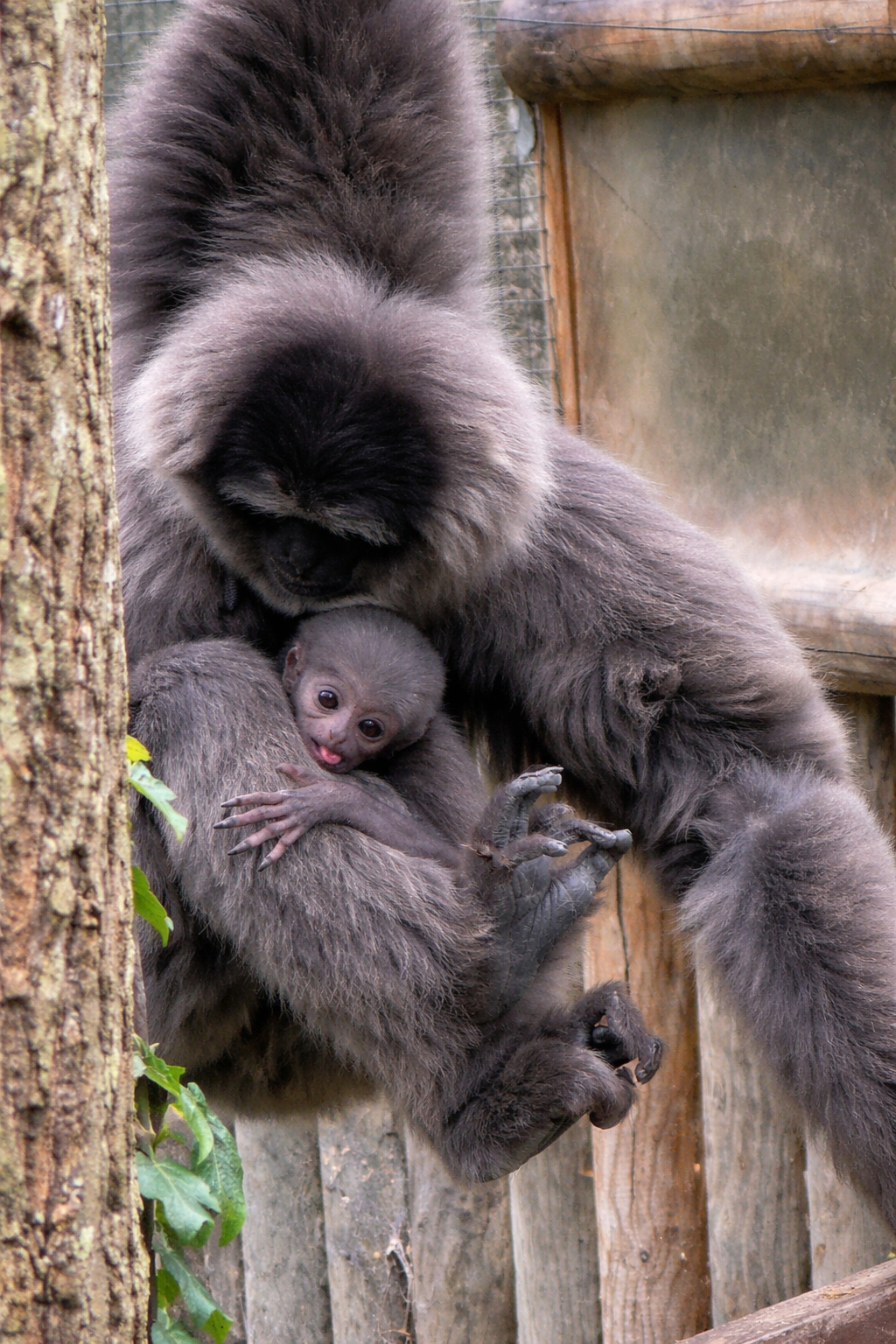
As a consequence, the species is in decline, with less than 2,500 individuals estimated to remain in the wild. One study has even suggested that three of the four largest remaining populations of Javan gibbons have a high probability of going extinct within the next 100 years if current threats continue.
Port Lympne Reserve is part of an effort to ensure that day never arrives, running an ex-situ breeding program for the species. So far, the program has resulted in nine births, Lima being the latest.
“We’re incredibly proud to welcome Lima to Port Lympne Reserve. As a critically important species within the EAZA [European Association of Zoos and Aquaria] programme, Javan gibbons are central to our conservation mission, and Lima represents a significant and exciting step forward for our breeding efforts,” said Simon Jeffery, Animal Director at Port Lympne Reserve, in a statement sent to IFLScience.
Another part of that conservation mission could see Lima one day ending up in the rainforests of Java; the eventual goal of the program is to restore the species to its former glory within the gibbons’ native habitat, beginning with the carefully planned reintroduction of captive-bred individuals into protected areas. Two of Lima’s siblings, along with one other Javan gibbon born at the reserve, have already left for their homeland.
We’re keeping our fingers crossed that Lima gets to join them!