Nature
 PUBLISHED
 1
1



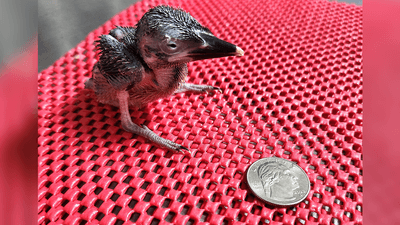


Prepare yourselves, folks – there’s an adorably scrungly new baby bird in town at San Antonio Zoo. The young Micronesian kingfisher chick may look thoroughly peeved at its own existence, but it’s big news that it exists at all, as the species is currently extinct in the wild.
It’s not an easy feat to hatch one of these chicks; Micronesian kingfishers, also known as Guam kingfishers, are notoriously selective (some would say quite rightly) when it comes to picking who to mate with. Luckily, the parents of the zoo’s new chick quickly shacked up with each other earlier this year, shortly followed by the pitter-patter of teeny-tiny bird feet.
The hatching of the as-yet unnamed baby bird stands out as a success story in what has been a rather gloomy history for the species over the past 80 or so years. Originally only found on the Pacific island of Guam, the kingfishers were rapidly snuffed out by invasive brown tree snakes that had slithered onto shipping containers brought to the island in the 1940s. So quick was their decline that the species was declared extinct in the wild in 1988.
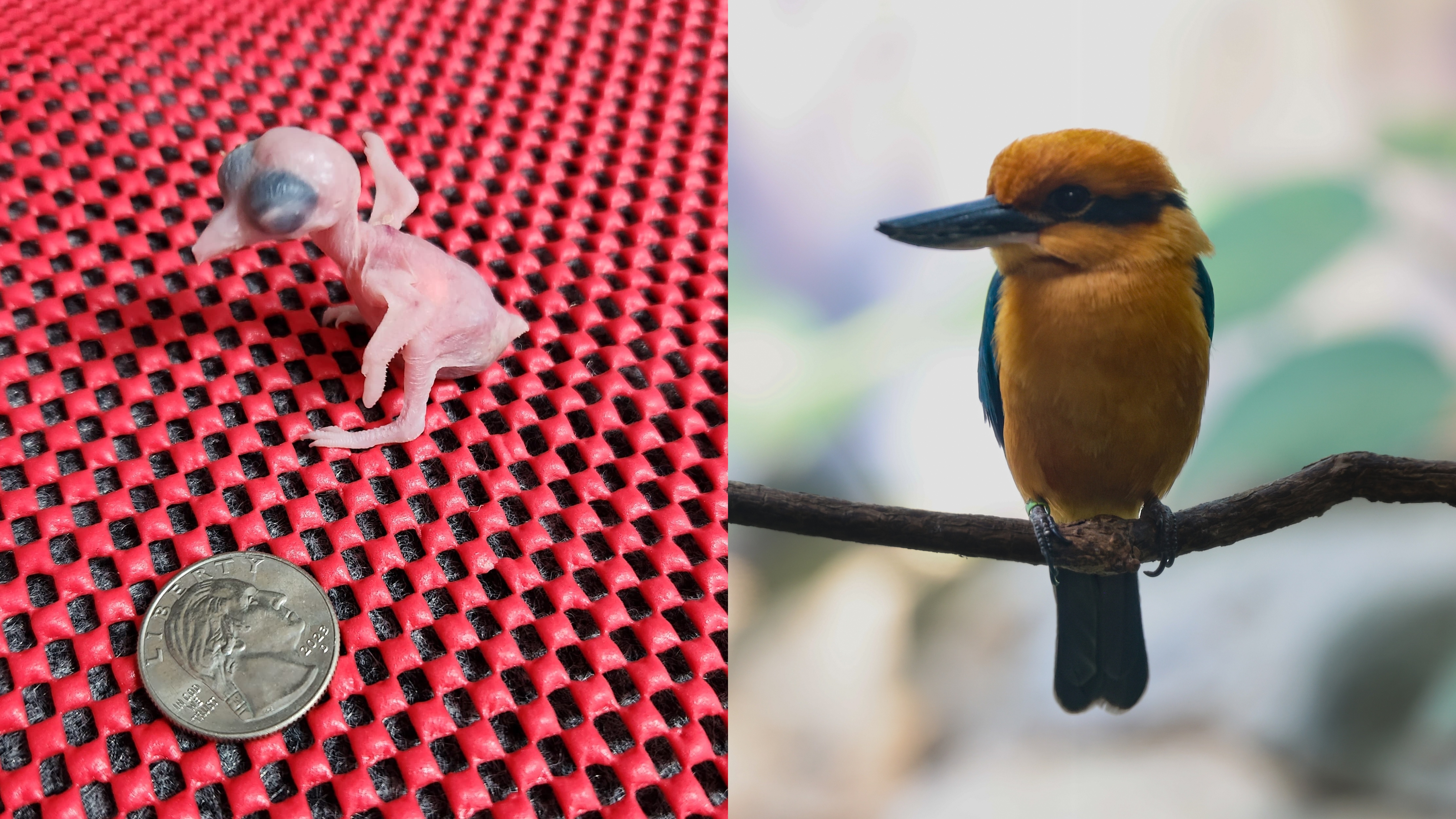
Thankfully, conservationists had made moves to save the species five years before, launching the Guam Bird Rescue Project to take the remaining 29 birds at that time into human care. Since then, institutions like San Antonio Zoo have worked hard to maintain and expand the population of these rare kingfishers.
This latest addition to the gang is the first Micronesian kingfisher chick hatched at the zoo in five years, and the 47th since its first pair of the birds arrived back in 1985.
“San Antonio Zoo has been part of this species’ story for over 40 years, and this hatch continues that legacy,” said Tim Morrow, President and CEO of San Antonio Zoo, in a statement sent to IFLScience. “Our team’s expertise and commitment are helping ensure the Micronesian Kingfisher not only survives, but one day thrives again in the wild.”
That’s something conservationists are currently working towards, and they made a historic step in the process back in 2024, when nine Micronesian kingfishers were released onto Palmyra Atoll, a remote, predator-free island that’s also a US National Wildlife Refuge.
How are they still considered extinct in the wild then, you may ask? Part of that is to do with where they were reintroduced – the IUCN still defines a species as extinct in the wild if where they’ve been re-released is well outside their previous range. Palmyra Atoll is nearly 6,000 kilometers (3,700 miles) across the Pacific Ocean from Guam, a distance that very much fits that criterion.
It also takes time; while the eventual goal is to restore these kingfishers to their original habitat, scientists need to make plenty of observations of the birds on the atoll and ensure the population is sustainable before such a move is considered possible.
There’s hope though – last April, the introduced kingfishers laid eggs, the first in the wild in almost 40 years.