Nature
 PUBLISHED



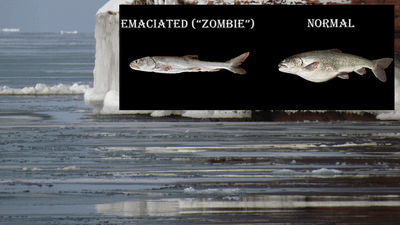


Scientists have been exploring the deepest point of Lake Superior in search of the cause of an undesirable transformation in the ecosystem’s top predators. Known as “zombie fish," these siscowet lake trout are raising eyebrows among experts due to their extremely emaciated appearance.
Siscowet occupy some of the deepest and coldest waters of Lake Superior. As such, they need to have a generous layer of fat to survive. It’s with some concern, then, that scientists have noticed an increasing number of extremely gaunt siscowets carrying about a third of the fat content of healthy fish.
"When we first lifted our net with a bunch of these from our deep-water nets, I was thinking WTF!" said Department of Natural Resources (DNR) fisheries research biologist Shawn Sitar to IFLScience. "There were an inordinate number of these emaciated fish, and I was thinking: what is going on! These dudes are f*cked up."
We must take a comprehensive approach and provide attention to every component – even those that are remote and less used by humans
Shawn Sitar
In 2015, just 3 percent of siscowet caught during a survey of the deepest parts of Lake Superior were zombie fish. That number has since risen, reaching 54 percent in one 2025 catch at Superior Maximus (though it's worth noting this comprised only 15 fish and doesn't necessarily reflect the wider population of the lake).
It’s a trend that warrants further investigation, but Sitar urged in a DNR release that it’s not cause for alarm. While some posts on social media have reported that 50 percent of all the fish in Lake Superior are “zombies,” this isn’t the case. Still, it remains critical we figure out what is going on, said Sitar.
“To properly understand and take care of our ecosystems, we must take a comprehensive approach and provide attention to every component—even those that are remote and less used by humans,” he said. “I want to break the human short-term gratification mindset that animals and plants not directly used by humans are unimportant.”
“Ecosystems, as well as nature, are interconnected, and all the life in it is important and plays obvious and less obvious or even unknown roles.”
Siscowet lake trout aren’t caught by humans in the same way nearshore lean lake trout are, but it’s hypothesized that they act as a buffer species, taking some of the brunt of lamprey attacks that would otherwise target nearshore trout. They also serve as a keystone species in Lake Superior as the apex predator in the offshore ecosystem, regulating the food web and keeping it in balance.
Their health is therefore a good indicator of the ecosystem’s overall health. “Like a canary in the coal mine,” said Sitar.
It’s possible the zombie fish are the result of a natural ecological event. The delicate balance of deep-water ecosystems (siscowet live at depths of 393 meters (1,300 feet)) means it only takes one resource to be depleted to cause widespread starvation, and living in such extremes is very energetically expensive, so siscowet going without food are likely to slim down rather quickly.
The blood chemistry and lab results verified that these fish exhibit clinical signs of starvation − cause unknown
Shawn Sitar
The driver could also be a disease outbreak. This is something the new expedition, which took place in June, hoped to investigate and – ideally – rule out. The expedition plan included collecting fish for thorough testing and has already yielded some eye-opening results.
“I took the fish pathologist and his team from Michigan State University out to Superior Maximus back in June and collected both healthy and zombie fish for a disease/health assessment,” said Sitar. “They are still working on the pathology part, but the blood chemistry and lab results verified that these fish exhibit clinical signs of starvation − cause unknown.”
“I interpret that as a clinical verification that the zombies are f*cked up!”
That expedition included a dive to the deepest point in the Great Lakes – a place noone has explored in person for 40 years. While we wait for answers as to that “cause unknown," you can watch a livestream of the footage with insights from Sitar in the video above.
This article was amended on Wednesday August 12, 2026, to include comments from Shawn Sitar and updates on the results of the June expedition to Superior Maximus.