Nature
 PUBLISHED


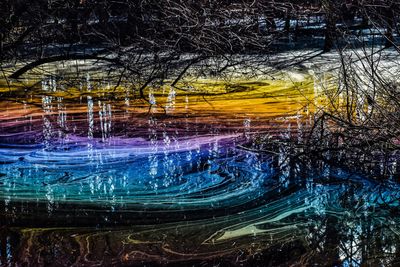


Swamps are murky brown and boring, right? Not so, with a careful combination of decomposition and the light hitting just right. When that happens, swamps in the southern US can transform from gloomy landscapes into dazzling displays of color.
These so-called “rainbow swamps” can be seen in wetland areas that are densely populated by bald cypress – or “swamp cypress” – trees, a type of conifer that is native to the southeastern US and thrives there, thanks to its high tolerance to frequently-flooded terrain.
While most conifers are evergreen, meaning they keep their needle-like leaves all year round, bald cypress trees are deciduous. When the fall comes, their needles first adopt a characteristically autumnal deep red-brown, before dropping off and landing in the swampy waters below as winter approaches.
So far, so normal. But it’s when the fallen needles begin to rot that the magic can happen. As they decompose, the needles leach oil into the water, which forms a film at the surface. Then, when the light hits the water’s surface at the right angle, the prismatic phenomenon appears. It’s basically the same thing as when there’s an oil slick in an ocean, except this is a natural phenomenon, and not terrible for the environment.
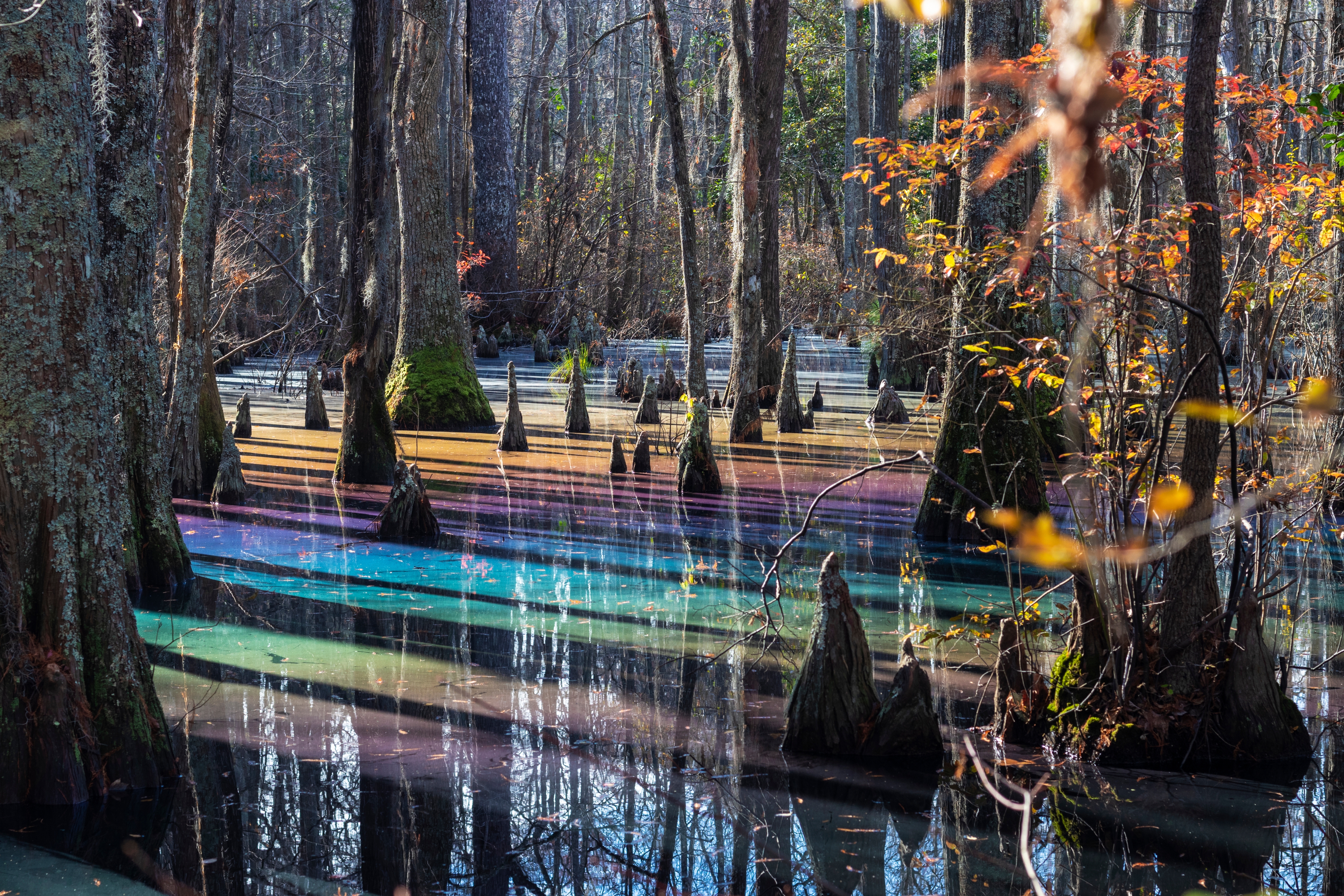
"The rainbow sheens found as a thin film on top of pooled water in swamps and marshes are the result of natural oils released by decaying vegetation or the biological processes of anaerobic bacteria reducing iron in soil,” Jeff Ripple, a former Florida swamp walk leader, told BBC News in 2018.
At that time, the internet took a sudden interest in rainbow swamps after Brent Rossen posted a stunning photo of one such swamp in Virginia’s First Landing State Park to Reddit, racking up 125,000 upvotes and 1,700 comments – including one that whimsically posed that drinking the water would cause a unicorn to appear and grant you superpowers. We’d suggest against doing that.
But this state park isn’t the only place that you can witness a rainbow swamp; they’ve also been seen in places like Tallahassee in Florida, as well as Martin Dies, Jr. State Park in Texas.
If you’re hoping to see the phenomenon for yourself, your best bet is to head to swamps with bald cypress trees in the winter. At this time of year, the Sun is more likely to refract at just the right angle to produce the rainbow colors. It also helps if the area is more sheltered from the elements. "Movement by sheet flow, current or wind disturbance would destroy the fragile rainbow film,” said Ripple.
An earlier version of this article was published in August 2025.