Humans
 PUBLISHED



This week, 200,000-year-old grass found in a cave shows ancient humans regularly replaced their bedding, test rovers will soon be sent to the Moon to prepare for humans' return to the lunar surface, and a new blood test could accurately identify stages of Alzheimer’s disease. Finally, we explore the Giant Magellan Telescope and how it could one day soon capture a direct image of an Earth-like exoplanet.
Create an IFLScience account to get all the biggest science news delivered straight to your inbox every Wednesday and Saturday.
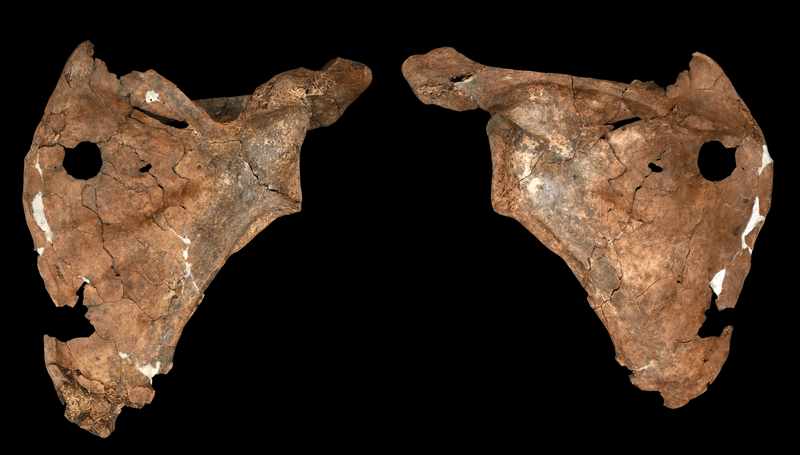
“Pretty Cool If You Ask Me”: Perfectly Preserved 121-Million-Year-Old “Feather Dragon” Fossil Reveals New Species With Incredibly Long Tail Feathers
How do you impress a partner? A big romantic gesture like in the movies? A bouquet of red roses? In the bird world, the answer is usually to flash your tail feathers, and it seems, thanks to a newly analyzed fossil, that sometimes the old ways are the best – and by old, we mean really old. Read the full story here
Seen Reports That The Global Population Is Set To Halve By 2064? Here's The Real Story
In 1968, a book hit the shelves that predicted nothing less than a full-on apocalypse. It advocated aggressive population control measures; anything less would result in global famines and environmental damage on a scale humanity simply couldn’t survive, it argued. Of course, that didn’t happen, which just goes to show you never can tell what the future holds. So, when we tell you that a new model has predicted a potential halving of the global population within the next four decades … maybe don’t panic just yet. Read the full story here
How Did Ancient Humans Make Their Beds? 200,000-Year-Old Grass Found In An Iconic Cave Just Revealed The Answer
If you’re the sort of person that doesn’t change their sheets regularly then you are officially less hygienic than a prehistoric cave-person. According to new research, ancient hunter-gatherers in South Africa frequently burned their used bedding and replaced it with a fresh mat of grass, revealing the importance our ancestors placed on making their beds. Read the full story here
NASA’s Moon Base To Cover "Hundreds Of Square Miles" – And The First Launch Could Be Just Months Away
NASA is going full throttle with its Moon plans. Just two months after it revealed its ambitious plans for a lunar surface base, the space agency has now announced more details of the several missions launching this year to get the Moon base started, as well as what it may include and even how big it will be. Read the full story here
New Blood Test Could Identify Stage Of Alzheimer’s Disease Just As Accurately As Expensive Scans
Testing levels of two different biomarkers in blood plasma can be as accurate as a costly and complex scan when determining the stage of Alzheimer’s disease. This is not so much about knowing who has Alzheimer’s and who doesn’t – it’s about figuring out how far it has progressed, and crucially who might therefore be a good candidate for treatments and clinical trials. Read the full story here
TWIS is published weekly on our Linkedin page, join us there for even more content.
Feature of the week:
The First Direct Image Of An Earth-Like Exoplanet Might Be Just Years Away Thanks To The Giant Magellan Telescope
Is our little corner of the universe special? So far, it looks like Earth is pretty exceptional, as most worlds we have spotted in the three decades since the first exoplanet discovery have been very large and hot. But this is partly due to limitations in our ability to spot smaller, cooler exoplanets, meaning our "pale blue dot" may not actually be as unique as it appears. A change set to reinvigorate the hunt for an exo-Earth is the development of a larger class of observatories. One of them, the Giant Magellan Telescope, is even set up to be capable of photographing an Earth twin directly. Read the full story here
More content:
Have you seen our e-magazine, CURIOUS? Issue 46, May 2026, is available now. This month, we asked, “Do Other Animals Have Pets?” – check it out for exclusive interviews, book excerpts, long reads, and more.
PLUS, the We Have Questions podcast – an audio version of our coveted CURIOUS e-magazine column – continues. In episode 21, we ask, “Are There Plants That Can Photosynthesize By Moonlight?”
Our Break It Down podcast now has a new monthly format, coming at you in both audio and visual. So tune in each month to hear about some of the wildest science stories and adventures we’ve been on. Kick off this month with “Artemis II Records, Neanderthal Not-Hybrids, And Introducing ‘Moon Joy’”
The Big Questions season 6 returns in June 2026, so here's our season 5 bonus episode to tide you over until then: Can Magic Be Used As A Tool In Science? You can catch up on the whole of season 5 here.