


 Humans
 PUBLISHED


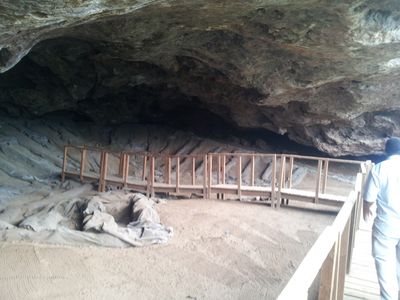


If you’re the sort of person that doesn’t change their sheets regularly then you are officially less hygienic than a prehistoric cave-person. According to new research, ancient hunter-gatherers in South Africa frequently burned their used bedding and replaced it with a fresh mat of grass, revealing the importance our ancestors placed on making their beds.
Evidence for this immaculate cavekeeping comes from the iconic site of Border Cave, which was continuously occupied by humans from about 220,000 to 43,000 years ago. The rock shelter thus documents the cultural evolution of early Homo sapiens, providing insights into the emergence of so-called “modern” behavior, which includes the development of symbolic practices.
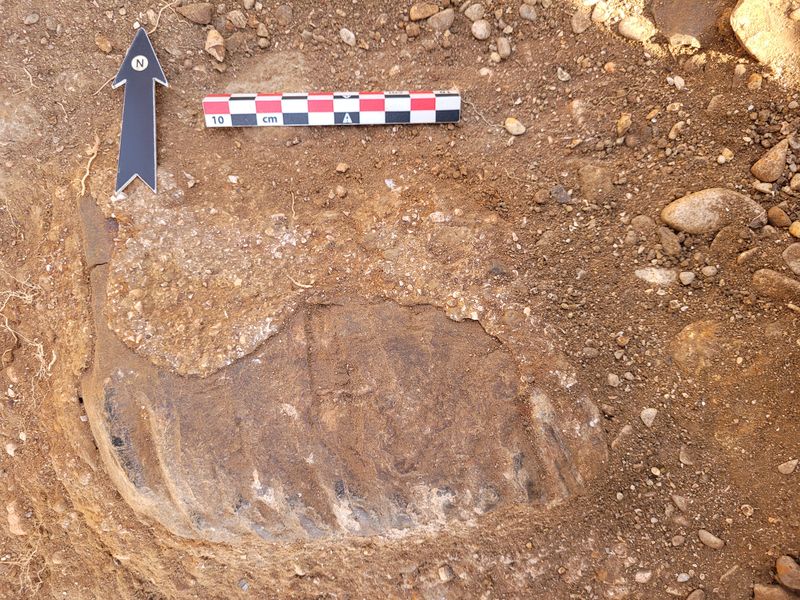
Yet the site also shows that the management of sleeping spaces began long before our species became truly modern. In total, the study authors examined six different ancient beds that have been remarkably preserved within the cave, ranging in age from 161,000 to 43,000 years – though some bedding at Border Cave has been dated to 200,000 years ago.
In most cases these beds were made of grasses from the Panicoideae subfamily – which includes numerous modern crops such as maize, millet, and sugarcane – although sedges were also used in some bedding. Clay was also identified in these ancient sleeping surfaces, although it’s unclear if this was used in the construction of the bedding or appeared later due to weathering of the bedrock.
Most remarkably, though, all beds were built upon a layer of ash, and many show signs of layering, whereby bedding was repeatedly burned and then reassembled on top of the charred or desiccated remains of the previous layer.
“The construction of bedding on existing or purposefully moved ash deposits was clearly a common behaviour throughout the occupations,” write the study authors. “The new observations provide further support for the idea that Border Cave's occupants routinely constructed bedding on re-worked ash deposits as a deliberate strategy,” they add.
This means that over almost 200,000 years, the cave’s prehistoric inhabitants stuck to a regular routine of making their beds by burning and rebuilding them. The fact that this practice emerged long before the first evidence for symbolic behavior – yet persisted for tens of millennia afterwards – suggests that the need to maintain an orderly sleeping space was present throughout our ancestors’ transition to becoming modern humans.
It’s unclear exactly why ash was repeatedly swept up and laid beneath new bedding, although the researchers suggest that this may have helped to deter insects from entering the space. Regardless of the ash’s purpose, though, the persistence of this behavior over such a long period shows that prehistoric humans actively managed their sleeping environments using fire, and maintained the same housekeeping traditions for hundreds of millennia.
So, have you made your bed this morning?
The study is published in the Journal of Archaeological Science.


 1
1