Humans
 PUBLISHED
 1
1





At some point in our evolutionary history, our ancestors made the leap from primitive hominins to sophisticated modern humans, though anthropologists have yet to agree on when this happened. For some, this status was reached when we attained a certain level of technological complexity, while others view the emergence of abstract thought as the rubicon of modernity – although a new study argues that neither of these markers are fit for purpose.
According to study author John Speth, Professor Emeritus of Anthropology at the University of Michigan, “technological complexity is always a work in progress, and deciding where to place the boundary between 'pre-modern' and 'modern' is arbitrary.” In other words, human technology is constantly advancing and is likely to continue to do so for as long as our species exists. Thus, just as the earliest hominins lacked the ability to make symmetrical handaxes, people in the 19th century were unable to produce flying machines or smartphones, while today’s population has yet to crack teleportation.
At what point, then, do we draw a line between primitive and modern human technology? Or, as Speth puts it, “how complex is complex enough?”
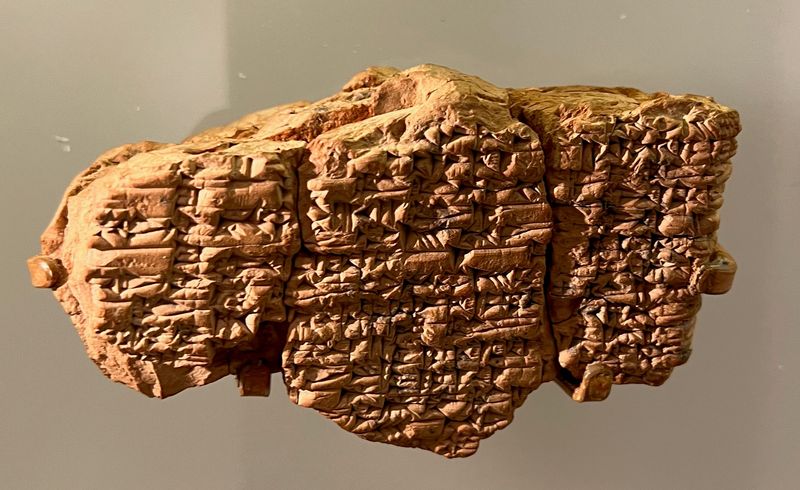
Turning his attention to the issue of symbolic thought, the author points out that researchers tend to identify the emergence of this very human trait with the appearance of non-utilitarian objects like body ornaments, or artworks like cave paintings and sculptures. However, this entails an assumption that functional items weren’t also imbued with spiritual or symbolic meaning in the minds of prehistoric humans.
“Many Paleolithic archaeologists work with the misguided notion that an item can either be symbolic or utilitarian, but not both at the same time,” writes Speth. “This assumption, whether explicit or implicit, flies in the face of well over a century's worth of ethnographic evidence and understanding.”
Indeed, as the author notes, Indigenous cultures worldwide are known to attach symbolic meanings and beliefs to all kinds of common things – including food, colors, the cardinal directions, landscapes, and weather phenomena. Yet if these abstract thought processes leave no material trace, how can we be sure that these beliefs didn’t also exist hundreds of millennia ago?
In other words, just because some prehistoric cultures didn’t produce rock art or sculpted figurines doesn’t mean they weren’t capable of abstract thought.
“Given the propensity of Indigenous societies to assign spiritual meanings to just about everything in their universe, it is quite likely that modern human behavior emerged long before a few of the world's peoples hit upon the novel idea of making and wearing beads or painting images on cave walls,” writes Speth.
Taking this argument a step further, he explains that if scholars assume that all utilitarian artifacts were no more than they appeared on the surface, then they automatically define ancient humans as completely rational beings whose thought processes were entirely economical. Yet we know for a fact that humans are the least rational species on Earth, as we are the only animal that concocts bizarre initiation rituals, worships holy texts, salutes and even dies for a flag, or gambles our precious economic resources away in casinos.
Suggesting that early human behavior may have been somewhat similar, Speth says that “the critical first steps in reframing the 'modern human origins' paradigm are just coming to recognize that non-rational beliefs and behaviors can be attached to the most mundane of materials and activities.” The bigger challenge, however, is finding evidence for these beliefs in the archaeological record.
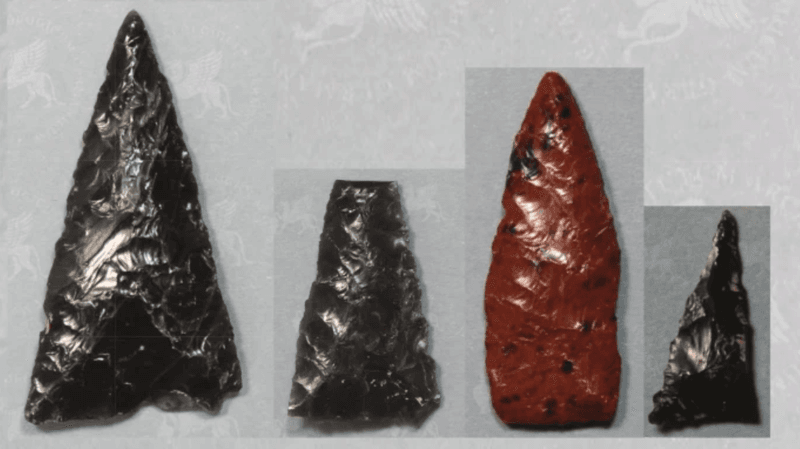
Offering “some admittedly very preliminary suggestions,” the author notes that we might find clues as to the origins of modern humans by studying the geographic provenance of stone tools at prehistoric sites. Those that show signs of having been transported over long distances, despite the availability of nearby lithic resources, might indicate that ancient humans traveled irrational distances to retrieve flint from locations that were perceived as spiritually powerful.
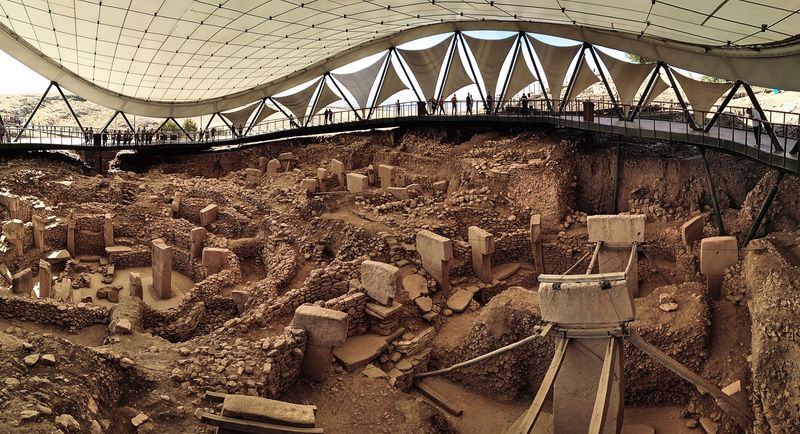
Pleistocene mortuary practices such as Neanderthal burials, meanwhile, may also offer insights into the origins of human modernity. For instance, at Sima de los Huesos in Spain, a group of pre-Neanderthals may have deliberately interred 29 skeletons in a deep pit some 450,000 years ago.
“Although the evidence from Sima is more difficult to interpret than Neanderthal burial practices, I wouldn't be surprised if further research shows that the human capacity for symbolic and spiritual behavior has a time depth of at least half a million years and perhaps more,” concludes Speth.
The study is published in the journal Quaternary Environments and Humans.