Humans
 PUBLISHED
 4
4


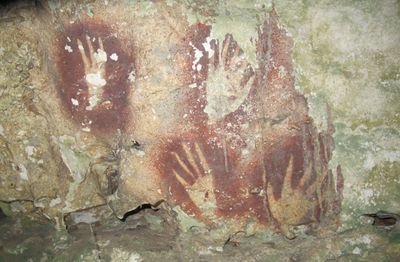


On an idyllic tropical island, archaeologists have found a cave wall that's been carefully adorned with pigment in an oddly familiar, yet wonderfully unique style. Geochemical analysis revealed that this prehistoric masterpiece was created at least 67,800 years ago, making it the oldest known rock art ever discovered.
The discovery comes from Sulawesi, an oddly shaped Indonesian island that's earning a reputation as the prehistoric Louvre of the East. This remarkable region has already made headlines for its prehistoric portrait of a fat-bellied pig (the oldest known figurative painting at 45,500 years old) and a complex hunting scene that stands as the world’s oldest narrative art (51,200 years old).
But this latest find is something else entirely. To create it, a person would have pressed their palm against the stone and sprayed a mist of pigment over it, leaving behind a sharp outline of their hand. While the technique is extremely similar to the iconic hand stencils left by Neanderthals elsewhere in Eurasia, these Indonesian prints are significantly older and come with a unique twist.
“The tips of the fingers were carefully reshaped to make them appear pointed. This feature may have had symbolic meaning, possibly linked to animals,” lead study author Maxime Aubert, an archaeologist specialising in geochemistry from Griffith University in Australia, told IFLScience.
The hand stencils were uncovered as part of a new survey that documented 44 rock art sites across Southeast Sulawesi, including 14 that were previously unknown to science. Remarkably, several of these caves preserve evidence of two distinct bursts of artistic activity, separated by nearly 35,000 years. This included both human stencils, as well as more recent figurative artworks of animals and the like.
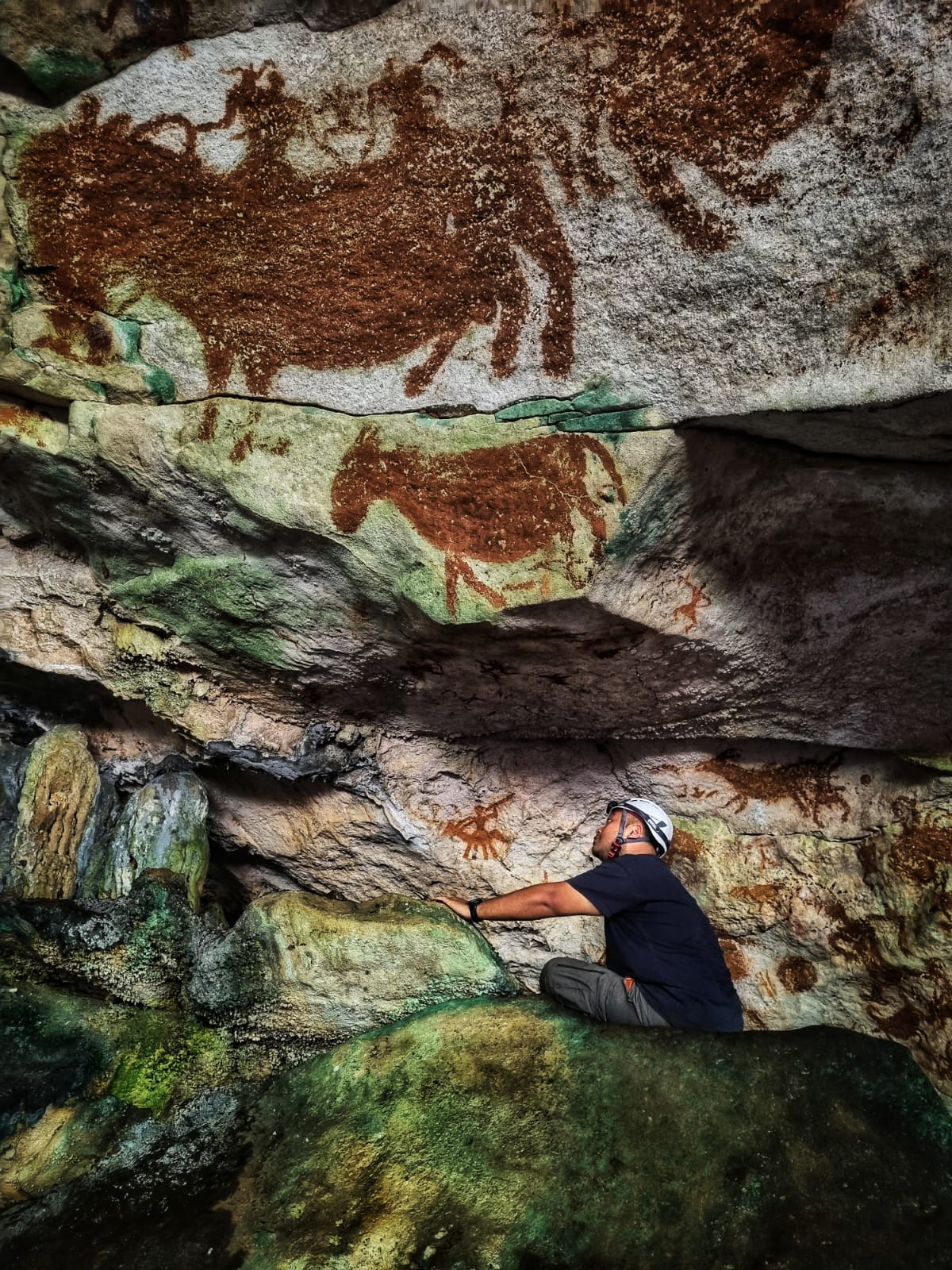
This shows how different human groups, separated by dozens of millennia, came to the very same caves to leave their marks. It's as if they functioned as enduring cultural landmarks, like limestone galleries or Pleistocene temples, that became a momentous archive of human creativity stretching across tens of millennia.
Like any work of great art, the hand stencils speak volumes about the people and culture that created it.
“The artists were early modern humans living in Southeast Asia during the Ice Age, at a time when sea levels were much lower and the region looked very different,” Aubert explained.
“Archaeological and genetic evidence from present-day Indigenous Australians and Papuans suggests they were part of the populations moving through Indonesia on their way toward Australia and New Guinea, and they are likely ancestors of Indigenous Australians and Papuans."
Their arrival in Sulawesi is surprisingly early, though. There’s some debate around when and how the first people reached Australasia. The more conservative view is that it was sometime around 50,000 years ago, while other research has suggested it could be closer to 65,000 years ago.
Making this discovery was both thrilling and humbling. It was one of those rare moments in science when you realise you are looking at something that changes how we understand our shared human story.
Maxime Aubert
Together with another recent genetic study on the question, the new cave art discovery suggests the earlier date is an enticing and realistic possibility.
The markings were dated using a cutting-edge technique – laser-ablation uranium-series dating – on the thin calcium-carbonate crusts that had formed on top of the pigment. Since these crusty bits could only grow after the painting was made, it provides the youngest possible age of the images.
At 67,800 years old, the human stencils are the oldest rock art ever studied, beating the previously known oldest art by around 1,100 years, which, funnily enough, is another set of hand stencils from Spain attributed to Neanderthals.
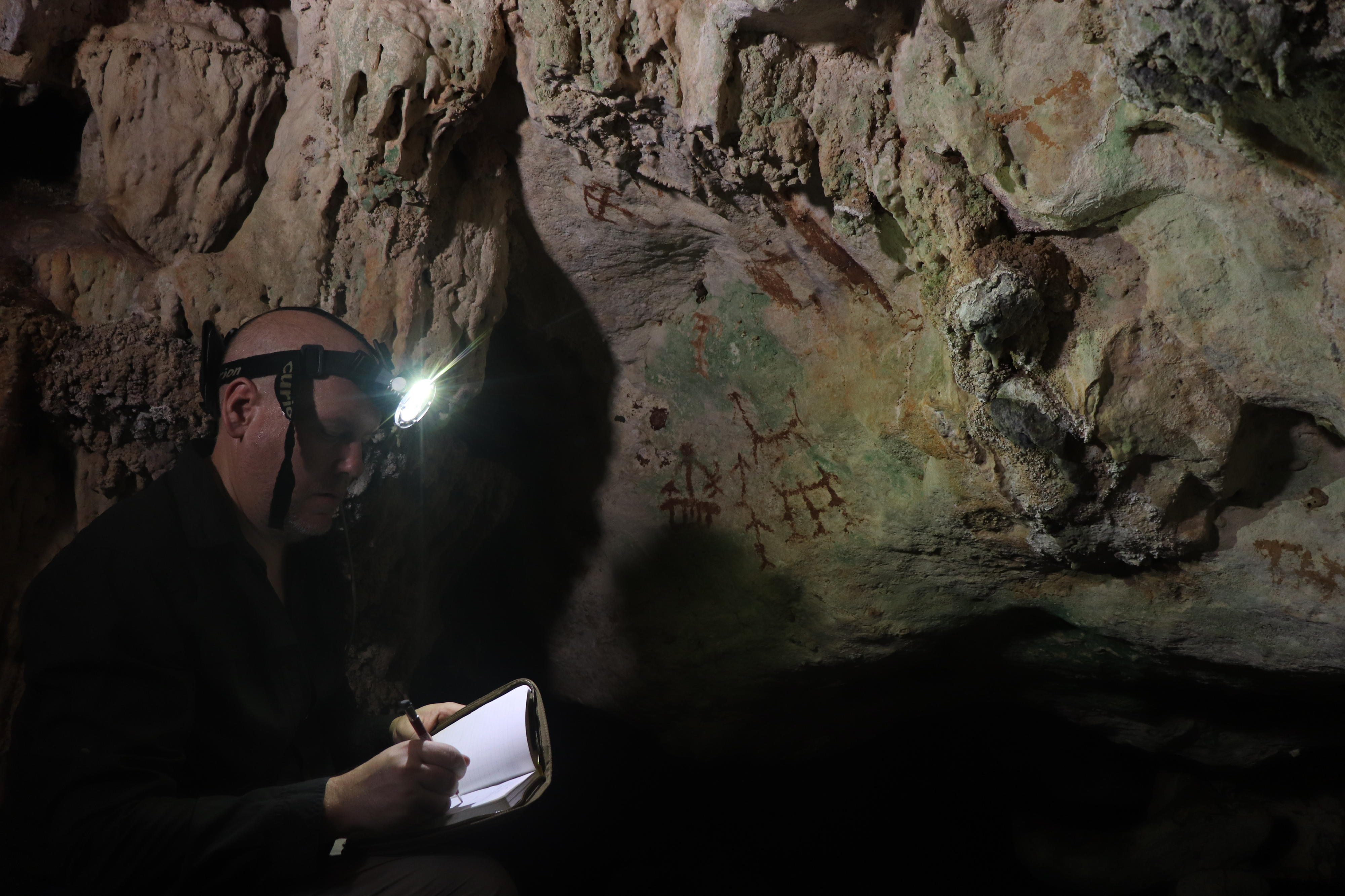
Not only does this cave art provide a dated record of human presence, but it also shows a pivotal moment when human creativity began to show itself in lasting physical artifacts.
“Creating images on cave walls suggests they were marking places that mattered to them and expressing ideas about identity, belonging, or relationships with the natural world. This was not a casual activity. It required planning, shared knowledge, and cultural meaning,” said Aubut.
The art-strewn cave walls in Sulawesi are likely to be just the tip of the iceberg. With further work, archaeologists hope to uncover even more prehistoric art that awaits discovery in nearby islands and beyond. That is, however, if it hasn’t been washed away by millennia of tropical storms and baking heat.
“Making this discovery was both thrilling and humbling. It was one of those rare moments in science when you realise you are looking at something that changes how we understand our shared human story,” commented Aubert.
“For us, this discovery is not the end of the story. It is an invitation to keep looking,” he concluded.
The new study is published in the journal Nature.