Humans
 PUBLISHED


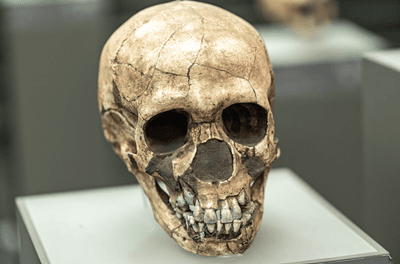


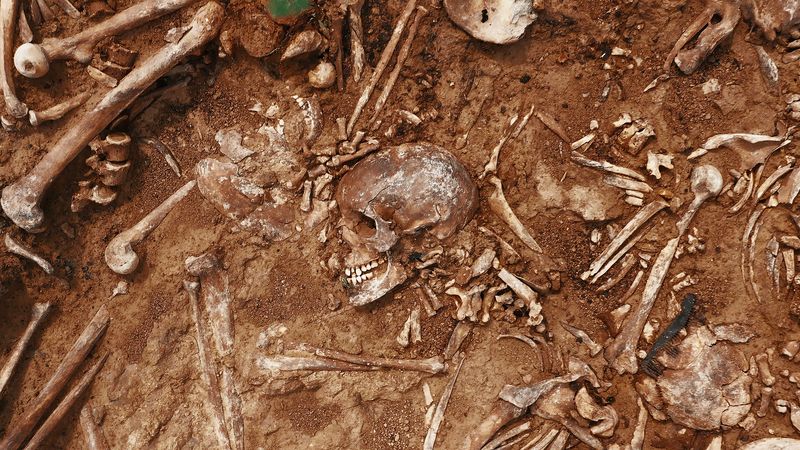
Neanderthals in France had a hunger for reindeer, although they were also partial to the taste of their own species. Among the thousands of animal bones discovered at the Les Pradelles cave, researchers have discovered the discombobulated carcasses of at least eight Neanderthals - including adults and children - who may have been consumed by cannibals when they fancied a change from deer.
The site was first excavated between 1967 and 1980, before further investigations between 2001 and 2013. Those searches revealed more than 20,000 reindeer bones, indicating that the cave was primarily used as a butchering site for this particular prey type.
However, scattered through the piles of reindeer skeletons, the various excavators also found 108 Neanderthal bones. At a minimum, these belonged to three adults, one sub-adult, one pre-adolescent and three children, although it’s unclear if more individuals are represented among this assemblage.
Tellingly, butchery marks were seen on many of these remains, with both mature and immature victims having been hacked apart using stone tools. Naturally, this all looks a lot like cannibalism, although it’s impossible to rule out funerary practices or other explanations for the cut marks on these Neanderthal bones.
Reexamining the entire osseous assemblage from these two previous rounds of excavations, researchers have now identified five more Neanderthal bits and pieces, all of which were broken while still fresh. However, no traces of butchery were found on these bones, which makes it hard to say if their prehistoric owners were eaten or not.
The study authors also note that the entire assemblage of Neanderthal remains is dominated by cranial elements like skulls, jawbones and teeth, which account for more than half of the hominin features at Les Pradelles. Intriguingly, they state that “human cranial overrepresentation has been interpreted as a criterion to identify cannibalism.”
Among the postcranial elements found at the site were the thigh bones of both adults and children, and the finger bones of a juvenile Neanderthal.
Finally, the researchers point out that butchered Neanderthal bones appear across multiple sediment layers, suggesting that they were deposited repeatedly between 60,000 and 50,000 years ago, rather than all at once. This, they say, points towards at least three “distinct episodes of cannibalism at Les Pradelles.”
Overall, though, the consumption of Neanderthals appears to have been rare and sporadic, with the vast majority of meals consisting of wild game. The authors therefore conclude that their data “support the interpretation of Les Pradelles as a short-term Neandertal hunting camp, focused on the butchery and processing of ungulate carcasses, mostly reindeer, and, occasionally, Neandertals.”
The study has been published in the Journal of Quaternary Science.