


 Humans
 PUBLISHED


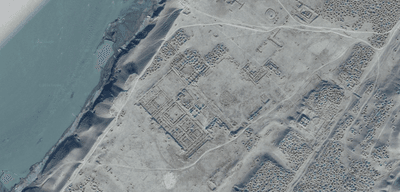


Over 4,000 kilometers (2,485 miles) from Athens, in the rocky terrain of Afghanistan, stand the dusty remains of an amphitheater, broken statues of Zeus, Corinthian columns, and gold coins emblazoned with the faces of Greek kings.
This is the frontier where the ambitions of Hellenistic civilization reached their limits and buckled, before shattering into ruins.
Today it’s known as Ai-Khanoum or Oyxonim, but the original name has been lost to history. The city is located in north-eastern Afghanistan’s Takhar Province between the Amu Darya and Kokcha rivers, surrounded by fertile farmland.
Little remains today, but researchers have identified a lower town — dominated by a sprawling palace complex and featuring administrative buildings, an arsenal, a gymnasium, several temples, and a large open-top theater — and a fortified upper town, or acropolis, that served primarily a defensive role. The influence of Greek culture is everywhere, from the architecture and artworks to the city layout.
It was inhabited for a relatively brief blip from the late 4th century BCE to the mid-2nd century BCE. The settlement was abandoned by 145 BCE when local nomads seized upon the ruling empire's internal troubles and raided this far-flung outpost, forcing its inhabitants into the hills.
Given its dating, some have suspected Ai-Khanoum was the work of Alexander the Great and his relentless campaign of conquests across Asia. Most scholars, however, now believe it was established under his successor, Seleucus I (305–281 BCE), who founded the Seleucid Empire, a Greek State that stretched across the Middle East from southeastern Europe to the borders of India.
A popular myth holds that the site was discovered in 1961 when Mohammed Zahir Shah, the last king of Afghanistan, was hunting in the region and noticed the outlines of a city. In fact, evidence of an ancient settlement here was first identified in 1925 by French archaeologist Jules Barthoux. It wasn't until 1963 that another French researcher, Daniel Schlumberger, uncovered evidence of the city's distinctly Greek flavour.
It was investigated through a series of excavations by the French Archaeological Delegation in Afghanistan, but progress was stalled in 1979 following the Soviet invasion of Afghanistan. Instability has persisted since, through the Afghan Civil War in the '90s and the US-led invasion that began in 2001, drawing excavations to a standstill.
Today, Ai-Khanoum has been royally ravaged by looters and left in a sad state of disrepair, seemingly forgotten once again.
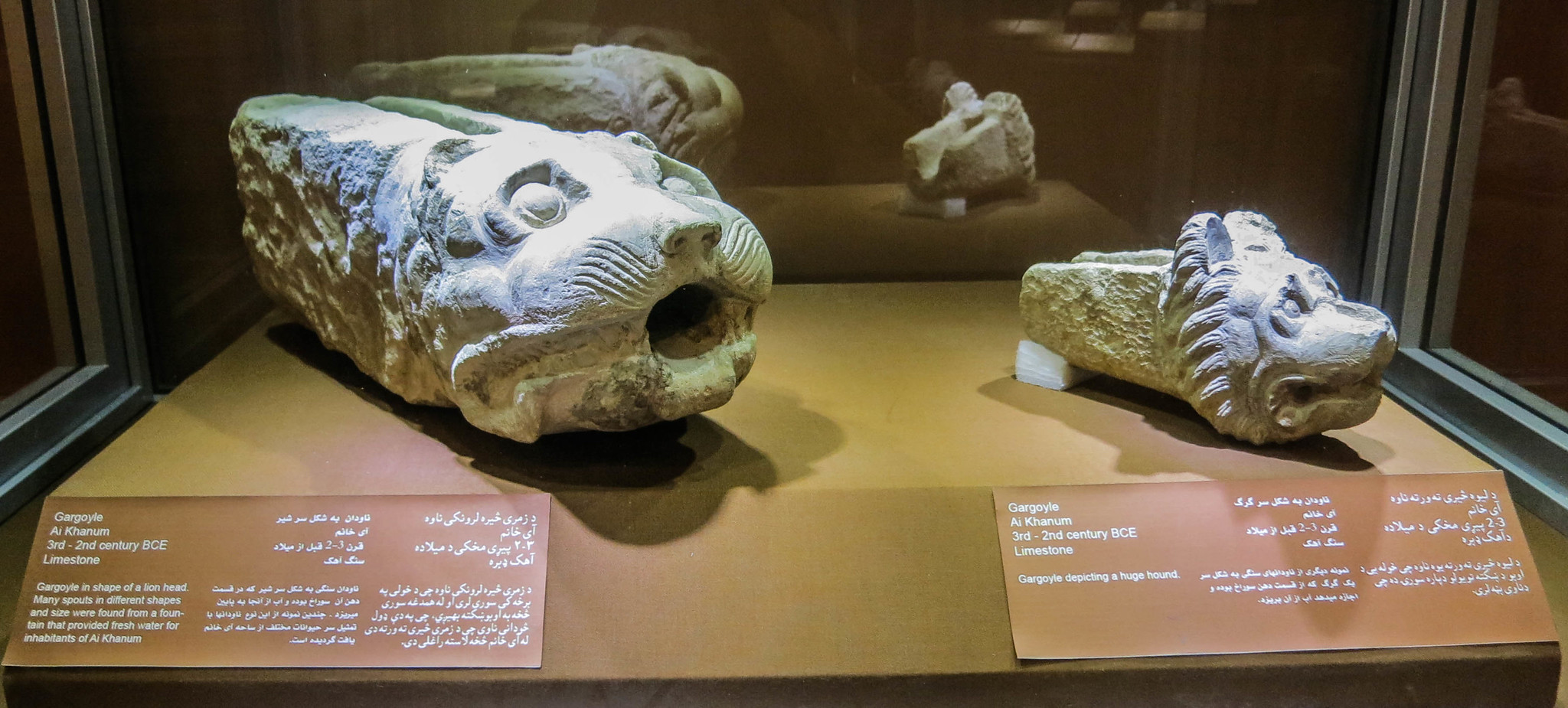
Afghanistan is sometimes painted as a desolate backwater that’s out of step with the rest of the world. However, Ai-Khanoum highlights that this ancient land is, in fact, brimming with a rich and unusual history.
Sitting at the crossroads of Asia, its mountain passes formed a vital highway for the Silk Road, channeling goods and ideas between China, India, Persia, and the Mediterranean world for millennia.
Its strategic location has also brought no shortage of trouble. For thousands of years, the region has been fought over and passed between a remarkable string of empires, including the Achaemenid Persians, Alexander the Great's Macedonians, the Kushans, the Sassanids, the Arabs, the Mongols, and the Mughals, not to mention the modern-day empires that tried and failed to make it their own.
A Greek city thousands of kilometers from the Aegean Sea might seem strange at first glance, but for Afghanistan, it's just another footnote in its long and disorienting history.


 2
2