


 Humans
 PUBLISHED



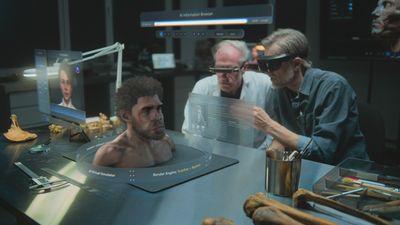


Back in 2012, the famous geneticist George Church wrote that it may be feasible to clone a Neanderthal, provided an “extremely adventurous female human” agreed to act as a surrogate mother.
Since then, Church and his colleagues at Colossal Biosciences have been busy working out how to de-extinct other Ice Age creatures like the woolly mammoth. But could they really bring back our long-lost relatives?
How to resurrect a Neanderthal
Colossal already claims to have achieved its first de-extinction by creating a trio of dire wolves in late 2024. These ancient canids last walked the Earth 10,000 years ago, and their remarkable comeback was hailed by some as a milestone in the quest to undo extinction.
In reality, however, the animals produced by Colossal are just genetically engineered gray wolves with a bunch of altered genes that make them look a bit more like hypothetical dire wolves. Similarly, the plan to de-extinct mammoths essentially involves doctoring the DNA of Asian elephants, rather than cloning an actual prehistoric proboscidean.
This is because cloning can’t be achieved without a complete, intact sample of DNA belonging to the target species. And that’s something we simply don’t have for any prehistoric animal.
However, in 2010, scientists succeeded in sequencing the entire Neanderthal genome. According to Church, this means that it may be possible to engineer the full suite of Neanderthal genes and insert them into the DNA of a human cell.
Theoretically, this altered DNA could then be implanted into an egg and implanted into a willing surrogate who would then carry the developing Neanderthal to term, before giving birth to a live archaic hominin.
Should we bring back Neanderthals?
Simple, right? Wrong.
For one thing, we have no idea if Neanderthal DNA is compatible with human pregnancies. This means we don’t know if the surrogate’s body would reject the fetus, resulting in a miscarriage that could cause significant physical and emotional harm.
Even if this doesn’t happen, giving birth to a Neanderthal baby may be highly dangerous for a Homo sapiens woman. The birth canal is designed to accommodate newborns of a particular size and proportion, both of which vary between the two species.
This is one of the reasons why, in general, cloned animals have high rates of pregnancy loss, stillbirth, and congenital health defects. In addition to this, cloned animals often have an increased susceptibility to disease and a below-average lifespan.
Now consider that we aren’t talking about cloning a sheep, but an actual human species that may be as cognitively, behaviorally, and emotionally complex as we are, and the ethical potholes suddenly become a lot deeper.
For all of these reasons, the cloning of humans is illegal in many countries and tightly regulated everywhere else. And let’s be clear, if we’re talking about cloning Neanderthals, we’re talking about cloning humans.
In fact, bringing back a Neanderthal is probably even more problematic than cloning a modern human.
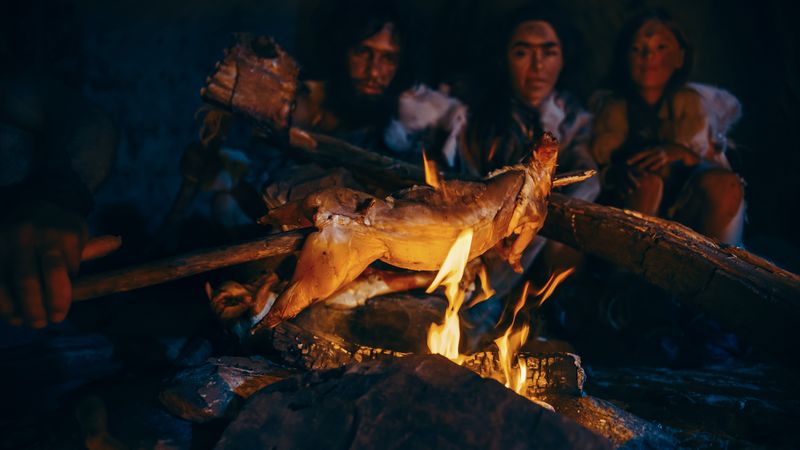
After all, we don’t know what Neanderthal babies and children needed to survive. Recent research suggests that they grew much faster than Homo sapiens infants, and there’s no reason to believe that human breast milk or baby formula would meet the nutritional needs of a Neanderthal newborn.
This rapid growth likely reflected an adaptation to glacial environments, where a chunky body provided extra warmth and therefore assisted with survival - so how would a Neanderthal fare in today’s ever-warming world? And what rights would this prehistoric human have in our modern society?
The deeper you go down the rabbit hole, the more problems you encounter. For instance, even if we somehow managed to raise a healthy Neanderthal, what on Earth would it do with itself? Being the only one of its kind, in an environment that bears no resemblance to the one it evolved in, this de-extinct hominin may become socially alienated, with potentially severe mental health consequences.
All in all, then, it’s unclear if we really could clone a Neanderthal. But even if we could, it may just be better to let sleeping dire wolves lie.

 2
2