Humans
 PUBLISHED


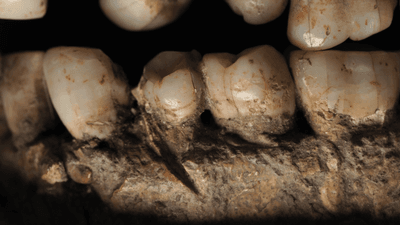


The very first humans to develop funerary practices may have experienced some pretty horrific violence during their lifetimes. One member of the group even appears to have been attacked with a sharp object, leaving a deep wound that damaged part of the jawbone and one tooth.
Originally discovered in 1979 at the Qafzeh Cave in Israel, the cranium belongs to a member of an ancient Homo sapiens population that reached the Middle East long before the main human expansion out of Africa, and died out without leaving any genetic legacy. Known as Qafzeh 25, the individual was one of at least 27 skeletons thought to have been deliberately buried near the cave’s entrance between 92,000 and 145,000 years ago.
Examining the fossil using high-resolution micro-computed tomography, researchers have now identified a nasty-looking injury on the left side of the face. The lesion affects both the mandible and one of the lower premolars, and its morphology suggests that it was caused by a sharp object.
Because of the location of the gash, the study authors suspect that it was probably the work of a right-handed assailant. They therefore propose that the injury represents a case of interpersonal violence using a sharp weapon, rather than some sort of accident or mishap.
“The combination of a lesion consistent with sharp-force trauma and its left-sided facial position renders an interpersonal interpretation more plausible than an accidental one, even if the latter cannot be categorically ruled out,” write the researchers. “Qafzeh 25, an archaic Homo sapiens individual from the Middle Paleolithic, would represent the earliest documented case of sharp force trauma in the archaeological record,” they add.
The only other comparable example comes from the famous Shanidar Cave in Iran, where a 40,000-year-old Neanderthal was discovered with a possible sharp force trauma on one of its ribs.
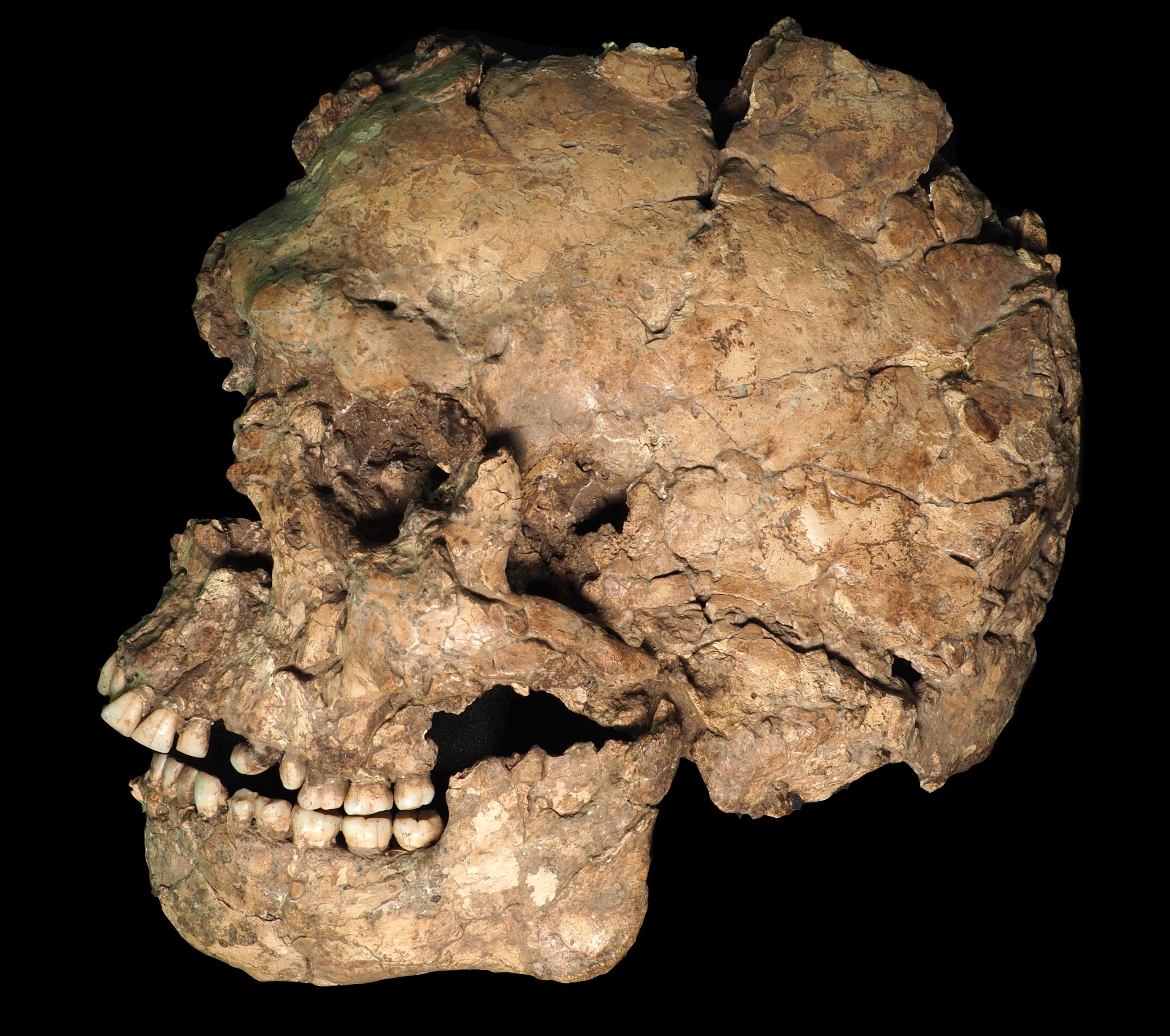
Fortunately for Qafzeh 25, the blow did not prove fatal and the bone shows signs of healing. The fact that the injury didn’t reach the pulp chamber of the damaged tooth may have saved this individual from suffering a potentially life-threatening infection, while it’s also possible that community care played a role in their recovery.
In addition to the wound, the researchers noted cavities and enamel defects in Qafzeh 25’s teeth. Similar dental pathologies have previously been noted in other members of the Qafzeh community, with each individual displaying carious lesions in 40 percent of their teeth.
This is by far the highest proportion of dental problems in any known Palaeolithic population, and suggests that the diet, environment or genetics of the Qafzeh hominins wreaked havoc on their oral health.
Finally, the researchers examined the taphonomic processes that affected the state of the Qafzeh 25 fossil after death, and concluded that it was not exposed to the elements or interfered with by carnivorous animals. This confirms that the body was deliberately buried almost immediately after expiring, reinforcing the idea that the cave acted as a formal burial site for this archaic Homo sapiens community.
"These findings provide new evidence in the ongoing debate about the origins of complex behaviors such as interpersonal violence, the care of injured or ill individuals, and funerary practices - fundamental aspects for understanding the social and cultural evolution of our species," said study author Ana Pantoja Pérez in a translated statement.
The study is published in the journal Scientific Reports.