Humans
 PUBLISHED
 1
1


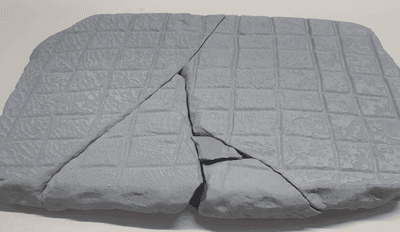


An ancient board game discovered at a Roman frontier fort near Hadrian’s Wall has been recreated using 3D scanning and printing, enabling members of the public to enjoy the antiquated pastime for the first time in nearly 2,000 years. Known as Ludus Latrunculorum, the game is thought to resemble draughts, in which two players face off and attempt to trap their opponent’s pieces.
Researchers first uncovered the gaming board at the archaeological site of Vindolanda in northern England in 2019. Established in 85 CE, this military settlement was home to several thousand people, including a large number of soldiers as well as women, children, and other regular civilians.
The stone board was found beside a third-century road rather than within the fort itself, suggesting that it was used by members of the non-military population. In the years after Vindolanda was abandoned, the relic was repurposed as a flagstone for a farm that was established at the site, and had been broken into five pieces by the time it was discovered by archaeologists.
After scanning all five of these, the researchers were then able to 3D-print a replica of the intact board using polylactic acid plastic (PLA). Visitors to the Roman Army Museum, which is located a few miles west of Vindolanda, can now enjoy a game of Ludus Latrunculorum using this recreated board.
Just like draughts, this ancient game is played on a gridded board and requires players to either capture or immobilize the pieces of their adversary. So far, 16 gaming boards have been found at Vindolanda, providing insights into the Romans’ love of strategy games.
In fact, pretty much everywhere Hadrian went, his soldiers seem to have taken their favorite board games with them. Just by Hadrian’s Gate in Jerusalem, for instance, Roman legionaries scratched out a game of Alquerque, which originated in ancient Egypt and is thought to have given rise to the modern game of checkers.
At Hadrianopolis in Türkiye, meanwhile, researchers have discovered gaming pieces that were probably used to play either Ludus Latrunculorum – which is also known as Ludus Latrunculi – or a backgammon-like game called Doudecim Scripta. Researchers think these games were particularly popular among soldiers as they helped them hone their strategic thinking skills.
Yet board games were by no means reserved for the military, and the evidence at Vindolanda suggests that people from all walks of life enjoyed playing them simply for fun.