Humans
 PUBLISHED


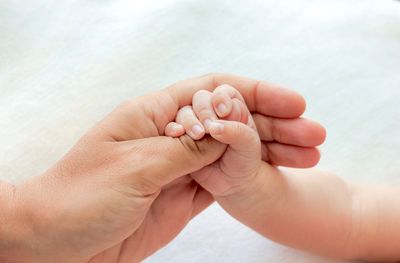


There’s a growing appreciation among anthropologists that Neanderthals were more similar to modern humans than we previously thought, although new research indicates that the babies of our extinct cousins may have been rather different to our own littl’uns. Based on a new analysis of a Neanderthal infant that lived just over 50,000 years ago, it appears that these prehistoric sprogs were absolutely huge – at least in comparison to Homo sapiens babies.
Originally discovered in the Amud Cave in Israel in the 1990s, the skeleton in question is the most complete example of a Neanderthal infant ever found. Dated to between 51,000 and 56,000 years ago, the specimen consists of 111 skeletal fragments, although until now, only the cranial bones had actually been studied.
Analyses of the wee Neanderthal’s teeth, for instance, have previously allowed scientists to conclude that the youngster died at roughly 5.5 months old. By examining the rest of the skeleton, however, researchers have now shown that this individual was similar in size to a modern human toddler more than twice its age.
For instance, the proportions of the upper limb bones are equivalent to those of a 13.7-month-old Homo sapiens infant, while the lower limbs match those of modern human children between the ages of 12 and 14 months. The study authors also estimate the Neanderthal baby’s height to fall within the range of 70.3 to 78.6 centimeters (27.7 to 31 inches), which means it was potentially as tall as a 14-month-old human boy.
According to the researchers, these findings suggest that “Neanderthals might have followed a unique and fast growth pattern in early life,” and seem to have dwarfed infants belonging to our own species. And while it’s hard to make generalized claims given that so few Neanderthal babies have been discovered, the study authors say that a small number of other finds from elsewhere appear to display a similar growth trajectory.
Interestingly, recent work has suggested that Neanderthal fetal development was pretty similar to that of Homo sapiens, which means that the two species may not have differed much at birth. However, the authors of the new study suggest that Neanderthals may have grown much more quickly than modern humans in their first few months outside the womb, before the growth patterns of the two species evened out later in childhood.
Furthermore, despite the young age of the Amud specimen, the researchers say it already displays a number of hallmark Neanderthal traits, such as a “robust clavicle” and a straight first rib. This “indicates that Neanderthals’ unique morphology appears at a very young age,” explain the authors.
The accelerated growth rate of Neanderthal infants probably reflects the fact that they had higher energy demands than modern humans. After all, Neanderthals evolved in the frigid Eurasian climate and therefore needed large bodies in order to generate as much heat as possible. Our species, on the other hand, emerged in Africa, where the warmer conditions placed no such demands on us as babies.
“This suggests an evolutionary strategy emphasizing accelerated development in the early years of life, likely advantageous in the harsh environments Neanderthals inhabited,” conclude the researchers.
The study is published in the journal Current Biology.