Humans
 PUBLISHED
 1
1




What you'll discover in this article
- In the new NatGeo series Pompeii: Out of Time with Tom Hiddleston, experts explore what science can tell us about the people, place, and eruption behind one of history's most shocking true stories.
- IFLScience's exclusive interview with NatGeo explorer and archaeologist Professor Caitie Barrett dives into what the last days of Pompeii were really like, and where history has a habit of getting it wrong.
- As Barrett told IFLScience, it's a site that humans have been studying for so long that the archaeology of Pompeii has its own archaeology. “The dig that I co-direct, we often find the physical remains of excavations from the 19th century.”
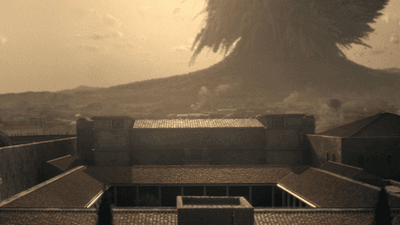
August 24, 79 CE, was a very bad day to be a resident of Pompeii. After enduring days of the ground beneath their feet shuddering, the nearby volcano of Vesuvius erupted, releasing 100,000 times the thermal energy of the atomic bombs dropped on Hiroshima and Nagasaki.
The people of Pompeii had time enough to panic, but not everybody got out alive.
This, says NatGeo explorer and archaeologist Professor Caitie Barrett, is one of the most common misconceptions surrounding the story of Pompeii. Many think that the fiery events of that day swallowed everyone in the Roman city – at that time thought to be around 20,000 people – in pyroclastic flow.
In fact, while the exact death toll remains unknown, we’ve only found evidence to suggest around 2,000 people died (some of whom had their brains turned to glass).
Thousands of people evacuated the city. The archaeological record indicates that some evacuations were even planned, suggesting at least a few Romans knew something big was coming. Tom Hiddleston takes us through the evidence of these human stories in his new NatGeo series, Pompeii: Out Of Time.
In episode one, we meet a potential survivor first thought to be the story of “Julius Felix”. Excavation records show this Felix to have organized a planned evacuation of their bath house property ahead of the eruption of Vesuvius – no horses, no carts, and no treasures were at the property when it was buried in the pyroclastic flows.
So, how did Felix know to get out of dodge? In his quest to find out, Hiddleston soon learns that this Julius was, in fact, a Julia – one of Pompeii’s many female business owners.
Hiddleston is no doubt not alone in thinking that Rome was a patriarchy and women were unlikely to have been given the rights to own property and run a business. It’s an idea repeated in history, but one that doesn’t match up to the archaeological record.
So, where does this pervasive idea stem from?
When we look at the archaeological and the inscriptional record from a place like Pompeii, we can see that women were active in pretty much all spheres of society.
Prof Caitie Barrett
“I think we sometimes imagine ancient history the way that the ancient historian described it to us, and through their perspective, and a lot of ancient authors were elite men, and they present the world the way they saw it and the way they wanted others to see it,” said Barrett to IFLScience.
“So, women sometimes don’t get their full due in those accounts.”
“When we look at the archaeological and the inscriptional record from a place like Pompeii, we can see that women were active in pretty much all spheres of society, from wealthy business owners to enslaved people to householders, and workers who were just trying to feed their families and get through their days. You get a much richer picture when you look at all these sources of evidence that come from daily life and not just elite accounts.”
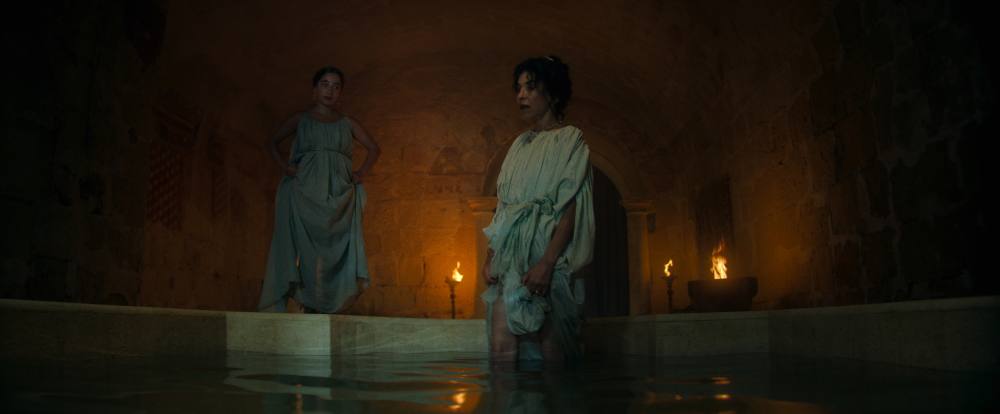
Not only was Julia Felix a successful business owner, but she was seemingly self-made. A sign outside her bathhouse described her as the daughter of “spurious” – meaning unknown, the suggestion being that either she or her father was born out of wedlock. Something of a scandal in 79 CE, and yet a fact she chose to advertize.
So, how did this supersmart Julia Felix know to evacuate? It’s here, says Barrett, that we find ourselves “bumping up against the limits of the archaeological record. We just don’t know. Archaeology can’t get us inside people’s heads.”
The dig that I co-direct, we often find the physical remains of excavations from the 19th century.
Prof Caitie Barrett
Perhaps not, but there is much that it can reveal about the lives of ancient people, and Pompeii – with its uniquely good preservation – is packed full of evidence to dig into.
From graffiti to raunchy paintings and – of course – the haunting body casts of its dead, the ancient city has revealed much of its story to us.
So long have we been studying it that Barrett says the archaeology of Pompeii actually has its own archaeology.
“The dig that I co-direct, we often find the physical remains of excavations from the 19th century,” she said. “We’ve found terracotta pipes that these guys were smoking, the tools they were using. This is a place where a lot of people have been working for a long time.”
As for Vesuvius, it’s thought the volcano has erupted around 50 times in its history and it remains active to this day. Residing in a densely populated area east of Naples, it’s considered one of the highest-risk volcanoes in the world according to the Italian government.
However, unlike the people of Pompeii we modern humans enjoy the reassurance of volcanic monitoring, enabling us to predict eruptions before they happen and evacuate residences accordingly.
As for what signs Julia Felix was reading in 79 CE? Check out the new series to find out what the last days of these Romans really would’ve been like.
Pompeii: Out Of Time with Tom Hiddleston premieres in the US on July 22 and in the UK on July 23 on NatGeo TV. Streaming on Disney + and Hulu from July 23.