Humans
 PUBLISHED
 1
1





“If I could offer you only one tip for the future, sunscreen would be it.” With skin cancer rates on the rise, this iconic opening line from Baz Luhrmann’s 1997 cult classic song Everybody’s Free (To Wear Sunscreen) seems to become more prophetic with each passing year. But what did ancient humans do to protect themselves from the Sun’s harmful ultraviolet rays?
Ancestral pigmentation: a natural sunscreen?
Until relatively recently, the majority of humans were dark-skinned. Even in Europe, it wasn’t until the Iron Age – which began around 1200 BCE – that lighter pigmentation became common.
Darker skin contains more melanin, which provides protection against UV radiation. However, by blocking the Sun’s rays, it also reduces the body’s ability to produce vitamin D. It’s therefore thought that lighter skin evolved slowly as people inhabited more northerly latitudes, where a lack of sunlight could easily lead to vitamin D deficiency in people with too much melanin.
Early humans, of course, evolved in Africa and spent much of their evolutionary history on the sun-baked savannas. A popular theory therefore states that our ancestral dark pigmentation helped us to survive by protecting us from skin cancer.
However, a study published earlier this year challenges that idea by analyzing skin cancer trends among people with Anglo-Celtic ancestry living in Australia. Despite a lack of melanin, members of this population generally don’t develop skin cancers until after they had reached reproductive age.
This suggests that darker pigmentation may not have evolved as a direct response to the threat of skin cancer, as even people living in sunnier climates are unlikely to die from this disease before passing on their genes. Instead, the selective pressure favoring high melanin levels may be driven by some of the other harmful effects of solar radiation, which can cause sunburn-induced dehydration and destroy vital nutrients that support fetal development, such as folate.
Ancient Sunscreen
Even those with dark skin still need to protect themselves from the Sun, and one of the best natural sunscreens is ochre. This clay pigment contains iron oxide, which helps to diffuse ultraviolet radiation.
In a 2015 experiment, researchers discovered that more fine-grained ochre has a higher sun protection factor. Amazingly, early Homo sapiens living in the famous Qafzeh Cave in Israel deliberately overlooked their local sources of ochre and instead imported a finer-grained variety from over 60 kilometers (37 miles) away, suggesting they may have been aware of its radiation-blocking power.
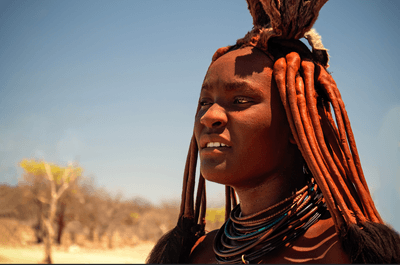
Even today, ochre is used as a sunscreen in parts of Africa, where it is applied to the skin either on its own or with a binder such as clarified butter or animal fat. Interestingly, the archaeological record depicts a massive increase in the use of ochre about 40,000 years ago, which coincides with the so-called Laschamp event, when the Earth’s magnetic field lost its ability to filter out ultraviolet radiation for about 300 years.
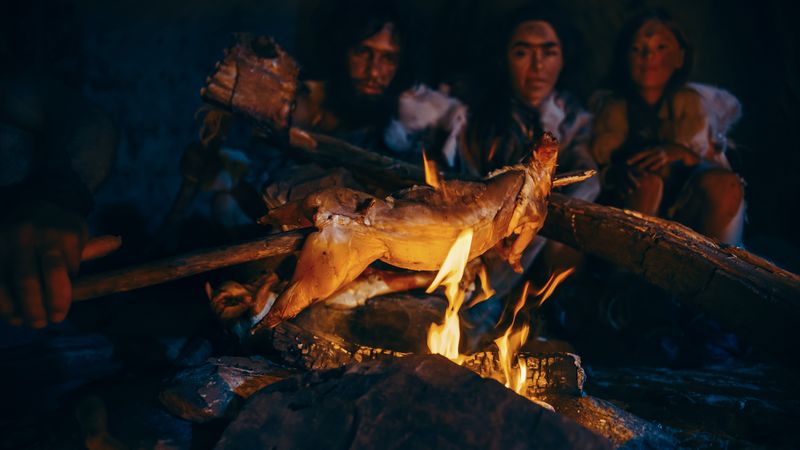
Funnily enough, this also aligns with the period in which Neanderthals became extinct, leading to suggestions that they may have died out because they weren’t as good at protecting themselves from the Sun as we are. For instance, ancient Homo sapiens used bone awls and needles to tailor fitted clothing, while Neanderthals are thought to have worn their animal pelts looser.
A combination of protective clothing and ochre may therefore have helped modern humans survive the Laschamp event and escape the fury of the Sun, while Neanderthals fried under the intense ultraviolet radiation.
It’s worth mentioning that the link with the demise of the Neanderthals is highly speculative, and the connection may only be coincidental. That said, the increase in ochre use provides some evidence that Sun protection was as important for prehistoric humans as it is for us. Or, as Luhrmann says in the final line of his song, "Trust me on the sunscreen."