Health and Medicine
 PUBLISHED
 1
1


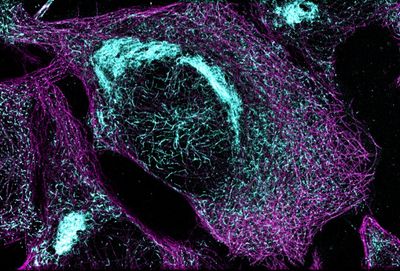


Testing levels of two different biomarkers in blood plasma can be as accurate as a costly and complex scan when determining the stage of Alzheimer’s disease. This is not so much about knowing who has Alzheimer’s and who doesn’t – it’s about figuring out how far it has progressed, and crucially who might therefore be a good candidate for treatments and clinical trials.
There are four broad stages of Alzheimer’s disease, according to the latest criteria published by the Alzheimer’s Association Workgroup in 2024. These initial, early, intermediate, and advanced stages are identified by testing for different combinations of altered proteins that are known to be present in the disease.
This process may involve testing cerebrospinal fluid, which is collected in a procedure known as a lumbar puncture, as well as scanning the brain using a radiotracer that binds to specific proteins: a positron emission tomography (PET) scan.
While both are considered safe, lumbar punctures can be painful and may cause side effects like headaches. PET scans are expensive and time-consuming, and some patients may struggle with having to spend long periods of time in a scanner due to things like claustrophobia.
Blood tests, on the other hand, may be an easier option for many people, as well as being more affordable and easily scalable to reach as many patients as possible.
For these reasons, lots of research has gone into the development of diagnostic blood tests for Alzheimer’s.
A tale of two biomarkers
One such blood test that was approved recently looks for the presence of phosphorylated tau 217 (p-tau217), a modified form of the tau protein that is used as a proxy for Alzheimer’s pathology in the brain.
“We tend to think of p-tau as a toxic and bad thing, and that seems to be the case in Alzheimer’s disease,” Fernando Gonzalez-Ortiz, MD, PhD of the University of Gothenburg previously told IFLScience.
P-tau217 “has demonstrated excellent performance for identifying Aβ pathology [amyloid β, the other major pathological protein in Alzheimer’s],” write the authors of a new study.
Let’s break that down. Tau protein itself is a problem – it builds up into tangled masses that Gonzalez-Ortiz told us are actually “the main driver of cognitive decline in Alzheimer’s disease.” However, what the statement above means is that levels of p-tau in the blood correlate well with the amount of Aβ pathology in the brain, a totally different protein but just as important in Alzheimer’s disease.
If you’re looking directly at the brain itself using a PET scan, you can physically detect the Aβ and see where it’s accumulating, but with a blood sample you’re relying on a biomarker as a proxy for that. It just so happens that a phosphorylated form of another protein is about the best one we have.
But while the p-tau217 blood test may be good at identifying who has Alzheimer’s initially, its accuracy falls off when you get to a more advanced stage of the disease.
That’s where the new research comes in. The scientists, led by a team at Lund University in Sweden, have added another biomarker in the mix, and come up with a test that they say continues to be effective in more advanced disease stages – just as good as the conventional PET scan.
“Minimally invasive and highly accurate”
The second biomarker has the not-so-catchy name of “endogenously cleaved microtubule binding region containing residue 243”, or eMTBR-tau243.
“We developed and validated a biological staging model for [Alzheimer’s] using two plasma biomarkers that have previously been linked to distinct aspects of [Alzheimer’s] biology,” the team writes in their paper.
“These findings support the feasibility of plasma-based staging as a proxy of biological disease severity, although further work is required before clinical implementation.”
They performed a longitudinal study comprising 872 participants in the main cohort and 156 in a separate validation cohort. The 872 main participants were divided between those with no symptoms of dementia, those with mild cognitive impairment, some with Alzheimer’s, and some with non-Alzheimer’s neurodegenerative disease. The mean age was 72.8 years.
Using the two plasma biomarkers to stage the disease was found to produce results that aligned with those from PET scans and matched the symptoms the patients were experiencing.
“This scalable, minimally invasive approach could facilitate broader implementation of biological staging in clinical practice and could enhance participant selection for disease-modifying treatments and clinical trials,” the authors concluded.
That last point is an important one. The Alzheimer’s treatment landscape has been fraught with controversy recently – on the one hand, there are more specific drugs for the disease than ever before, and on the other hand there are many who claim the results have been overblown and that radically different approaches may be needed.
Many more clinical trials are sure to follow, and having a blood test that could help identify which patients might be ideal for inclusion in such trials – e.g. if you wanted to specifically target early-stage Alzheimer’s patients – can only be a good thing.
Without proper clinical context, biomarker levels don’t mean anything.
Fernando Gonzalez-Ortiz
Biomarkers in isolation are not the be all and end all. As Gonzalez-Ortiz told us, “People […] believe that 217 equals Alzheimer’s disease. The thing we need to understand is that without proper clinical context, biomarker levels don’t mean anything.”
“We use the biomarker as a way to understand the disease,” he added.
Within that clinical context, the authors of this study are suggesting how their approach could help patients and their clinicians understand their own disease better – and possibly find treatments and trials that may benefit them – in a way that has the potential to be easier to access than current methods.
The study is published in the journal JAMA Neurology.