


 Health and Medicine
 PUBLISHED



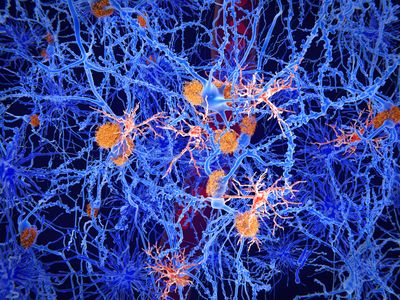


Inhibiting an enzyme in the brain could unlock a novel way of slowing Alzheimer’s disease, a new study suggests. With controversy raging over the latest generation of Alzheimer’s drugs and a growing population affected by the condition, this finding offers a promising avenue that could yield new, much-needed treatments.
One of the hallmarks of Alzheimer’s in the brain is the buildup of toxic plaques of a protein called amyloid-β. A huge amount of research has been devoted to understanding how this pathological process happens and finding ways to stop it, or to clear out the plaques after they’ve formed.
Recent years have seen the advent of drugs that target amyloid-β directly. Some believe this approach has the potential to revolutionize the treatment of the disease; others aren’t so sure, and a recent review that concluded they have “no meaningful effect” hasn’t helped the case.
Anti-amyloid drugs are by no means the only therapeutic approach being explored, though, and many scientists are working hard to understand more about how the disease works to see if we might find other ways to slow its progression.
In 1988, Nicholas Tonks – now a professor at Cold Spring Harbor Laboratory – discovered a protein called PTP1B. Since then, he and his colleagues have been exploring its various roles in health and disease.
PTP1B is known to be involved in inhibitory signaling processes in macrophages, a type of immune cell. The brain has its own immune system, but one type of brain immune cell – microglia – closely resembles macrophages. If PTP1B affects them in a similar way, the team reasoned, it may be possible to harness it to help microglia clear toxic amyloid-β plaques more efficiently.
“Over the course of the disease, these cells become exhausted and less effective,” explained first author and graduate student Yuxin Cen in a statement. “Our results suggest that PTP1B inhibition can improve microglial function, clearing up Aβ plaques.”
In a mouse model, the team demonstrated that removing the PTP1B protein boosted a signaling cascade in the microglia that had the knock-on effect of making them more efficient and energetic.
If this effect could be harnessed in a human treatment, it could be a valuable add-on to current anti-amyloid drugs, co-author Steven Ribeiro Alves explained: “Using PTP1B inhibitors that target multiple aspects of the pathology, including Aβ clearance, might provide an additional impact.”
The team is now working on this, with the hope of devising a combination therapy that could make a difference to patients in the future. It’s something that has touched Tonks’ life personally, as his mother lived with Alzheimer’s disease.
“It’s a slow bereavement. You lose the person piece by piece,” he said. “The goal is to slow Alzheimer’s progression and improve quality of life of the patients.”
One recent forecast projected that 1 million US adults per year could develop dementia by 2060, of which Alzheimer’s is the most common type. That’s a huge population that stands to benefit if the goal of an effective combination therapy were to become a reality.
The study is published in the journal PNAS.


 10
10