Health and Medicine
 PUBLISHED
 2
2



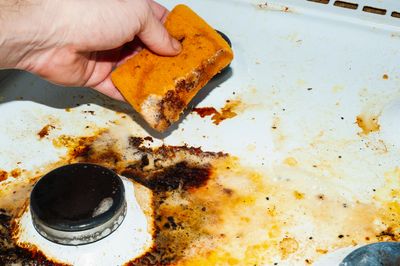


The kitchen sponge is easily one of the most bacteria-laden objects in your house, which isn't ideal for something you wipe all over your plates, glasses, and cutlery.
That's why new research has taken a close look at this undercover germ fest and provided some very good reasons to regularly replace that soggy sponge that lingers next to your sink.
Scientists at the German Federal Institute for Risk Assessment (BfR) looked at three common food-borne bacteria that often leave people bent over on the toilet – E. coli, Salmonella Enteritidis, and Staphylococcus aureus – and found they were incredibly skilled at surviving on a kitchen sponge.
Small populations of the bacterium were seeded onto a sponge and, from these humble beginnings, they were able to reproduce like wild and establish stable populations that lasted for at least 14 days.
This remained true even after the sponge was allowed to dry, highlighting how these common food-borne bugs are remarkably persistent in the kitchen environment.
It is hard to say whether these bacterial loads would be enough to make you sick, as that would depend on a multitude of factors. However, the researchers do suggest it could be a cause for concern for households with children, elderly individuals, and others with vulnerable immune systems.
“Quite a few cases of foodborne infection originate in private households, and they are not always limited to a day or two of feeling unwell,” Andreas Hensel, study author and BfR President, said in a statement.
“Such infections can be particularly hazardous for vulnerable groups such as the elderly or those with underlying health conditions, as well as young children,” he added.
The germs were also remarkably stealthy. The team tracked their development through traditional culture methods, DNA sequencing, and high-resolution confocal microscopy, but they noted the contaminated sponge didn't have an unpleasant smell nor look dirty or greasy.
This is especially worrying because the bacteria could easily hop from contaminated sponges to nearby surfaces – that could be a plate you eat from or a board where you chop up your vegetables.
The researchers describe sponges as the “ideal reservoir for bacterial pathogens due to their porous surface and the moisture they contain.”
So long, sweet sponge?
While their experiments did highlight some of the downsides of this tried-and-tested tool, the team doesn't suggest ditching sponges altogether. Instead, you should reassess how you use them.
“Many consumers decide when to replace their kitchen sponges based on how they look or smell. However, this is an unreliable indicator, as the researchers observed no noticeable changes in the test sponges, even when bacterial counts were high,” the BfR said in a press release.
“How often kitchen sponges should be replaced depends, among other things, on how they are used. For example, if a sponge has been used to clean surfaces that have come into contact with raw meat, it should be discarded afterwards.
Alternatively, the bacterial load can be reduced by treating the sponge for at least two minutes with water at temperatures above 70 °C,” the organization added.
Speaking of filthy hygiene habits, you should also reconsider whether you let your dirty dishes soak in to the sink overate. Along with sponges, kitchen sinks and tap handles harbor some of the highest loads of bacteria in the average household and are known hangouts of pathogenic bacteria, including E. coli and Staphylococcus.
Using the sink to create a broth-like bath for your plates and pans, therefore, is not recommended by hygiene experts.
The new study is published in the Journal of Food Protection.