Health and Medicine
 PUBLISHED





What you'll discover in this article
- Scientists have been trying to solve the mystery of why people who smoke tend to have a lower risk of developing Parkinson's disease.
- A new study suggests it could be due to a protective effect of carbon monoxide, which first author Clara Bueno Lopez told IFLScience is known for "protecting against oxidative damage and reducing inflammation."
- Experts agree that the overall health risks of smoking are still major, but hope this could lead to a new treatment for Parkinson's down the line.
Most doctors will tell you that quitting smoking is pretty much the number one thing you can do for your health. Tobacco smoking increases the risk of a whole slew of diseases, not only lung cancer. But there’s one disease in particular that bucks this trend, and it’s been a scientific mystery for a long time.
People who smoke have been observed to be at decreased risk of developing Parkinson’s disease. No one knows why, but a new study reveals some clues.
It appears to involve carbon monoxide (CO), a tasteless, odorless gas that is part of the cocktail of chemicals in tobacco smoke. CO is also extremely dangerous to human health – you may even have a detector for it in your home, along with your regular smoke alarm.
So that’s two things so far that are generally Very Bad™ for us but that together seem to decrease the risk of Parkinson’s disease. We were thoroughly confused at this point, so we reached out to first author Clara Bueno Lopez to tell us more.
"Several mechanisms have been proposed"
“Exposure to high levels of CO can be dangerous and even fatal. This is because CO reduces the oxygen-carrying capacity of the blood, and can create hypoxic-like conditions,” Bueno Lopez, a DPhil student at the University of Oxford, told IFLScience.
“However, this property is also believed to underlie the potential benefits of CO in the human body. Low levels of CO are produced regularly throughout the body and are thought to play a role in protecting against oxidative damage and reducing inflammation.”
Parkinson’s disease is a neurodegenerative condition in which there is significant damage to part of the brain called the substantia nigra, just above the brainstem. The death of neurons in this region leads to a massive decline in the neurotransmitter dopamine, which causes the many different symptoms of the disease, including movement disorders.
It’s been theorized that low levels of CO could help protect this key population of brain cells.
Bueno Lopez told IFLScience that “several mechanisms have been proposed.” For example, CO has been shown to play a role in anti-inflammatory pathways within the body, including some that are linked to neuroprotective pathways that have been associated with Parkinson’s pathology.
In their new investigation, Bueno Lopez and colleagues studied a cohort of over 500,000 Chinese adults.
Being able to decouple the associations of CO from those of smoking is a striking element of the study.
Clara Bueno Lopez
Smoking has been identified as a major public health challenge in China, with nearly a quarter of adults reporting that they smoked in 2024. For comparison, in the same year the prevalence of cigarette smoking in US adults was put at 9.9 percent.
During 12 years of follow-up, regular smoking was found to be significantly associated with an increased risk of lung cancer, heart disease, stroke, and death from all causes, confirming what science already knows to be true. It was also found to be associated with a lower risk of Parkinson’s.
In those who had never smoked, a decreased risk of Parkinson’s was also observed in those who had higher exhaled CO levels, adding more weight to the idea of CO involvement.
It may be possible to harness the protective effects of CO in a safe way that doesn’t involve exposing people to all the other health risks from tobacco.
“Being able to decouple the associations of CO from those of smoking is a striking element of the study,” Bueno Lopez said. “Finding that, among never smokers, exhaled CO was associated with lower risk of PD but not with higher risks of lung cancer or other smoking-related diseases was particularly remarkable to discover and gives confidence in the robustness of the evidence.”
The link was found to be specific to Parkinson’s disease. Bueno Lopez told IFLScience that other neurodegenerative diseases were also looked at, including different forms of dementia, but that “exhaled CO was associated only with Parkinson’s.”
The authors do note several limitations of the work, including the fact that they can’t fully rule out that something other than the CO in tobacco smoke is contributing to the protective effect.
A gateway to new treatments
The study has been met with positive comments from fellow researchers.
“It is a well-designed study, carried out by a group of experts in epidemiology. The analysis is meticulous,” commented Rosario Sánchez Pernaute of the Health Research Institute Biobizkaia, who was not involved in the work, to the Science Media Centre (SMC) Spain.
“It is consistent with epidemiological studies showing a reduced risk of developing PD among smokers, even to a greater extent than in this study.”
“The only point to bear in mind is that the follow-up period is relatively short for diseases such as Parkinson’s disease (PD), which have a late age of onset,” Sánchez Pernaute added.
Other experts in the field agreed that the data warrant further investigation.
“This report provides the clearest human evidence, even if circumstantial, that low-dose carbon monoxide may be beneficial in people with PD – short of randomized, blinded clinical trials,” Dr Michael A. Schwarzschild of Harvard Medical School told the SMC.
Schwarzschild is the principal investigator of an ongoing clinical trial of low-dose liquid CO treatment in Parkinson’s disease. Bueno Lopez told IFLScience the new results add support to trials like this, which “if successful […] could contribute to substantially reducing the global burden of Parkinson’s.”
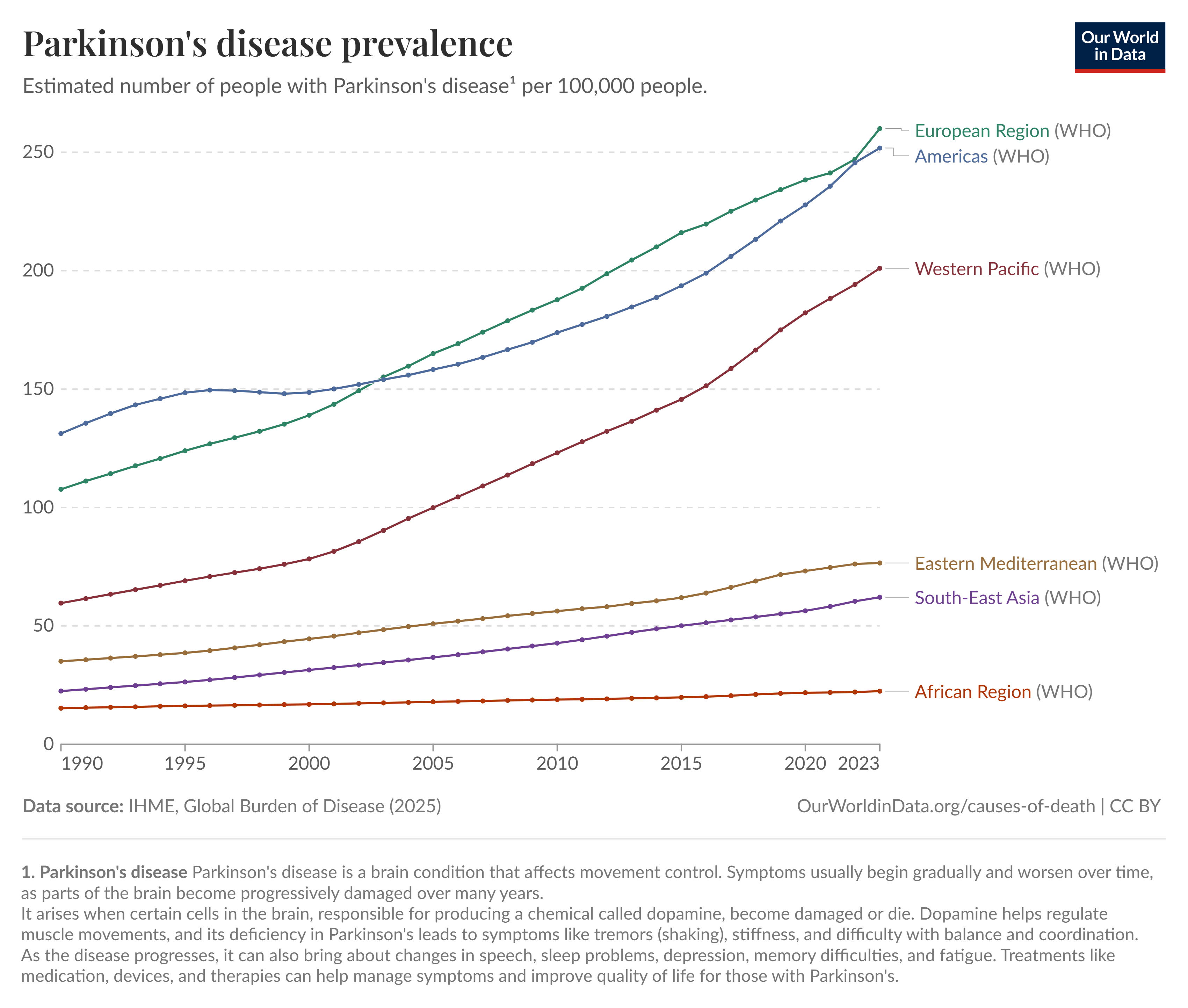
A 2025 modeling study predicted that the prevalence of Parkinson’s disease could increase 112 percent by 2050, translating to over 25 million people living with the disease.
“The new insights into biological pathways that may be relevant to the aetiology of Parkinson’s is a personal highlight from the project, given the potential translational relevance for development of PD therapies,” Bueno Lopez added.
PSA: that doesn't mean start smoking!
One thing all of the experts are united on is this: smoking is still overall bad for health, and you should not delay quitting if you do smoke.
George Mellick, a Professor of Neuroscience at Griffith University, described smoking as a “terrible lifestyle choice” in a comment to the SMC Australia. However, Mellick also stressed that the findings of the study could “assist in new avenues for treatment” for Parkinson’s.
That’s ultimately what the researchers behind the paper hope to achieve.
The study is published in JAMA Neurology.