Health and Medicine
 PUBLISHED


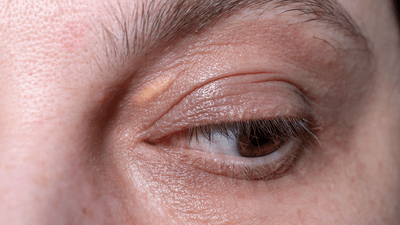


A new study looking at the health records of 17,925 patients has found that small "yellowish" plaques or papules located in the eyelids or surrounding the eye may be associated with a slightly increased risk of heart attack and stroke.
Atherosclerosis, the condition where your arteries become narrowed, making it more difficult for blood to flow through them, can increase your risk of both heart attacks and strokes. Both of these are something you would generally like to avoid, and the more time you have to take the correct medications and/or make lifestyle changes, the better.
But the problem with atherosclerosis is that whilst it sometimes comes with warning signs like pains in your chest or shortness of breath, often the early stages can come with no symptoms at all.
Researchers at Stanford University looked at a condition generally thought to be harmless, known as xanthelasma. This is when cholesterol deposits accumulate under the skin of your eyelids or near your eyes, causing growths on your eyelids or surrounding them, next to your nose.
In many patients (but not all), this condition is linked with higher cholesterol levels, and so it makes sense that the team would explore potential links between it and heart attacks/strokes.
"Many studies link xanthelasma to atherosclerosis and cardiovascular risk, supporting its role as a marker of systemic disease. Moreover, xanthelasma has been associated with the presence of atherosclerotic plaques in carotid and coronary arteries, as evidenced by imaging studies like carotid intima-media thickness and coronary artery calcium scoring," the team explains in their paper.
"These findings support the hypothesis that xanthelasma is a cutaneous marker of systemic atherosclerosis. Nonetheless, other studies have reported no relationship with lipid profile, cardiovascular disease."
To investigate, the team looked at the health records of 17,925 patients from the United States, Taiwan, Georgia, and Brazil with xanthelasma. As a matched control group, they looked at the same number of patients with an eye condition called presbyopia, as it affects people of similar age, whilst also ensuring that they had undergone an eye exam that would have spotted any xanthelasma, were it present.
Following the patients over the next 10 years (through their medical records), the team found, unlike earlier studies, that there did appear to be an increased incidence of stroke and heart attack in people who developed xanthelasmas.
In the first year following examination, 1 percent of the xanthelasma cohort had suffered a heart attack compared to 0.35 percent of the control cohort, whilst 0.95 percent had a stroke compared to 0.3 percent of the control patients. At five years, 2.26 percent of people with xanthelasma had had a heart attack vs 1.13 percent of people without it. Meanwhile, 2.25 percent of the xanthelasma cohort had suffered a stroke, vs 1.03 percent in the control group.
"In our analysis, xanthelasma was associated with increased cardio- and cerebrovascular events at short- and long-term follow-up," the team concluded.
"The most likely explanation for the differences seen is our substantially larger matched cohorts that provide greater statistical power and the use of covariate matching to account for factors affecting vascular outcomes."
Whilst the difference is not too dramatic, with further research into the topic, the finding could become useful to clinicians. Given that atherosclerosis can begin without symptoms, identifying patients with this condition could help clinicians make further investigations, prescribe medications if necessary, and help people to reduce their risk of stroke and heart attack.
The study is published in Atherosclerosis.