Health and Medicine
 PUBLISHED
 2
2


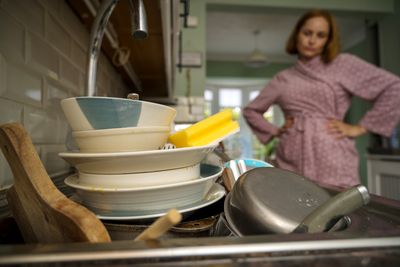


'Tis the season of relentless dishwashing and lethargy. After ingesting half a turkey and a gallon of eggnog, it is tempting to look at the piles of dirty plates, shrug, and think, meh, they could use a long soak in the sink anyway. But here’s the dirty truth: sinks are among the most germ-ridden spots in your house, and not the kind of place you want your dinnerware to hang out.
In a 2019 study, scientists from Cardiff Metropolitan University swabbed the kitchen surfaces of 46 homes in the UK and found that the highest loads of bacteria were found in kitchen sinks and tap handles.
This, they explain, is because these surfaces regularly come in contact with raw food and grubby hands, plus they’re often damp, providing the ideal conditions for bacteria to live and reproduce.
Among some of the most common species of bacteria identified in the research were Enterobacter cloacae (in 52 percent of kitchens), other Enterobacter species (26 percent), Klebsiella pneumoniae (24 percent), Escherichia coli (20 percent), Pseudomonas aeruginosa (15 percent), Bacillus subtilis (57 percent), Staphylococcus spp. and Micrococcus spp.
You may recognize a few of these household names, such as E. coli and Staphylococcus, as pathogenic bacteria that have the potential to make you sick. So, leaving your dishes in one of their favourite hangouts isn’t the safest of ideas.
It’s even worse if you’re putting the food-covered plates in a pool of warm water, which is an ideal environment for bacterial growth, and leaving them to fester. Then again, simply leaving them out overnight without soaking isn’t much better, either.
“If items are soaking in a pool of harmful bacteria, it makes it more difficult to kill all the bacteria during the cleaning process,” Dr Brian Labus, associate professor of epidemiology and biostatistics at the School of Public Health at the University of Nevada, told Reader’s Digest.
“Dry environments might keep bacteria from growing, but that doesn’t mean they can’t survive and grow later,” Labus added. “And if you have food sitting out, it can attract bugs that can spread bacteria to the rest of your kitchen.”
Even if you’re proud of your potwashing skills, there’s a good chance you’re still not cleaning thoroughly enough (especially if that plate has been lurking in a dirty sink for hours).
A study in 2003 tested how some of the most common food poisoning bugs – Salmonella, Campylobacter, and E. coli – fared against different means of kitchen cleaning, involving various water temperatures (47–60 °C), detergent levels, presence of organic matter, drying, and so on. The big takeaway was that some harmful bacteria can survive normal dishwashing and drying.
Research has even shown that electronic dishwasher machines often do not kill all the harmful microorganisms left on plates, bowls, and cutlery. The safest way, they found, was using a dishwasher with a superheated steam option that can blast the kitchen utensils for at least 25 seconds
So, what’s the solution to this? The best way to keep your kitchen squeaky clean is to do the washing up as soon as possible and not let things pile up (obviously). Failing that, you should disinfect your sink regularly, especially when it’s about to witness a bout of heavy use during the holidays.
“Clean the sink with soapy water, then use an antibacterial spray or one with bleach,” Labus advises. “Don’t immediately rinse the spray off—let it sit on the surface long enough to kill bacteria.”