Space and Physics
 PUBLISHED


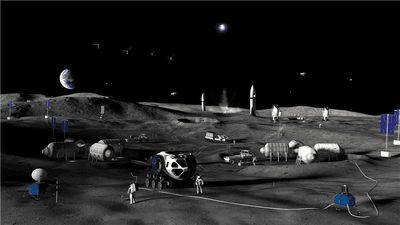


Just a few weeks ago, NASA announced major changes to its Artemis program. The first human Moon landing in decades was shifted from Artemis III to Artemis IV with the goal of doing not one but two Moon landings in 2028. During today's Ignition press conferences, NASA chief Jared Isaacman went even further, announcing plans to build a base on the surface of the Moon in the early 2030s, and explaining the plan to make it happen. Unfortunately, that means Lunar Gateway is not being built in the coming years.
The Gateway is a proposed and partially built space station that was going to orbit the Moon and work as a halfway stop for astronauts. Last year, the Trump administration proposed some major cuts to NASA's 2026 budget, and the Gateway was among many missions cut. (The European Space Agency told IFLScience back in November it planned to go ahead with Gateway.) The 2026 budget was approved by Congress in January with major changes, so NASA's budget ended up being pretty healthy. But in the end, the new NASA Administrator, billionaire and private astronaut Jared Isaacman, has still pivoted away from the space station, explaining that existing hardware and international partner contributions will be repurposed towards NASA's lunar goals.
“It should not really surprise anyone that we are pausing Gateway in its current form and focusing on infrastructure that supports sustained operations on the lunar surface,” Isaacman said.
So, what's new? Here's what to know.
NASA’s New Vision For The Moon
The plan is now focused on the lunar surface, and it is very bold. NASA wants to have a Moon base that astronauts can occupy, not for days but for months, and they want it ready in a matter of years, at a cost of around $20 billion, Isaacman said.
“It should not really surprise anyone that we are pausing Gateway in its current form and focusing on infrastructure that supports sustained operations on the lunar surface,” Isaacman said.
In the plan, NASA proposed 24 launches between 2028 and 2030, deploying a lot of basic and smaller payloads that will provide the initial infrastructure to build this base. During those years, NASA doesn’t expect the astronauts to stay that long on the Moon's surface at first.
NASA wants to increase the Commercial Lunar Payload Services to increase mission quantities and cadence, and from 2031, it will bring larger materials to the Moon. The agency expects a cadence of seven landings per year between 2031 and 2036. This is needed to bring rovers (both robotic and for transportation), power plants, habitats, and more to the Moon.
NASA will deploy a satellite constellation on the Moon to improve communications at first, before adding permanent surface cell towers, and eventually navigation. When it comes to energy generation, NASA will start with solar, before deploying radioisotope thermal generators (RTGs) and nuclear power plants (to survive the 14-day-long lunar night). The habitat demos will be tested during phase 2 between 2031 and 2033.
Can This Be Done?
NASA was upfront that certain limitations are major challenges to making this happen. There are supply chain, capacity, and manufacturing capabilities to consider, and the testing of these technologies. On top of that, some technologies are not yet mature enough to be deploy and there is uncertainty that they will be ready by these very tight deadlines.
A lunar nuclear power plant has been going through design and testing for the last few years, and it might be ready to be delivered to the surface of the Moon by the end of the decade if things continue to proceed successfully. What happens if there are setbacks?
A similar question hangs over the human lander vehicles. SpaceX’s Starship rocket and Human Landing System should be further along than it is, and a leaked memo suggests that it won’t be ready until September 2028. Blue Origin’s Blue Moon lunar landers are not supposed to be ready until 2030. Both need to be tested next year if they are to bring humans to the surface of the Moon in 2028.
The other uncertainty is money. Each three-year-long phase has a $10 billion budget. The press conference stressed that the goal was to “achieve President Donald J. Trump’s National Space Policy and advance American leadership in space.” The Trump administration's proposed budget last year included a 25 percent cut in NASA's budget, which would have devastated the space agency. Will NASA receive adequate funding to achieve these lunar goals, and not at the expense of all its other work?
“NASA is committed to achieving the near‑impossible once again, to return to the Moon before the end of President Trump’s term, build a Moon base, establish an enduring presence, and do the other things needed to ensure American leadership in space,” Isaacman said in the press conference.
The starting point for this bold plan should occur next week with the expected launch of Artemis II on April 1 and the return of humans into deep space after more than 50 years.
This article was amended on March 25 following a third press conference, when Jared Isaacman stated that the Gateway is not cancelled for good, but deferred.