Nature




The world’s most expensive cheese costs more than some people’s monthly rent.
By some accounts, picking up a pound of Pule in 2016 would have left you $1,700 out of pocket – accounting for inflation, that is somewhere in the region of $2,300 in today’s dollar. Other estimates put the cheese at a still eye-watering but much more reasonable $600 per pound.
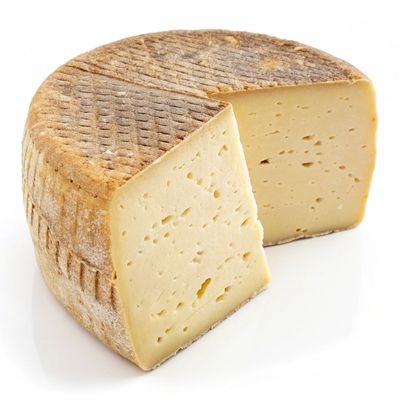
So, what is so special about this exorbitantly-priced cheese? It certainly doesn’t look as glam as the gold-flecked Clawson Stilton, which sells for roughly $300 a pound. In fact, Pule’s off-white color and crumbly texture looks deceivingly modest. The secret to its hefty price tag lies in the production process and, specifically, its core ingredient – Pule is 60 percent Balkan donkey milk.
The thing is, donkeys produce a lot less milk than cows. A female donkey (or jenny) can produce, at most, 2 liters of milk a day. In contrast, the average dairy cow generates between 8 to 12 gallons (30 to 45 liters). What’s more, the process of milking is a lot more arduous. There is no special machinery designed for milking donkeys. Instead, farmers producing Pule milk the old-fashioned way – by hand.
Finally, there is also an issue with the composition of the milk itself. It contains fewer solids. In practice, this means a cheesemonger requires more donkey milk than cows milk to make an equal amount of produce. Slobodan Simić, who produces Pule, told SBS Serbian in 2019, “For one kilo of cheese we need about 25 litres of donkey milk.” Adding, “That is roughly 1000 euros worth of donkey milk. It is a very intense, rich texture and flavour.”
So, what exactly does this high value cheese taste of? According to Atlas Obscura, Pule has a flavor profile similar to Manchego. However, if you want to try the cheese for yourself, you may be out of luck. Thanks to its scarcity and expense, Pule is hard to come by and may require a journey to the source of the cheese itself – the lush green wetlands of Zasavica, a nature reserve in northwest Serbia, 80 kilometers (50 miles) from Belgrade.
There may be health benefits to those who do make the trip. Donkey milk – which has been compared to human breast milk – is thought to possess immune boosting, anti-inflammatory properties. Historically, it has also been heralded for its ability to turn back the years. Indeed, there are even rumours that legendary beauty Cleopatra bathed in the stuff on a daily basis.
While Pule may be the most expensive, the title for the world’s oldest cheese belongs to kefir cheese, which was recently discovered smeared on the heads of Bronze Age mummies.
Meanwhile, the prize for most dangerous goes to casu marzu, a Sardinian delicacy made using maggots.