Culture and Society
 PUBLISHED


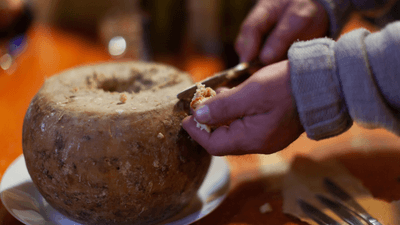


Cheese is milk that's been fermented and aged, but the process is a controlled one that strikes the right balance of bacterial activity to delicious cheesy goodness. Some traditional approaches to making cheese have pushed the boundaries of what’s safe for human consumption, and perhaps the most talked about is casu marzu.
Casu marzu is a delicacy that hails from Sardinia. It looks a bit like the consistency of scrambled egg, and is created with the aid of maggots that remain alive and leaping in the cheese when it’s eaten by humans.
The larvae are from the cheese fly Piophila casei. They’re pretty active, capable of jumping 15 centimeters (6 inches) in the air. It’s considered harmful in the food industries, but as a detritivore, it can be dead handy in forensic investigations – and as a cheese addict, it’s pivotal for the creation of casu marzu.
Also known as the cheese skipper, or ham skipper (they also love ham), they get their name from their incredible ability to propel through the air as larvae. Where these leaping larvae get a bit dangerous is when it comes to ingesting them – intentionally or otherwise – as, according to the University of Florida, they’re often cited as a cause of intestinal myiasis. That icky condition is basically when maggots set up camp in your digestive system.
“Intestinal myiasis occurs when fly eggs or larvae previously deposited in food are ingested and survive in the gastrointestinal tract,” explains the Centers For Disease Control And Prevention. “Some infested patients have been asymptomatic; others have had abdominal pain, vomiting, and diarrhea.”
For this reason, larvae-containing casu marzu is often reported as the “most dangerous cheese in the world,” and yet the BBC’s Vivienne Nunis was told that it’s been a delicacy enjoyed for thousands of years in Sardinia. Nunis certainly wasn’t put off, describing the flavor as, “Very strong, a little tingly. It’s very nice, it’s like parmesan cheese. I didn’t notice the maggots at all.”
Typical cheese production entails heating milk and adding bacterial cultures and enzymes to ferment the dairy, but in casu marzu, the fermentation is assisted by the cheese skippers. A wheel of cheese is cut open to give the flies a chance to lay their eggs, and as the larvae emerge they start wriggling around inside it, fermenting it as they go.
According to Atlas Obscura, casu marzu is made using sheep’s milk – but if live maggots aren’t quite challenging enough for your palate, perhaps you could try introducing the ham skipper to whale cheese?