Nature
 PUBLISHED
 3
3


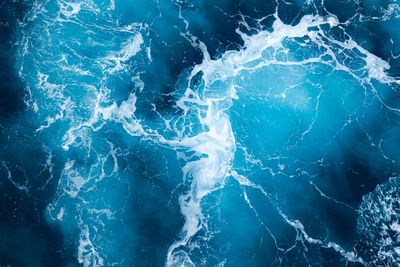


There’s one question that’s crossed many a mind whilst having a paddle at the beach: am I in the sea or the ocean? Saying you’ve dipped your toes in the ocean certainly sounds more impressive, but is there actually a difference between the two?
Before we dive into it, it’s important to know that the definitions of oceans and seas aren’t exactly the strictest – there’s a lot of room for interpretation, with generalizations and exceptions, particularly when it comes to seas.
If we’re getting really loose with definitions, oceans and (most of) the seas are all just one vast body of water anyway, known as the World Ocean. But for a multitude of reasons, be it cultural, geographic, or scientific, that water has been carved up and categorized.
What is an ocean?
When referring to the ocean, it typically means that big ol’ body of salt water covering nearly three-quarters of the planet’s surface, while each of the regions that oceanographers have divided it up into can be considered an ocean (well, so can the ocean, but a word count only allows for so much pedantry).
Historically, there were four officially recognized oceans – the Atlantic, Pacific, Indian, and Arctic – their boundaries primarily defined by the continents that they surround. Then, after years of debate, there came a fifth: the Southern Ocean, finally recognized by the National Geographic Society in 2021.
What makes this ocean different from the other four is that rather than the continents, it’s defined by an invisible ring: the Antarctic Circumpolar Current that encircles Antarctica.
What is a sea?
If you happen to call the sea the ocean, you’re not necessarily wrong – seas can still be considered a part of the ocean. What typically defines them, however, is that they are much smaller than an ocean, found where the land and ocean meet, and are usually at least partially enclosed by land.
…or are they?
We did warn you that there’d be exceptions and when it comes to seas, the Sargasso Sea shows that enclosure by land isn’t exactly a hard and fast rule.
Like the Southern Ocean, the boundaries of the Sargasso Sea are defined by current rather than land – four currents, in fact. Found in the north of the Atlantic Ocean, it’s enclosed by the North Atlantic Current, the Canary Current, the North Atlantic Equatorial Current, and the Gulf Stream, making it the only sea without a land boundary.
All “explainer” articles are confirmed by fact checkers to be correct at time of publishing. Text, images, and links may be edited, removed, or added to at a later date to keep information current