Nature
 PUBLISHED
 1
1




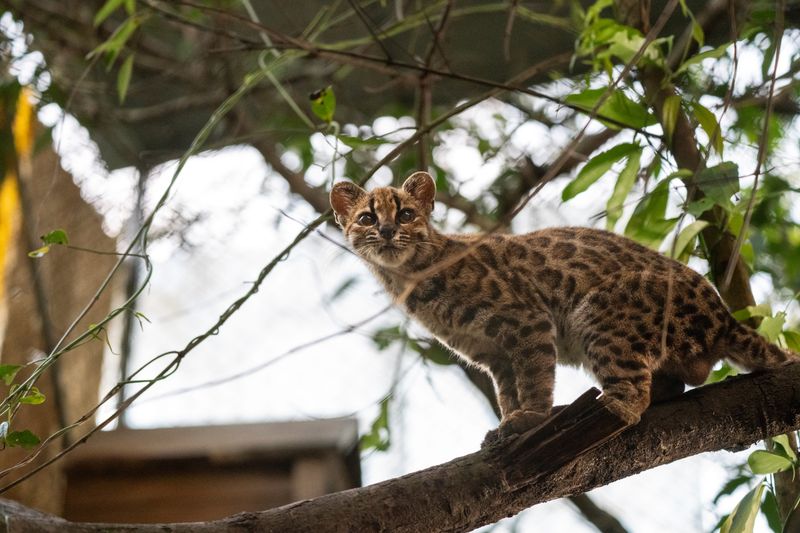
A new – and indescribably cute – species of tiger cat has been identified by scientists in Brazil. Unfortunately, just like its other tiger cat cousins, the species is under threat from rampant deforestation and habitat destruction.
Also known as the oncilla, tiger cats are small spotted cats that quietly stalk Central and South America, perfectly adapted for clambering in trees and hunting small prey. They are among the shyest and smallest wild cats in the Americas, weighing between 1.5 to 3 kilograms (3.3 to 6.6 pounds) – much smaller than most domestic house cats.
Until recently, they were split into two species: the northern tiger cat (Leopardus tigrinus) and the Atlantic Forest tiger cat (Leopardus guttulus) along with a handful of subspecies.
Researchers involved with the Tiger Cats Conservation Initiative in Brazil recently studied the appearance, genetic variety, and geographical range of the tiger cat complex, concluding that the family includes a third species: the clouded tiger cat (Leopardus pardinoides).
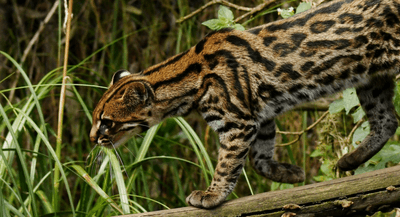
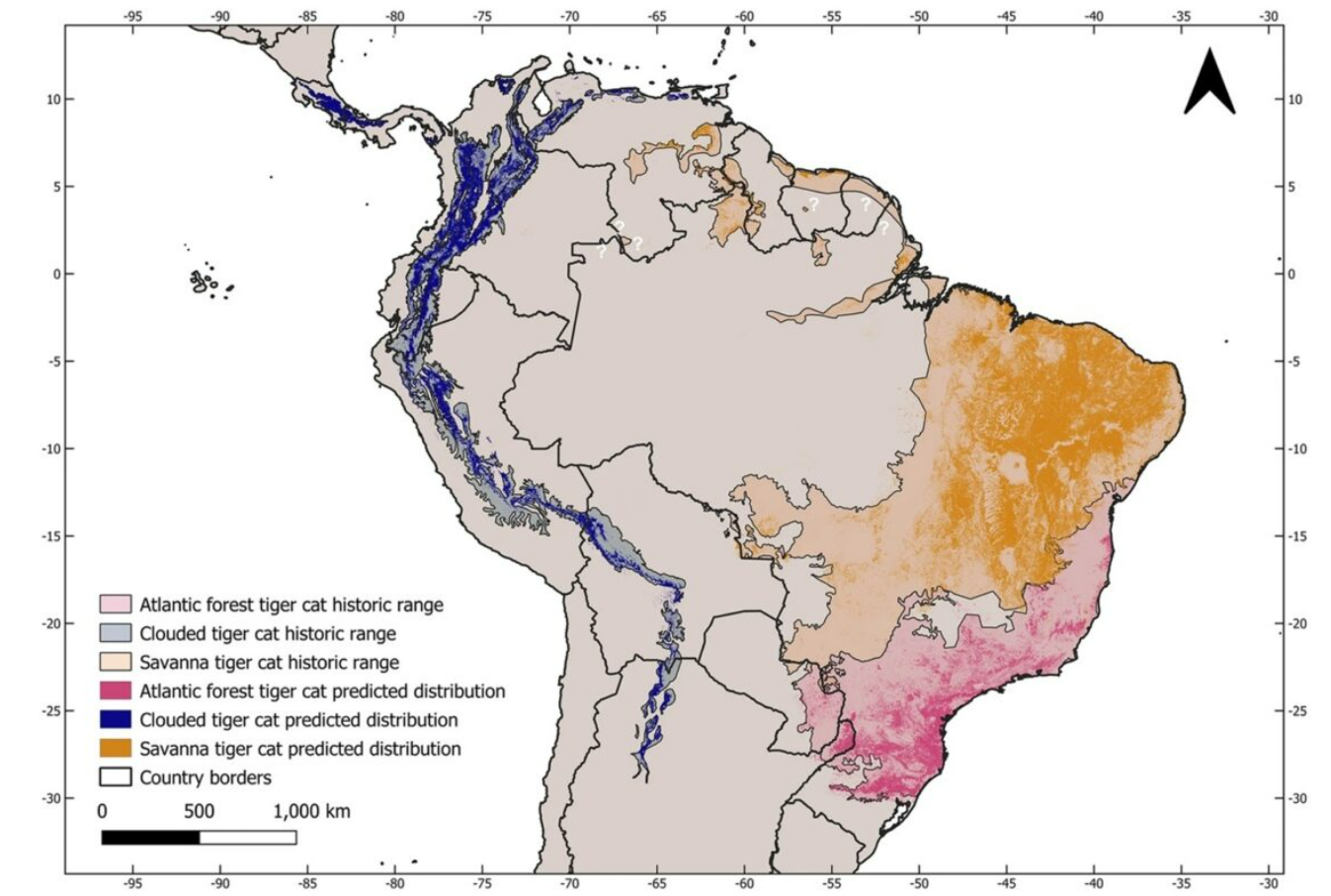
This little fella is found in the cloud forests of the southern Central American and Andean mountain chains, which stretch from Costa Rica through Panama, Colombia, Peru, Bolivia, and Argentina.
As you can see in the map below, this is a separate geographical range from its other relatives. The northern tiger cat is native to the savanna and shrublands of the Guiana Shield and central Brazil, while the Atlantic tiger cat lives further south in forested areas of central to southern Brazil down through Paraguay and northeastern Argentina.
Discovering a “new” species is often seen as a boon for biodiversity, but the researchers were keen to point out that all tigers cats – including the newly described species – are threatened with extinction. Like many creatures in this part of the world, all three species are being struck with aggressive habitat destruction and deforestation. There is also the ever-present risk of illegal hunting.
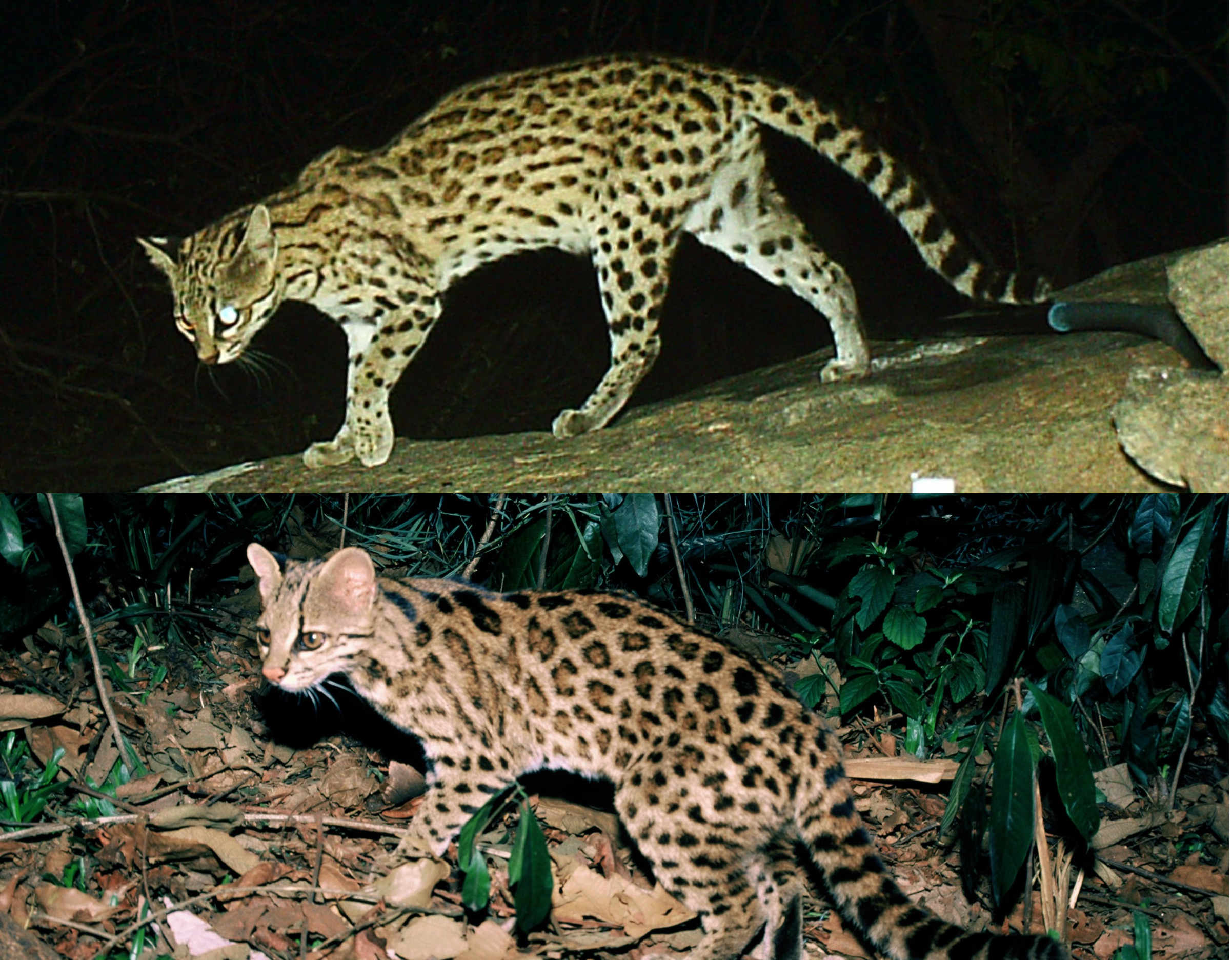
The researchers believe their latest findings highlight the need for greater protection to ward off the existential threat looming over tiger cats. However, the situation will prove very difficult to solve, especially for the newfound clouded tiger cat.
Much of the range inhabited by both savanna and Atlantic Forest tiger cats sits in Brazil, making future conservation efforts easier to coordinate (at least in theory). However, the range of the clouded tiger cat consists of a thin strip running down South America through numerous countries, parts of which are in the midst of guerrilla conflicts.
“For all tiger cats, very concerning area reductions, ranging from -50.4 to -68.2 percent, were identified. This also requires immediate action, with enhancement and reinforcement of environmental policies, an urgent need for Red List assessment/reassessment for all species, in addition to taking strong conservation action from local projects to national institutions and authorities,” the study authors write.
“The ‘Red Alert’ is on,” they conclude.
The study is published in the journal Scientific Reports.