Nature
 PUBLISHED


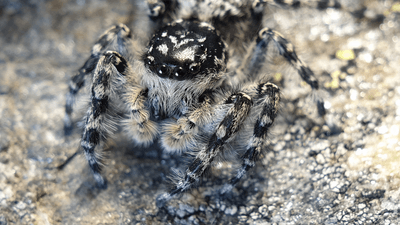


If ever you were to fall in love with a spider, it would surely be Salticidae. Known as the jumping spiders, they are gloriously fuzzy with eyes straight out of Pixar, and the world has just been gifted a whole new genus discovered in the alpine regions of Aotearoa New Zealand.
Their popularity shines through in the scientific literature, too, as Salticidae are among the most heavily researched groups of invertebrates globally. However, in Aotearoa New Zealand, it’s a slightly different story.
It’s estimated there are around 200 endemic species leaping around the country, but until recently, only 50 had actually been described. Now, that number’s getting a healthy leg up thanks to a new study that’s described not just a whole bunch of new species, but a new genus altogether.

The team of scientists went searching for spiders in the alpine zone of the South Island mountains. They visited 19 alpine sites altogether and collected 170 spiders for analysis (oh, to be a scientist hiking Aotearoa New Zealand’s South Island in search of adorable spiders).
DNA and microscope analysis revealed that among their collection, they had 12 new-to-science species and even a new genus that they’ve named Ourea. The genus appears to be pretty common, as they found at least one species from it at every alpine site they sampled.
The most widespread of the bunch was O. petroides, which was found from Kahurangi National Park all the way over to Arthur’s Pass National Park. Boingy though jumping spiders may be, that kind of distribution probably isn’t something you achieve on your eight tiny feet alone.

Salticids are actually commonly known to use a nifty trick among spiders called ballooning. The behavior essentially uses a piece of silk like a parachute so that the spider can take off, but there’s a bit more to it than wind.
In 2018, a study looked at what factors influenced a spider’s ability to balloon. They saw that the spiders displayed a behavior called tiptoeing to get their abdomens high in the air, and were able to take off even if there was no airflow, but not when electric fields were switched off. It seems the electric fields at strengths like those found in the atmosphere are all a spider needs to get lift, allowing them to travel far and wide.
The researchers on this latest study didn’t actually observe any Ourea ballooning, but given O. petroides was found on mountaintops like Mount Owen and Altimarloch, peaks that are isolated by a lot of forest, it would seem to be the most likely way it got up there.
Jumping, ballooning, is there anything they can’t do? Heck, these spiders may even dream.