Space and Physics
 PUBLISHED





What you'll discover in this article...
- The Nancy Grace Roman Space Telescope is launching this weekend, nine months ahead of schedule.
- Its advanced instruments will allow it to directly image exoplanets, as well as study almost a billion galaxies throughout the wider universe.
- “Roman's superpower is that it can scan large areas of the sky much more efficiently,” mission team member Neil Zimmerman told IFLScience.
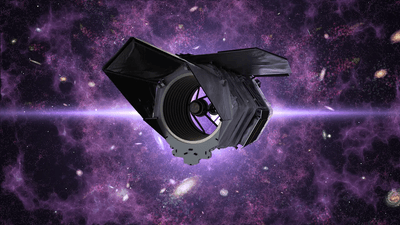
NASA’s next major observatory is about to take flight. The Nancy Grace Roman Space Telescope is scheduled to launch no earlier than August 30 at 7:26 am EDT (11:26 UTC) with a payload of advanced scientific instruments set to teach us more about the evolution of galaxies and the features of alien worlds.
The launch comes nine months ahead of NASA's latest schedule, an unusual turn of events for a space administration that has seen a number of high-profile delays in recent years (though it's worth noting that the original plan was to launch Roman in 2025, which was pushed back to 2027 in 2021).
The telescope possesses a mirror 2.4 meters (7.9 feet) across. That's the same size as the one in the Hubble Space Telescope, but because of its larger, 300-megapixel infrared camera, Roman's effective field of view will be 100 times larger, covering a patch of sky equivalent to what is covered by the moon when viewing from Earth.
Roman can also take its images much more frequently than Hubble, and NASA says the combined effect means it will gather data up to 1,000 times faster than the older telescope, recording some 20,000 terabytes over the course of its five-year primary mission.
Each image taken by Roman’s Wide-Field Imager will be so large it would need 37 4K Ultra HD screens tiled together to show it at its proper resolution.
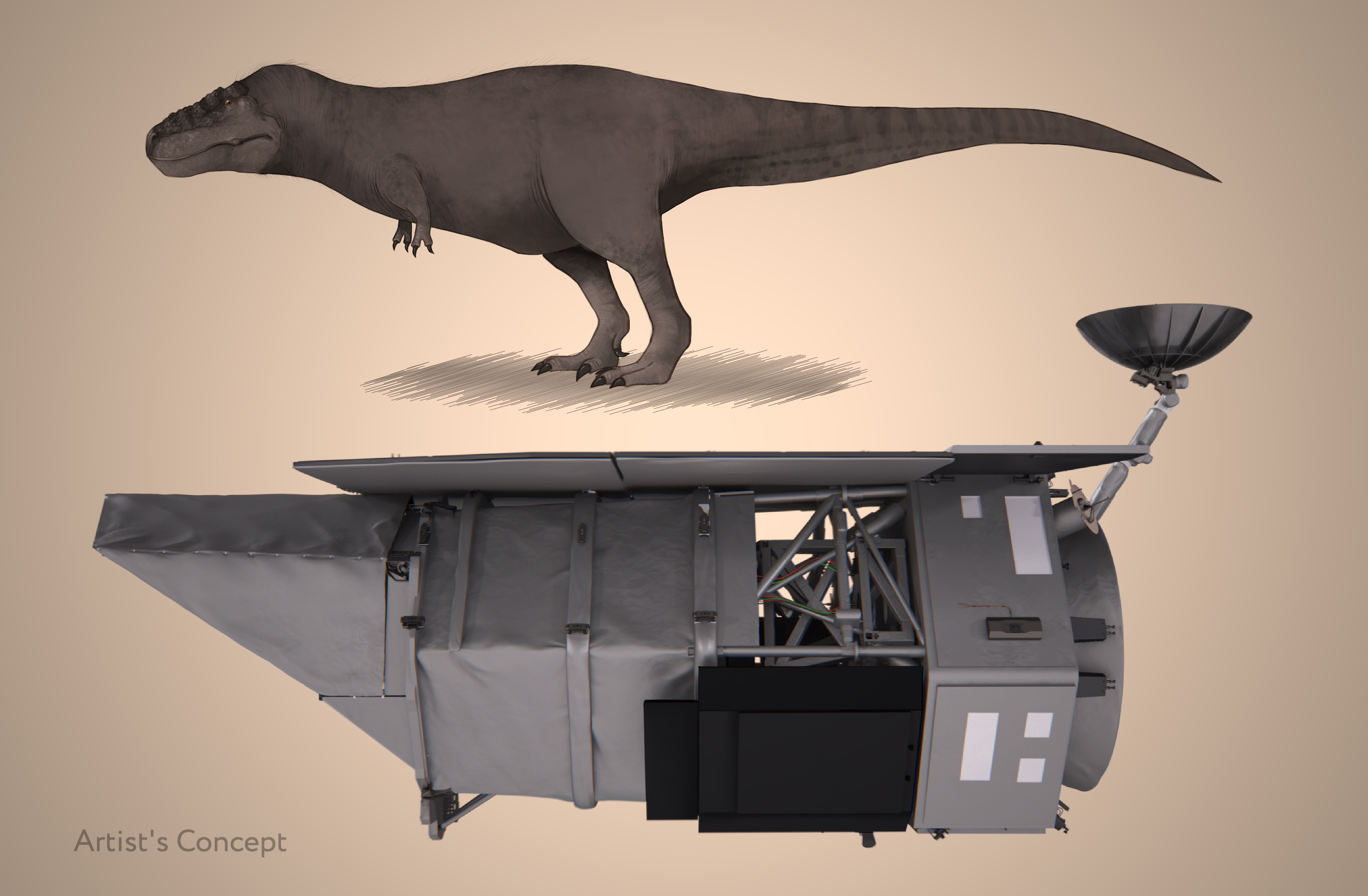
“Roman's superpower is that it can scan large areas of the sky much more efficiently,” Neil Zimmerman, who works on the Roman mission at NASA, told IFLScience. “It's a very agile observatory. That means that we can point, stop, and take an exposure and then repoint again, and do that over and over again.”
NASA expects Roman's widefield observations to reveal nearly a billion new galaxies. And its repeated snapshots will be used to create a timelapse of the cosmos, similar to the sky surveys now underway at the Vera Rubin Observatory on the ground.
By measuring the properties of these galaxies, Roman will help test general relativity, measure the curvature of spacetime, and help us refine the characteristics of dark matter and dark energy, key wrinkles that remain in our leading explanation for why the universe is the way it is.
Roman and the search for many new worlds
Roman is also set to join the hunt for planets beyond our solar system, otherwise known as exoplanets. It will do this partly using microlensing, which is when the gravity of a planet magnifies the light from stars behind it. The approach works best when the background is filled with stars, so Roman will focus its efforts on the central region of the Milky Way, where the starfield is most dense.
Other telescopes, such as the European Space Agency’s Euclid, have previously taken observations of this region at high resolution, providing a baseline for the new telescope to build on.
Roman can also use the transit method, but its signature feature is an instrument called a coronagraph, which is designed to study smaller and cooler exoplanets than any we've been able to witness before – down to roughly the size of Jupiter.
One thing that's special about Roman's architecture is the fact that our data sets are available to the entire scientific community 24 hours after we take the exposure
Neil Zimmerman
The coronograph works using advanced optics to block and separate light coming directly from a star and light that is reflected off that star's planets, revealing the faint orbiting objects and allowing them to be imaged directly.
“Imaging planets is a very hard problem. You can imagine that you're trying to see a point of light next to another point of light right next to it that's about 1 billion times brighter,” Zimmerman told IFLScience.
“In order to image planets like this, we need a special kind of instrument that's called the coronagraph. The Roman telescope will use several advanced technological features that will make it by far the most sensitive of all the coronagraphs that have been used in space before.”
Roman is expected to find around 100,000 such words over its primary mission. To go smaller than Jupiter-sized worlds and reach ones that are similar in size to Earth, we'll need to wait a few years for another major telescope that's still under construction.
With Roman, everyone has a chance to discover something new
Every new mission or new telescope is bound to discover something surprising, and Roman will collect so much data that it is practically certain to stumble on many unexpected and unknown phenomena. Notably, though, the race for these discoveries is going to be a free-for-all.
“One thing that's special about Roman's architecture is the fact that our data sets are available to the entire scientific community 24 hours after we take the exposure,” Zimmerman told IFLScience.
“We recognize that because each of these images contains so much information, we need them to be ready for many scientists because they're all going to want to do different things with these images.”
The flagship space telescope is named for Dr Nancy Grace Roman, NASA’s first Chief of Astronomy, who led the administration throughout the 1960s and 1970s.
Across her 50-year-long career, Roman championed the scientific exploration of space that is now considered a given by space agencies across the world. Her relentless work in the promotion and eventual construction of the Hubble Space Telescope earned her the nickname "Mother of Hubble."
Now her own namesake is headed out to look at the stars.