Space and Physics
 PUBLISHED




The discovery of exoplanets (planets around stars other than the Sun) is one of the hottest areas of science in recent years. When writing about some exciting new discovery, spending too long explaining the methods used to find it can interfere with bringing the fresh news, so it’s time for a separate explainer of the ways this can be done and their advantages and weaknesses.
It took 383 years from Galileo’s first astronomical telescope to the discovery of the first (real) exoplanet, with some reports that turned out to be wrong on the way. Clearly this is not an easy task, for two main reasons. Firstly, even the closest exoplanets are very far away, and therefore very faint. Secondly, they appear frustratingly close in the sky to something much brighter – the star they orbit and whose light they reflect. Screening out the starlight so effectively we can see the planet is an epic challenge
Four ways have been found to overcome this, each have their own strengths and weaknesses.
Radial Velocity
The radial velocity method (also known as the doppler wobble) was the first way we found exoplanets. It’s still the standard for confirming suspected planets found through other methods.
The technique relies on Newton’s observation that when planets orbit a star, the gravitational effects go both ways. Technically, both star and planet orbit a common point, known as the barycenter. For less massive planets, the barycenter is very close to the star’s center. For more massive planets, it’s outside the star, which is why it’s technically true to say Jupiter does not orbit the Sun – the Sun-Jupiter barycenter is almost 50,000 kilometers beyond the Sun’s outer bounds.
You might think that we could see the star move very slightly from side to side during this process, but the distance they wiggle perpendicular to us is so tiny that it’s overwhelmed by measurement errors and other influences. Fortunately, however, our ability to measure whether a source of light is moving towards or away from us is vastly more precise.
When the pull of a planet moves a star away from us, the star’s light is red shifted a little. When it moves towards us under the planet’s pull, it’s blue shifted. Stars are all moving through the galaxy, as are we, so we have a long-term red or blue shift, but if we see this increasing and decreasing on a regular cycle we can seek a cause. When we can rule out a companion star or some other options, an orbiting planet is what is left.
Fluctuating shifts don’t just tell us a planet is present, they reveal its orbital period/distance, and a possible mass range, although the latter depends on the plane in which the planet orbits.
The great thing about this method is that, theoretically, it works for most planets. If a planet is in an orbit at almost right angles to the line between us and the star, it will only create movement in a small circle perpendicular to us, and there’s no red or blue shift to see. That’s rare, however.
Another advantage is that there are plenty of telescopes large enough and equipped with suitable spectrometers to contribute to tracking stars’ movements.
Sadly, radial velocity is slow. Telescopes have to observe stars one at a time over long periods. The data needs to be carefully processed to weed out a lot of unrelated noise. The further from its star the planet is, the longer we need to track to be watching to find it. That means most of the planets we found initially were far too hot to support life. Low mass planets, including those we think are capable of supporting life, influence their stars less, making the signal even harder to confirm.
Moreover, in a binary system radial velocity runs into problems when the stars are too close together, as their influence on each other complicates things enough to make it harder to pick out the effects of a planet. This may be the reason why we haven’t found planets around either star in Alpha Centauri, although it’s equally possible that there aren’t any there to find.
Caught in Transit
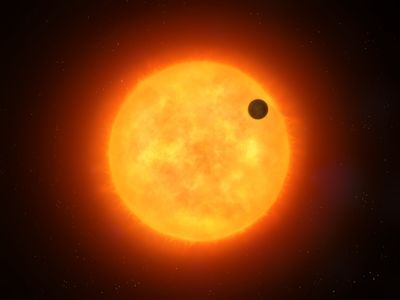
By far the majority of the 6,000 and climbing exoplanets we have now found have been detected by looking for dips in light as planets pass between us and their star, blocking a little of the light, an event known as a transit.
The Kepler Space Telescope checked up on more than half a million stars at short intervals. After it ceased to operate – despite a heroic extension effort – TESS, the Transiting Exoplanet Survey Satellite took over. TESS looks at cooler and closer stars than Kepler, but it’s the same approach.
If you see the dip recurring regularly, it’s probably a planet.
Human eyes are still better than AI at identifying the dips in the light curve caused by transiting planets, so volunteers help process the data, looking for ell-tale signs.
The transit method is hard to do from the ground, because it’s too easy for thin cloud or some other sort of atmospheric interference to replicate the effects of a passing planet, although some very rare detections have been made. Ground-based transit detections have also been used to confirm exoplanets found by radial velocity, although it’s more common for radial velocity to be used to confirm Kepler or Tess’s findings.
Even when observing from space, other things can cause short-term dips that initially appear planet-like, so once again, extra transits are sometimes required for confidence.
Despite the staggering rate at which the transit method is finding exoplanets, it still will never detect most of the galaxy’s planets, no matter how much our telescopes improve. That’s because most planets have orbits that never take them directly between their star and us. It’s lucky there are so many planets there to find, so even a method only applicable to a small fraction of them can find thousands.
Transits also tell us the time it takes for a planet to orbit its star, and therefore its orbital distance. We can also get an estimate of a planet’s size based on how much light it blocks. That means if we can find a planet through both radial velocity and transit method, we can calculate its density, distinguishing rocky Earth-like worlds that might host life from sub-Neptunes, although water worlds may confuse the picture.
There’s another reason why transit detection is astronomer’ favorite way to find planets; it allows us to look for atmospheres. When a planet with a thick atmosphere transits, the planet itself blocks light completely, but the atmosphere only blocks particular wavelengths. These correspond to the absorption spectra of the gases in the atmosphere. In theory, we can look for molecules that signal the presence of life, known as biosignatures. However, the thin atmospheres around rocky planets create large margins for error, as seen with the controversy about the claimed biosignature around K2-18b.
By combining the light from more and more transits, we can improve the confidence of these detections, but when a planet has a long orbit, and therefore doesn’t transit often, that makes for a frustrating wait.
Gravitational Lensing
There’s another way to spot planets, although it’s currently much, much rarer. When an object with a lot of gravity passes in front of a source of light, the gravity bends the light, causing the object to brighten temporarily before fading. The lensing provided by relatively nearby galaxies has been crucial to our observations of the most distant parts of the universe, like an overdrive for telescopes.
The same effect happens on a smaller scale when a nearby star passes in front of a more distant one. When this happens, sometimes the brightening caused by the lens effect is preceded, or followed, by a much smaller rise. The lesser brightening is the product of the mass of a planet, and is known as microlensing.
The unfortunate side of this is that space is big, and stars don’t pass in front of each other all that often. If we do detect a likely planet this way, it can be decades before we get a chance to confirm we got it right. Although gravitational lensing is a good way to learn a planet’s mass, it gives us only a very vague idea of its orbit relative to its star.
Direct Imaging
Despite our title, occasionally you can see exoplanets. One day we may be able to block the light from stars out efficiently enough to see their planets by reflected light alone. However, as Aragorn would say, this is not that day.
Instead, we only currently see planets that are so hot they produce a lot their own. There are two classes of sufficiently planets. One includes those that orbit very close to their star, making the challenge of detecting their output even greater. Not surprisingly, we haven’t directly imaged any of them.
The other category is very young planets still glowing from the energy released in the giant impacts as they came together. When planets this young orbit far from their star, we can sometimes block the star and view them directly, particularly in the infrared.
This method has even allowed us to stitch together films of the movements of some planets around their stars over time.