


 Space and Physics
 PUBLISHED


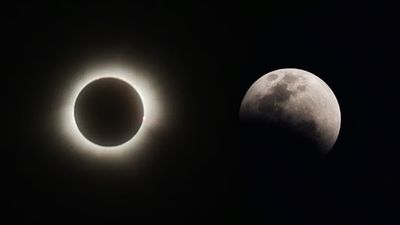


Both the rest of July and August are going to spoil us with options when it comes to the night sky. You've got a solar eclipse starting in North Asia and ending in southern Europe, a lunar eclipse across Europe, Africa, and the Americas, and a bunch of weak meteor showers mixed together with one of the strongest of the year. It’s a good time to go out and watch!
Let’s talk meteors first. From now until September, you have good chances to see a few meteors every night. Most of the showers are weak, not much different from the rate you get from the debris present on average in Earth’s orbit. That is known as the Antihelion Source.
Among the weak sources, we find eta-Eridanids, the July Pegasids, and the kappa-Cygnids, all active from now until the end of August with a peak of a few meteors per hour, just like the Antihelion Source.
But there are a few showers that have significantly more pep, and they are the ones bringing a bit of spectacle.
Slightly more active, with five meteors per hour, are the alpha Capricornids. The shower is notable for a plateau-like maximum and, most excitingly, a high number of fireballs during its active period, which goes from July 3 to August 15. So, few meteors, but a high chance of very bright ones.
The peak of this shower is July 31, which is also shared by the Southern Delta Aquariids.
That is a strong shower that has a peak of about 25 meteors an hour, and it is best seen from the tropics. While the peak will be ruined by being near the full Moon this year, the shower lasts from July 12 to August 23, so plenty of time to catch it even beyond the maximum.
With 100 meteors an hour at peak, the most anticipated meteor shower of the year remains the Perseids. The shower runs from today until August 24, and it peaks August 12-13. For this shower, no pesky Moon to spoil the fun. The Moon will be on the other side of the Earth, eclipsing the Sun.
The total solar eclipse of August 12 is quite a peculiar one, starting in northern Siberia, crossing the Arctic, and coming down across Greenland and Iceland to end in Spain. This will be the first total solar eclipse visible in Spain since 1905 – and Spain will get a bit more next year too, with the August 2, 2027 eclipse (the longest this century).
The path of totality on August 12, 2026 will be 294 kilometers (183 miles) and will reach a maximum of 2 minutes and 18 seconds at the center.
The path of totality crosses many populous areas of Spain, with cities like Valencia and Bilbao directly in the path, while Madrid and Barcelona are just outside it. Still, an extremely good partial eclipse will be visible across Europe and North Africa. That said, even North America will see a bit of the Sun eaten by the Moon.
If just a bit is not enough for the people of the Americas, they can feel better that the following eclipse, a lunar one in this case, is all for them. The partial eclipse of the Moon will happen on August 28 and it will be visible in Europe and Africa, but in its entirety in the Americas.
The shadow of the Earth will cover 93 percent of the full Moon, so we will not see the transformation in the blood Moon, but the Moon will be almost completely obscured by our planet.

 1
1