Space and Physics
 PUBLISHED
 1
1





What you'll discover in this article
- The Hubble tension roars on: we're not certain about the expansion rate of the universe, and different methods give us different answers. Something is wrong.
- A study of older stars in the Milky Way comes swinging for one particular method.
- It doesn’t solve the tension, but will certainly raise some eyebrows about what might be correct.
Over the last several years, a major problem surfaced in cosmology known as the Hubble tension. Different methods designed to figure out the expansion rate of the universe ended up with different values. As you can imagine, this isn't great.
Now, new research waiting to be peer-reviewed is bringing more fire to the argument.
The tension originates as the expansion rate of the universe can be used to work out the age of the cosmos. It is a pretty direct measurement.
But, according to the Standard Model camp that measures the expansion rate from the cosmic microwave background - the so-called light echo of the Big Bang - the Universe is around 13.8 billion years old.
I want the public to not be so worried every time a star is found to have an age older than the expected age of the Universe.
Dr Indranil Banik
The other camp, however, uses the Local Distance methods. This is a combination of using standard candles, which are stellar objects of a known distance, and measuring the recession velocities of galaxies. This gives a slightly higher value of the expansion rate, which converts to a slightly younger age of the universe.
Both of these ages cannot be correct at the same time.
To try and resolve this, a team of researchers led by Dr Indranil Banik from the University of Portsmouth approached the problem by bypassing the cosmology aspect altogether. They looked at the age of some of the oldest stars in our own galaxy, and found that they are simply too old for the Local Distance methods.
“The result strongly supports the predicted age of the Universe in the standard cosmological model,” Dr Banik told IFLScience.
“This is really exciting in light of the Hubble tension, because it means that even though the Universe appears to be expanding faster than expected, and that ought to make it younger than expected, in fact there is no age of the Universe anomaly corresponding to the Hubble tension.”
How to age a star
The oldest star in the study came out at between 13.6 and 13.9 billion years old. The usual assumption is that the Universe is another 200 million years older still. Using the local distance methods, the universe would have been expanding for 12.7 billion years, so there should be no stars older than 12.5 billion years.
“Many, many stars are older than that, so this cannot be right,” Dr Banik continues. “Our results therefore disprove scenarios where the Universe was always expanding 9 percent faster than expected in standard cosmology, a class of models known as early time solutions to the Hubble tension.”
When it comes to stellar ages, Banik told us that it is much easier to date stars towards the end of their lives. The team used a combination of data from the Gaia observatory and the Guo Shoujing Telescope in China to obtain enough details to estimate the mass of the stars.
“These stars have been carefully selected,” Banik says. “The stellar ages appear to be reliable about 99.9% of the time, though you do get the occasional outlier, which we think is mostly due to an undetected binary companion compromising the age estimate.”
“We were able to deal with this thanks to some carefully developed quality cuts.”
Both? Both is good.
So that surely means that after all these years, the Standard Model must be the correct method? Well, we wouldn't be so sure.
Uncertainty is always a crucial question when it comes to the Hubble tension. Some researchers believe that either or both camps are overestimating the precision of their values, meaning that perhaps neither method is wrong and the real age of the Universe is somewhere between the two.
Could that be the solution for the Hubble tension, or is new physics on the horizon?
Banik is upfront about the uncertainty found in estimating the ages of stars, which can often span billions of years. For example, some stars appear to be an improbable 16 billion years old.
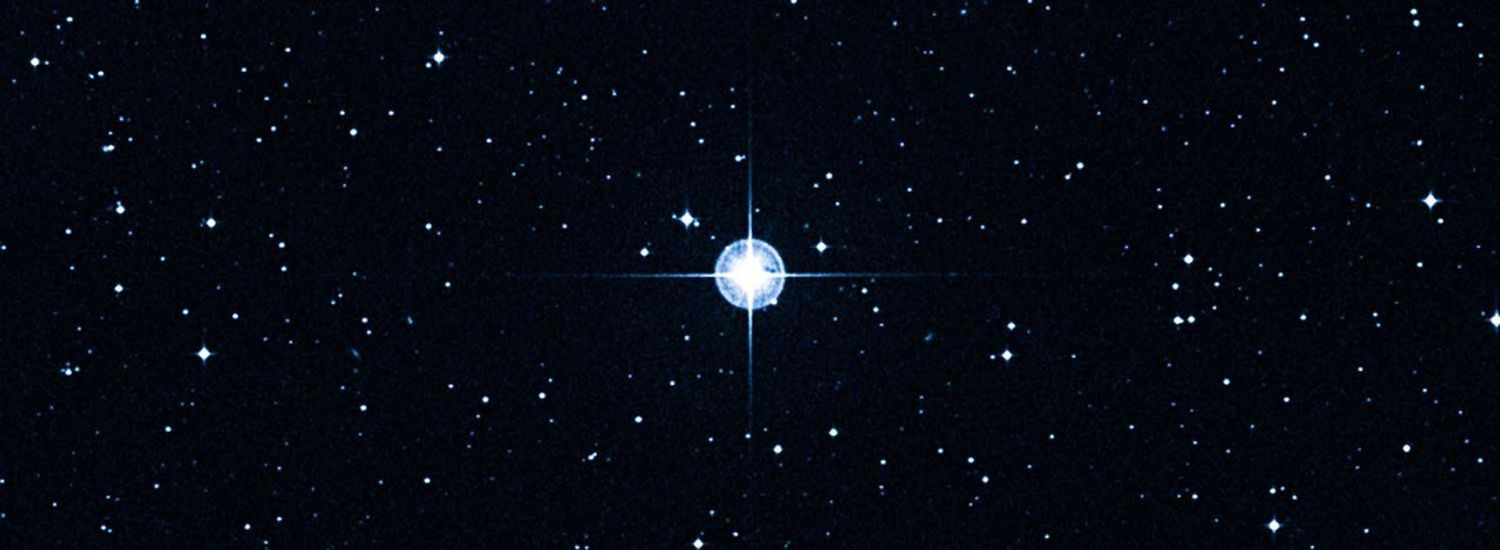
The famous Methuselah star has an age of 14.2 billion years, with an uncertainty that pushes it back down into the realm of possibility.
“I want the public to not be so worried every time a star is found to have an age older than the expected age of the Universe, and to always bear in mind the uncertainty!” says Banik.
“But I also want them to keep an open mind to the Universe really having a different age to what our leading cosmological models predict. Nearby stars will decide.”
The paper was submitted to the Monthly Notices of the Royal Astronomical Society, and it is available on the ArXiv.