Nature
 PUBLISHED
 3
3


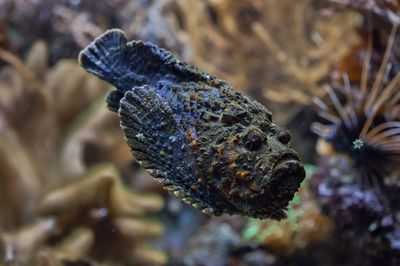


There are plenty of venomous and poisonous species across the different habitats of Earth. Some slither, some crawl, and some fly through the sky – but one group takes the title as the most venomous species to swim in the planet's seas. Meet the stonefish.
The name “stonefish” refers to five species in the genus Synanceia, including the reef stonefish (Synanceia verrucosa) and the estuarine stonefish (Synanceia horrida). Stonefish are masters of camouflage blending in perfectly with the coral or rocks of the muddy seabed in the Indo-Pacific. According to the Australian Museum, reef stonefish typically eat fish and crustaceans, lying in wait and then striking their prey super fast.
The venomous aspect of a reef stonefish comes from the dorsal fin spines that run along the back of the fish. These spines contain a highly toxic venom that can cause intense pain and even death. The Guinness World Records writes that the estuarine stonefish has the largest venom gland of any known fish.
The spines are grooved like a hypodermic needle and are used purely for defense. As such, they are erected by the fish when they feel threatened. Each spine has two venom glands surrounding it. The seriousness of the reaction is largely due to how many spines are involved and the depth at which the spines enter the victim.
While the pain is said to be excruciating and incredibly intense, some suggest that hot water therapy is the best pain management tool to inactivate the venom while waiting for medical attention.
“When you step on it, that presses on the gland, the gland ruptures and the venom squirts up along the spine,” Bryan Fry, an associate professor at the University of Queensland, told The Guardian. The result is a painful sting that has been described as “worse than childbirth”.
Fortunately, an antivenom was developed in 1959, which reduces the likelihood of serious complications.