Nature
 PUBLISHED
 1
1




Nothing makes the IFLScience team happier than an unusually colored lobster. From Banana to Bowie, these colorful rare crustaceans give us an extraordinary insight into both the colors its possible for a lobster to be, and the genetic mutations that cause these rare color morphs to happen.
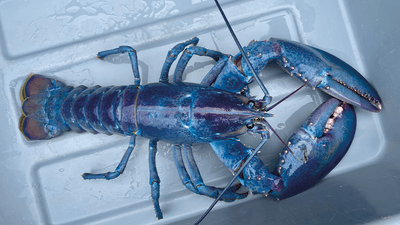
The latest lobster to join the gang is a one-in-100-million finding, saved from the dinner plate after being caught by a commercial fishing vessel belonging to the Atlantic Lobster Company off the coast of New Castle in New Hampshire, USA. The owner of the boat took it to the Seacoast Science Centre in Rye.
“I think it is definitely the only one I will ever catch, maybe even the only one I will ever see again in my lifetime. I’m over the moon about catching it, and letting it be seen by everyone at the Science Center makes it even better,” Joseph Kramer from the Atlantic Lobster Company, who caught the animal, told Smithsonian Magazine.
The male lobster is an extremely rare “cotton candy” color morph. Animals can become all sorts of different colors by flukes of genetic mutations. Albino, leucistic, and melanistic individuals are all due to either over- or underproduction of the pigment melanin. Lobsters have colored carotenoid pigments in hues of red, yellow, and blue, which often make the lobster appear reddish or brown; in these rare cases some of the pigments are expressed too much or not at all, leading to a whole rainbow of lobster coloration.

“Lobsters come in a few color descriptions from orange, yellow, red, blues, and cotton candy which is a mixture of pinks and purples on a blue backdrop resembling 'cotton candy,' so this is where the name comes from. There are also split lobsters, for example red on one side and black on the other; as well as calico, another rare coloration where the lobster has a distinctive black and orange mottled color pattern,” said Sam Rutka, an aquarist at the Seacoast Science Center where the lobster now lives, in a statement sent to IFLScience.
While the genetic reasons why these colors crop up aren’t fully understood, lobster parent Peaches and her 100 offspring are helping scientists figure out the mystery. “At this point, no one really knows in detail why some lobsters develop these multicolor variations, though we do have some theories,” the University of New England’s Dr Markus Frederich, professor of marine sciences, said in a news release.