


 Humans
 PUBLISHED



This week, footprints from the Early Cretaceous hint at the largest known mammal from that era and it may have hunted dinosaurs, a potential new solution to tackling antibiotic resistance may lie in a 160-million-year-old “revived” protein, and JWST observations have revealed a limited window for planet formation in 72 baby systems. Finally, we spoke to Marianne Moen, Head of Archaeology at the Historical Museum and the Museum of the Viking Age, to ask where are all the Viking helmets?
Create an IFLScience account to get all the biggest science news delivered straight to your inbox every Wednesday and Saturday.
Record-Breaking Human Mini Brains Kept Alive For 5 Years And Appear To Age Like The Real Thing
Lab-grown mini brains made of human neurons have been kept alive in a lab for nearly six years, making them the longest-lived organoids made by scientists so far. While these peppercorn-sized balls of tissue aren’t conscious in any real sense, new research suggests they did appear to clock the “passage of time” in a way that made the cells behave differently depending on how long they'd been cultured. Read the full story here
Early Cretaceous Footprints Appear To Come From The Largest Mammal Of The Dinosaur Era
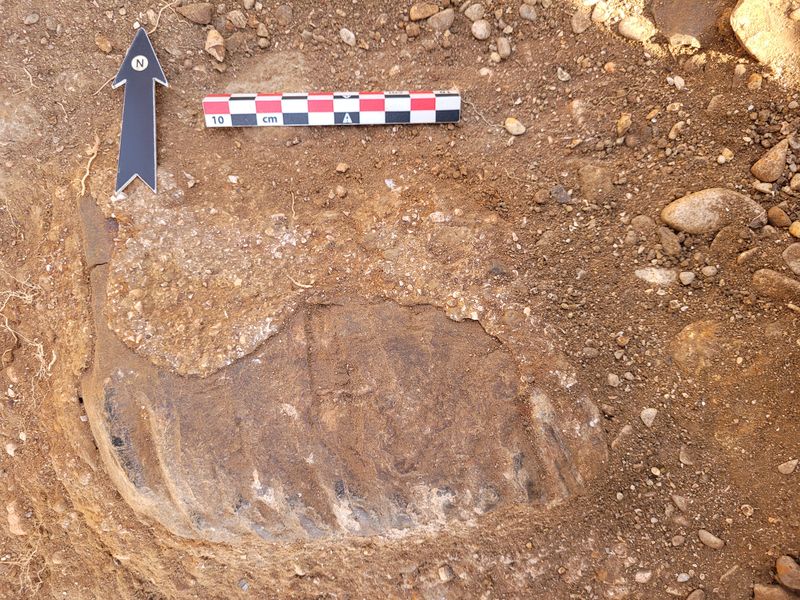
Footprints found in the Botucatu Formation, Brazil, have a shape consistent with being made by mammals’ paws, not dinosaurs’ feet. Yet the mammal that made these would need to have been much larger than any previously found, or even suspected, from before the asteroid impact reshaped the world. It seems the picture we have of our ancestors skulking beneath terrifying giant reptiles may need reworking: something this big could have hunted quite substantial dinosaurs. Read the full story here
“Revived” Protein Dating Back To The Dawn Of Mammal Evolution, 160 Million Years Ago, Hints At New Way Of Tackling Antibiotic Resistance
Humans need new antibiotics. This fact isn't in dispute. The question of how we find them, however, is much harder to answer. The idea that a minor infection could morph into an unstoppable, deadly force is unthinkable for most of us. But the reality of antimicrobial resistance – not just in bacteria, but other microbes too – is that unless new solutions are found, and fast, infections that today seem trivial could easily become killers. Read the full story here
Step Back In Time 165 Million Years, Relax, And Listen To The Sounds Of An Ancient Jurassic Forest
While scientists and researchers have gotten pretty good at reconstructing dinosaurs and learning what ancient plants might have looked like, there is one area that still proves tricky to recreate: sound. Read the full story here
Planets Must Form Quickly Or Not At All – JWST Observations Reveal The Limited Window Of Formation In 72 Baby Systems
The formation of planetary systems remains shrouded in mystery. We know that stars are born in giant clouds, and some of the leftover material ends up in what we call a protoplanetary disk. But new observations have revealed that gas planet formation must happen quickly, as it takes just a few million years for the gases necessary to dissipate. Read the full story here
TWIS is published weekly on our Linkedin page, join us there for even more content.
Feature of the week:
Only Two Full Viking Age Helmets Have Ever Been Discovered, So Where Are The Rest? And Where Are Their Horns?
Vikings left a hell of a legacy on the world, despite only being around for a few centuries. Yet for all their wanderlust and propensity for pillaging, archaeologists have been left with an unusual lack of helmets from their time. This lack of protective headgear is surprising as the Vikings were notorious raiders. Where, then, is the archaeological record of all their warrior clobber? Read the full story here
More content:
Have you seen our e-magazine, CURIOUS? Issue 49, August 2026, is available now. This month, we asked, “How Do Animals Get Their Patterns?” – check it out for exclusive interviews, book excerpts, long reads, and more.
PLUS, the We Have Questions podcast – an audio version of our coveted CURIOUS e-magazine column – continues. In episode 24, we ask, “Could You Turn A Flamingo Blue?”
The Big Questions podcast continues as we ask “How Close Are We To Talking To Animals?” Host Eleanor Higgs sat down with Dr David Gruber, founder & CEO of Project CETI (Cetacean Translation Initiative), to discuss decoding whale language, what we'd ask first, and who should really be doing the talking.

 2
2