Space and Physics
 PUBLISHED



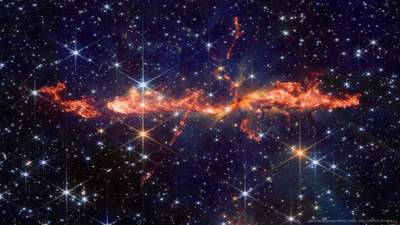


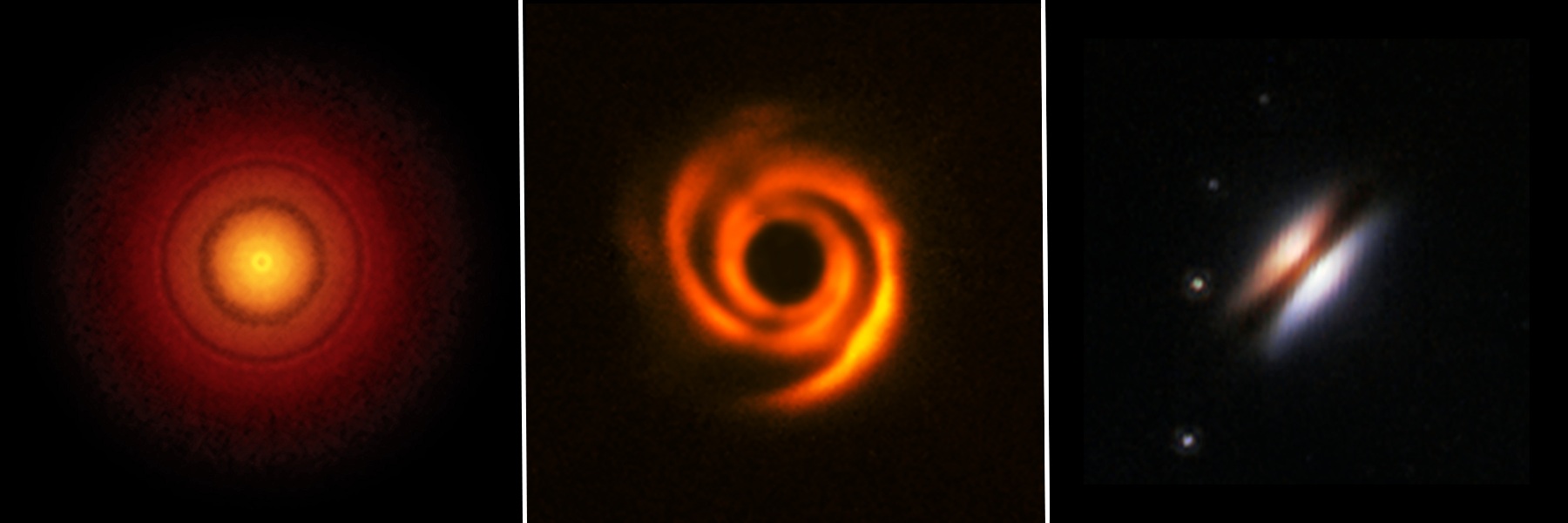
The formation of planetary systems remains shrouded in mystery. We know that stars are born in giant clouds, and some of the leftover material ends up in what we call a protoplanetary disk.
But new observations have revealed that gas planet formation must happen quickly, as it takes just a few million years for the gases necessary to dissipate.
Using the keen eye of JWST, researchers were able to track molecular hydrogen and ionized neon in 72 different baby star systems. These systems are all at different stages of stellar formation, meaning that together they read like a movie made of still images, roughly telling a consistent story.
And the story is: little planet, you better hurry growing up!
How to build a planet
In younger systems, the stars are gobbling up material from the disk. But this is not the only source of disruption in the protoplanetary disk.
The accretion gives rise to jets from the star that also push material away as powerful stellar winds are driven by the strong magnetic field in the disk. Gas can move through these magnetic field lines, stripping material and slowing down the disk. These are known as magnetic winds.
After a few million years, the magnetic winds weaken. At that point, the strong ultraviolet and X-ray emission from the star begins to excite the gas. The powerful light generates a different motion, known as the photoevaporative winds, which also pushes the gas away from the system.
Planets, therefore, have a small time frame in which to form. This is because after a short while most of the building blocks needed for planets to form have been pushed into interstellar space.
A race against time
“Planet formation is therefore a race against time,” Naman Bajaj, from the University of Arizona, said in a statement. “Gas giants like Jupiter must assemble their massive atmospheres while the disk is still substantial enough to supply them, before winds and jets carry that raw material away into space.”
“What is exciting about this study is that we can now see, across a large sample of young systems, how the mechanisms that remove gas from planet-forming disks change with time,” Uma Gorti, a SETI Institute scientist, said in a different statement.
“Disk dispersal sets a fundamental clock for planet formation: once the gas is gone, the opportunity to build gas-rich planets is essentially over.”
The team will build on this work with more analysis. They want to find out how much gas is removed by each process and where exactly in the disk is the escaping material coming from.
With those measurements, researchers believe they can work out just how long is the planet-forming window and even where and when planets can form.
A paper describing the results is published in The Astronomical Journal.