


 Humans
 PUBLISHED


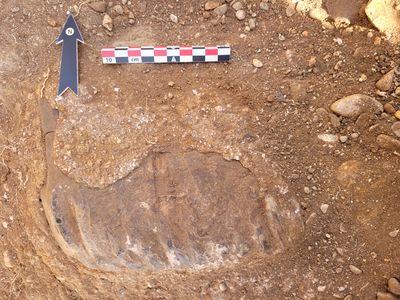


Hundreds of millennia before our own species left Africa, an archaic hominin related to Homo erectus embarked on its own world tour, eventually reaching eastern Asia. This journey began in the Levant, which connected Africa to Eurasia, and new research indicates that this vital migration corridor was teeming with meaty megafauna.
The archaeological site of Gesher Benot Ya'aqov in the Hula Valley has already provided scientists with some incredible insights into the lives of these prehistoric human ancestors. For instance, it’s here that we see the oldest evidence of cooking with fire, with the charred remains of a baked fish dating to 780,000 years ago.
Now, researchers have discovered a well-preserved tooth and tusk fragments belonging to the extinct proboscidean Palaeoloxodon antiquus, commonly known as the straight-tusked elephant. Alongside this ancient dentition, archaeologists found stone axes and other tools typical of the Acheulean technological complex.

And while this doesn’t prove that this particular elephant was hunted or butchered by tool-making hominins, it’s worth pointing out that the rise of Acheulean technology about a million years earlier coincided with the first exploitation of proboscideans by humanity’s ancestors. In the Levant, Acheulean hand axes are largely associated with hominins that preyed on elephants, which were among the largest land mammals of the Pleistocene.
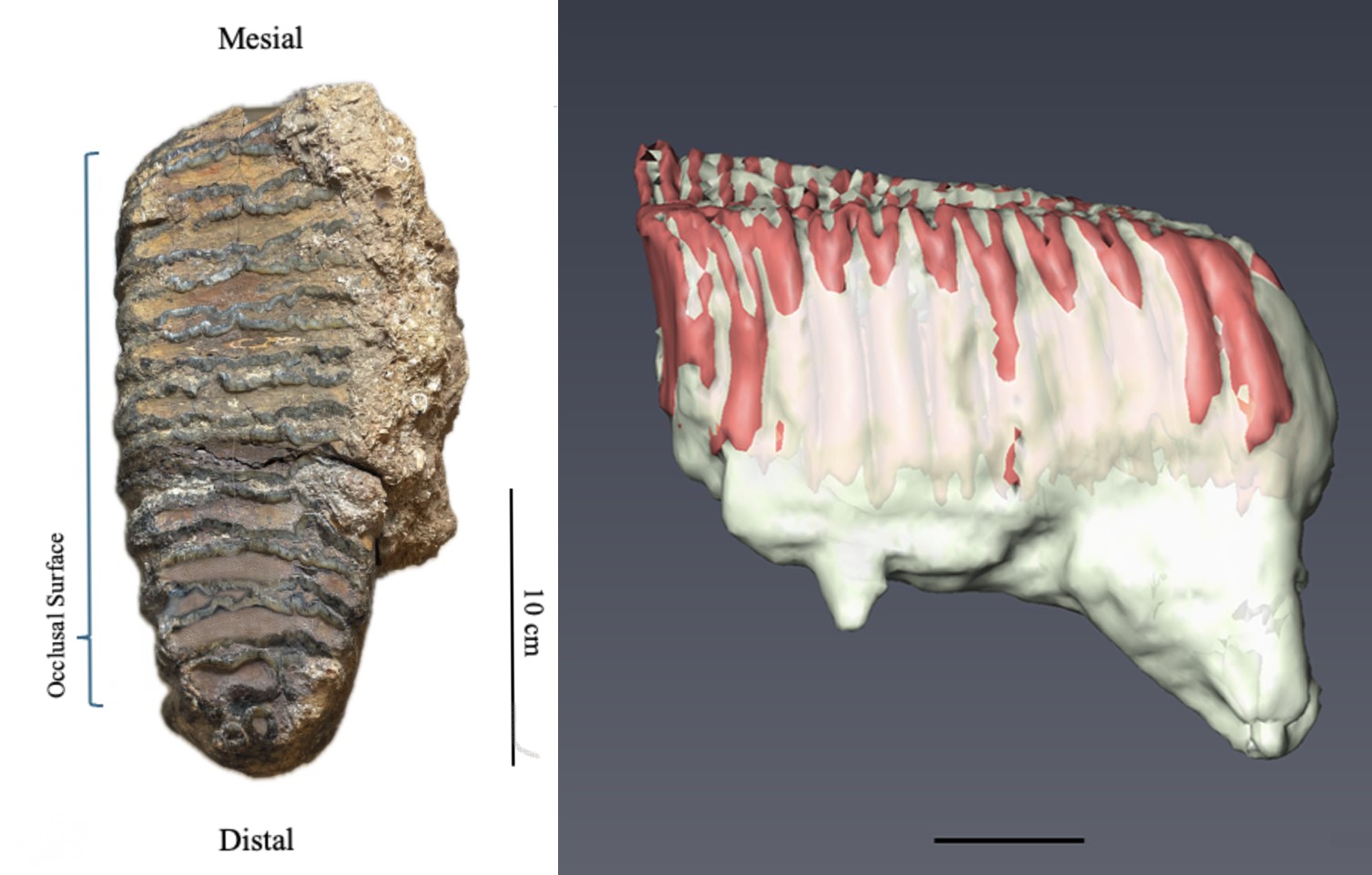
What the discovery does reveal, however, is that the Hula Valley provided a stable ecological refuge for both humans and megafauna 700,000 years ago. For instance, isotopic analyses conducted on the elephant molar indicate that the elephant ate plants typically found in grasslands and wetlands.
This suggests that the region around Gesher Benot Ya'aqov consisted of open woodlands crisscrossed with rivers, offering ideal conditions for both hominins and their prey to thrive.
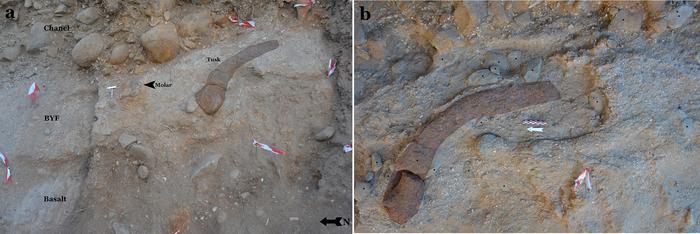
"The availability of water, vegetation and animal resources shaped where humans and wildlife could survive," explained study author Gonen Sharon in a statement.
"The wetlands, rivers and woodlands of the Hula Valley helped sustain life along one of the world's earliest migration corridors, offering a rare opportunity to understand the ecological conditions that supported both animals and human populations nearly 700,000 years ago."
As the sole land bridge between Africa and Eurasia, the Levant was an essential conduit for the earliest human ancestors to leave their homeland in search of pastures new. Had these ideal conditions not existed in the Hula Valley, it’s unclear whether these intrepid primates would ever have made it.
Fortunately, however, the region was something of a paradise for elephants, which meant there was always plenty of food for these early travelers.
The study is published in the journal Quaternary Science Reviews.




 2
2