Humans
 PUBLISHED



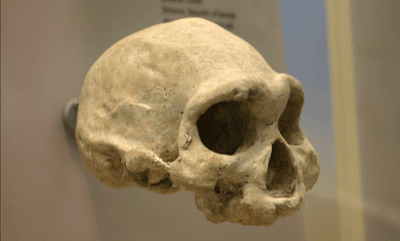


Long before Homo sapiens left Africa to begin colonizing the world, one of our prehistoric ancestors blazed the trail by setting off on its own intrepid journey into foreign lands. Among them was an individual who lost all but one of its teeth yet still managed to survive for a number of years, possibly thanks to the care provided by other members of its community.
To date, the oldest evidence for hominins outside Africa comes from Dmanisi in Georgia, where several skulls belonging to archaic humans dated to between 1.85 and 1.77 million years old have been found. These specimens are classified differently depending on who you ask, either as their own species, Homo georgicus, or as a variant of Homo erectus.
Back in 2005, archaeologists presented a fantastically well-preserved skull and jawbone belonging to one of these early Dmanisi hominins, which appeared to have lost all of its teeth apart from the left canine. Noting that all of the tooth sockets had been reabsorbed and the alveolar bone - which holds the teeth in place - had been extensively remodelled, the study authors concluded that this ancient individual survived for a significant period of time with just a single tooth.
Exactly how this gummy old hominin lost its dental hardware is unclear, although the researchers suggest old age or some sort of illness may have played a role.
Close to the toothless skull, archaeologists also found butchered animal bones, indicating that this species ate meat. Given that this particular individual couldn’t chew, however, the study authors speculate it may have survived by consuming soft tissues like bone marrow and brain.
More broadly, the researchers posited that the ancient hominin could only have remained alive for so long by adapting its behavior and by receiving a considerable amount of care and assistance from other members of its species. Other evidence from around the same time suggests our hominin relatives were already living in prosocial, co-operative groups, so this isn't a totally out-there claim.
“The… individual apparently survived for a lengthy period without consuming foods that required heavy chewing, possibly by eating soft plant and animal foods and/or by virtue of help from other individuals, which must have exceeded that capable of being offered by non-human primates,” wrote the study authors.
No teeth, no problem?
However, in 2020, another paper came out that challenged this assumption by documenting the behavior of a wild bonobo called Sting, who managed to survive for a number of years with no teeth at all. According to Dr Martin Surbeck at Harvard, the researcher behind that paper, Sting got along just fine without any help from other group members and without access to soft domesticated fruits.
While evidence for prolonged survival in toothless primates is rare, this case indicates some apes are capable of adapting their feeding strategies in order to nourish themselves without having to chew. The study authors directly link this finding to the previous assumptions made about Ol’ One Tooth from Dmanisi, calling into question the idea that the hominin could only have survived thanks to the kindness of others.
Whether or not this prehistoric individual really did rely on community assistance is therefore unclear, although the specimen continues to intrigue anthropologists and still holds the title for the worst dental health among all prehistoric humans.