Humans
 PUBLISHED


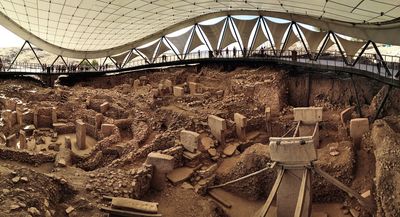


The first intact human burials have been excavated from Göbekli Tepe, the world's oldest known megalithic temple site, and it’s shaking up what archaeologists thought they knew about the ever-elusive site.
Göbekli Tepe is a wondrous oddity
Pretty much everything about Göbekli Tepe is remarkable. Located on a mountainside in southeastern Türkiye, the complex features the ruins of numerous buildings, massive carved stones, and monumental structures with beautifully designed pillars, some standing 5.5 meters (18 feet).
It was built in several stages between 9,600 and 8,200 BCE, which is unbelievably old for a site of this kind.
Around 11,500 years ago, the planet was just emerging out of the last Ice Age, and agriculture had not yet taken root. Nevertheless, people were already carving, hauling, and constructing giant megaliths.
This is the big reason why Göbekli Tepe is so significant. It offers a rare glimpse into one of the most important revolutions in human history, when nomadic hunter-gatherers began settling down and becoming farmers in the upper Euphrates and Tigris basins, leading to cities and complex societies.
The lack of human burials at Göbekli Tepe is another point of curiosity. Since excavations began in 1995, archaeologists have only found scattered, smashed-up human bone fragments mixed into the debris filling the large "special buildings."
However, in a new paper, researchers from the German Archaeological Institute reveal they have found the first intact burials at the site.
The first graves at Göbekli Tepe
Dated to around 8,700–8,000 BCE, the first is a group burial in a kidney-shaped pit containing an adult woman, a young man, and an adolescent girl. The second is a single burial, featuring a young woman in her 20s or early 30s, laid on her side in a curled-up position.
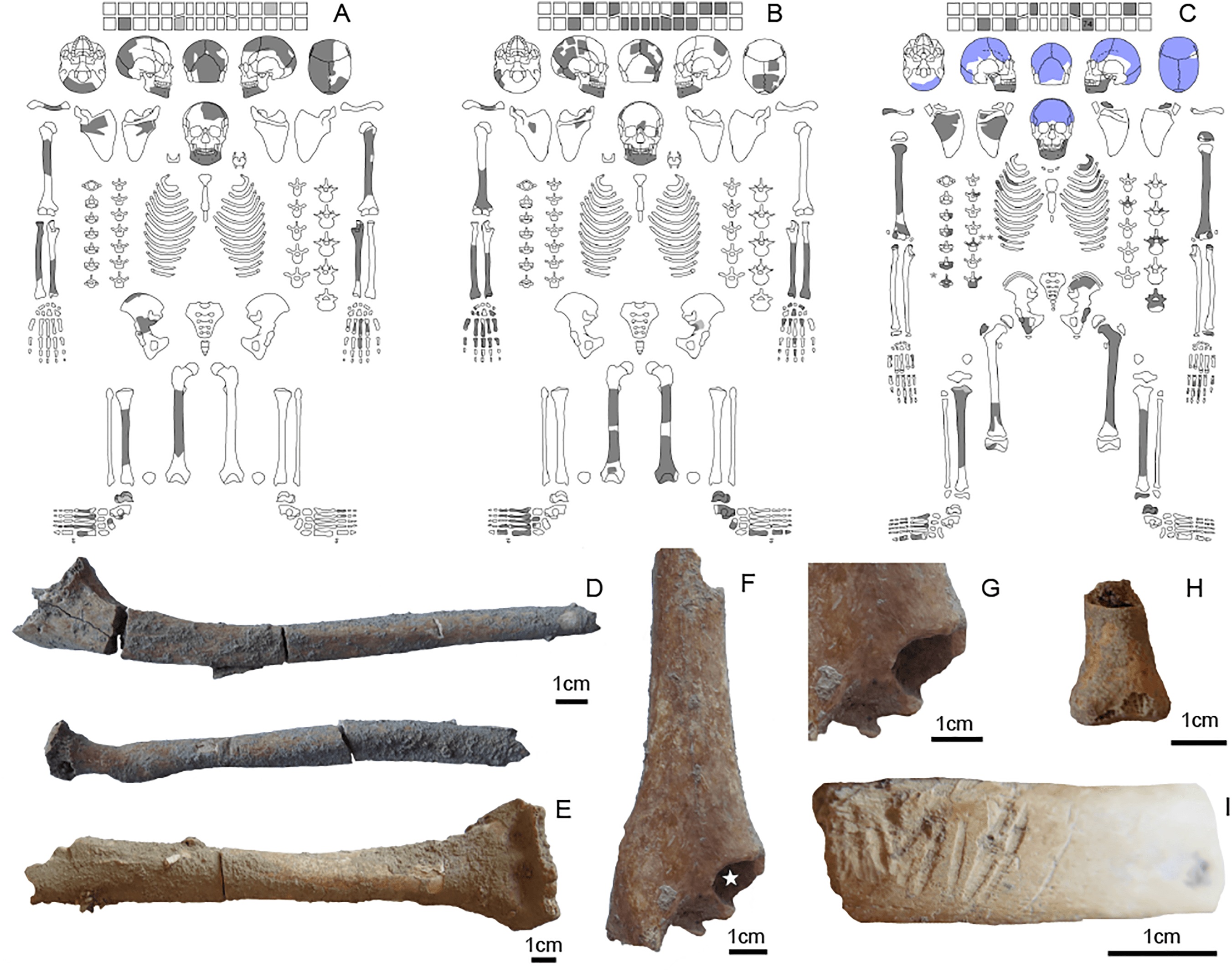
Armed with the knowledge of these two burials, the researchers set out to see if they could explain why the rest of the site is sprinkled with a scattering of human bones, not organized burials.
One idea is that selected bones, especially skulls and long bones, were deliberately placed in special buildings at the site as part of a ritual or a "skull cult".
Another idea is that the scattered bones originally came from burials higher up on the mound, but became washed down the slope into the special buildings by accident through erosion and landslides.
The team argues the second hypothesis is the most likely, but doesn't rule out the other possibility. The bones in both burials were badly broken, coated in hard calcium deposits, and had been gnawed by rodents, very similar to the scattered bone pieces from the special buildings.
The new research also reinforces the developing theory that Göbekli Tepe was not just a ceremonial complex where hunter-gatherers met periodically for rituals. Instead, it was a full-blown settlement where people were born, lived, and died.
The study is published in the journal PLOS One.