Humans
 PUBLISHED
 25
25


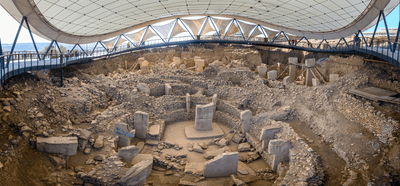


Göbekli Tepe in southeastern Türkiye is the oldest known monumental structure in the world. Archaeologists excavating there have recently broken fresh ground and have already uncovered some tantalizing finds that shed light on the lives of the Neolithic people who lived there and potentially upend what we thought the complex was used for.
Why Göbekli Tepe is a big deal
Göbekli Tepe is a mountainside archaeological site found in present-day Türkiye that features numerous monumental structures with beautifully designed pillars standing 5.5 meters (18 feet) and massive carved stones.
You can imagine it as a prehistoric temple-like structure, comparable to Stonehenge, but bigger, way more ornate, and at 11,600 years old, significantly older.
It was built through numerous phases between 9,600 and 8,200 BCE, predating other large megalithic structures by thousands of years. Around this time, the world was only just emerging from the last Ice Age, and agriculture was only just starting to take root in certain parts of the world.
The new excavations at Göbekli Tepe
Part of the latest work at Göbekli Tepe is focusing on an 80-by-70-meter (262-by-229-foot) plot, just a stone's throw away from the famous temple-like ruins that typically steal the show. However, the excavations are showing a very different, more domestic side to the site.
Data from surface scans and geomagnetic surveys suggest this patch of land was once home to several large-sized quadrangular public buildings.
Professor Necmi Karul, Coordinator of the Stone Hills Project, explained on social media that the internal design of the structures unearthed in the new dig suggests they were residential and “used as dwellings” in the site’s second phase, approximately the early 9th millennium BCE.
What was Göbekli Tepe used for?
This challenges the original theory that Göbekli Tepe was not a settlement, but an isolated temple complex used for ceremonial gatherings. The discovery of domestic buildings instead suggests people lived here rather than just gathering for ceremonial events.
Despite decades of excavations at the site, archaeologists have found limited evidence of domesticated plants or animals, nor pottery, leading some to conclude it was built by hunter-gatherers rather than settled agriculturists.
Klaus Schmidt, who first seriously excavated the site in the 1990s, was a firm believer that Göbekli Tepe was a purely ceremonial complex. He even argued it was built and maintained as a ritual site by hunter-gatherers, and the social organization needed for this feat was one of the sparks for the agricultural revolution and the emergence of complex settlements.
This theory has been critiqued in more recent years, and these latest excavations further support the emerging idea that people did live here, at least during part of the site's long history.
Along with these residential structures, the ongoing project is helping to conserve and better understand the temple-like structures that have already seen the light of day.
“Alongside the excavations, we place great importance on conservation efforts. While reinstalling the final fragments of the monolith surface in Structure C, we reinforced the walls of Structure D and the base connections of the two central monoliths. We are also securing the monoliths against tremors using steel cables,” Mehmet Nuri Ersoy, Culture and Tourism Minister, said on Instagram.
“By simultaneously conducting excavation, restoration, and conservation work across various parts of Göbeklitepe, we are carrying this unique heritage into the future through a holistic approach."