Humans
 PUBLISHED


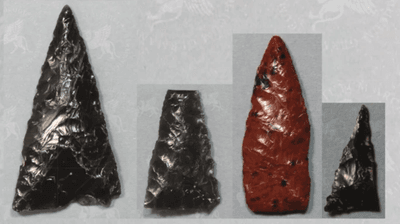


The bow and arrow have been invented multiple times over the past 70,000 years or so, with prehistoric humans in different parts of the world independently devising this long-range weapon as and when the need arose. Surprisingly, however, the Paracas culture – which existed during a horrifically violent chapter in Peru’s history – chose not to adopt the bow and arrow.
Offering greater range, penetration and accuracy than more primitive projectiles like spear throwers, the bow and arrow typically appeared in ancient societies that experienced an increase in conflict.
Based on skeletal trauma rates on Paracas skeletons, the authors of a new study explain that this pre-Inca civilization occupied Peru’s Palpa valleys during “the most violent time and place in the history of the Andes,” and should therefore have taken to archery.
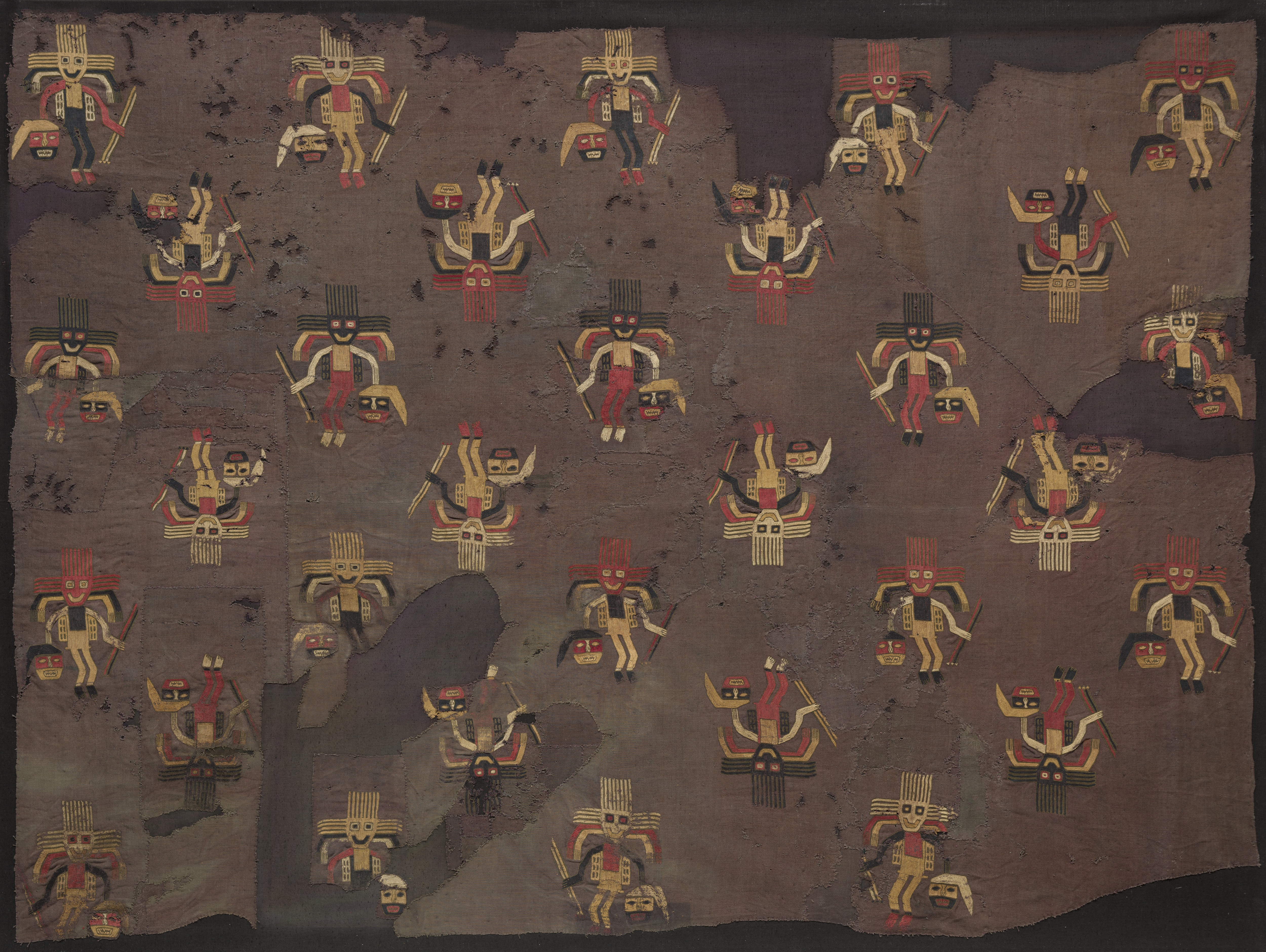
However, no bows or arrows have ever been found in Paracas burials, and the weapon is also absent from all imagery associated with this culture. In contrast, slings and spear-throwers are strongly associated with Paracas sites, which date to between 400 BCE and 1 CE.
Analyzing 200 obsidian points retrieved from these sites, the study authors found that all are too thick to be arrowheads, and therefore conclude that they were used as darts. This finding, they say, confirms the suspicion that bows and arrows were completely absent from the Paracas arsenal.
“The lack of evidence for the bow is surprising in light of evolutionary models from North America, which expect new weapons to be invented or adopted during violent times of growing populations,” write the researchers.
“It is also unexpected because all of these groups had the raw materials and knowledge of dart projectiles, and at some point, were in contact with bow-using groups.”
According to reports from Spanish conquistadores, bows and arrows were typically used by lowland groups across South America, while Andean warriors tended to prefer slings. It’s unclear why highland groups chose not to adopt archery, although the study authors suggest that they may have lacked access to the materials required for bow making.
In Europe, trees such as yew and ash have been sought out by bowyers since the Stone Age due to their strength and flexibility. The area around the Palpa valleys, however, is dominated by species like mesquite and acacia, both of which are too knotty and stiff to be used for bows.
Slings, meanwhile, could be easily manufactured, and may have formed part of a long-standing “warrior-ritual” tradition that Paracas fighters were reluctant to abandon by introducing new technologies.
More broadly, the study authors say their findings challenge the established assumption that bows and arrows naturally replaced slings and spear-throwers in a linear fashion, arguing instead that cultural and environmental factors may have caused some groups to favor other weapons.
They therefore conclude that “while other groups in the Americas readily switched to the bow, people in the Palpa valleys, and perhaps all along the Pacific coast, maintained traditions and used the same projectile weapons for millennia.”
The study is published in the Journal of Archaeological Method and Theory.